
















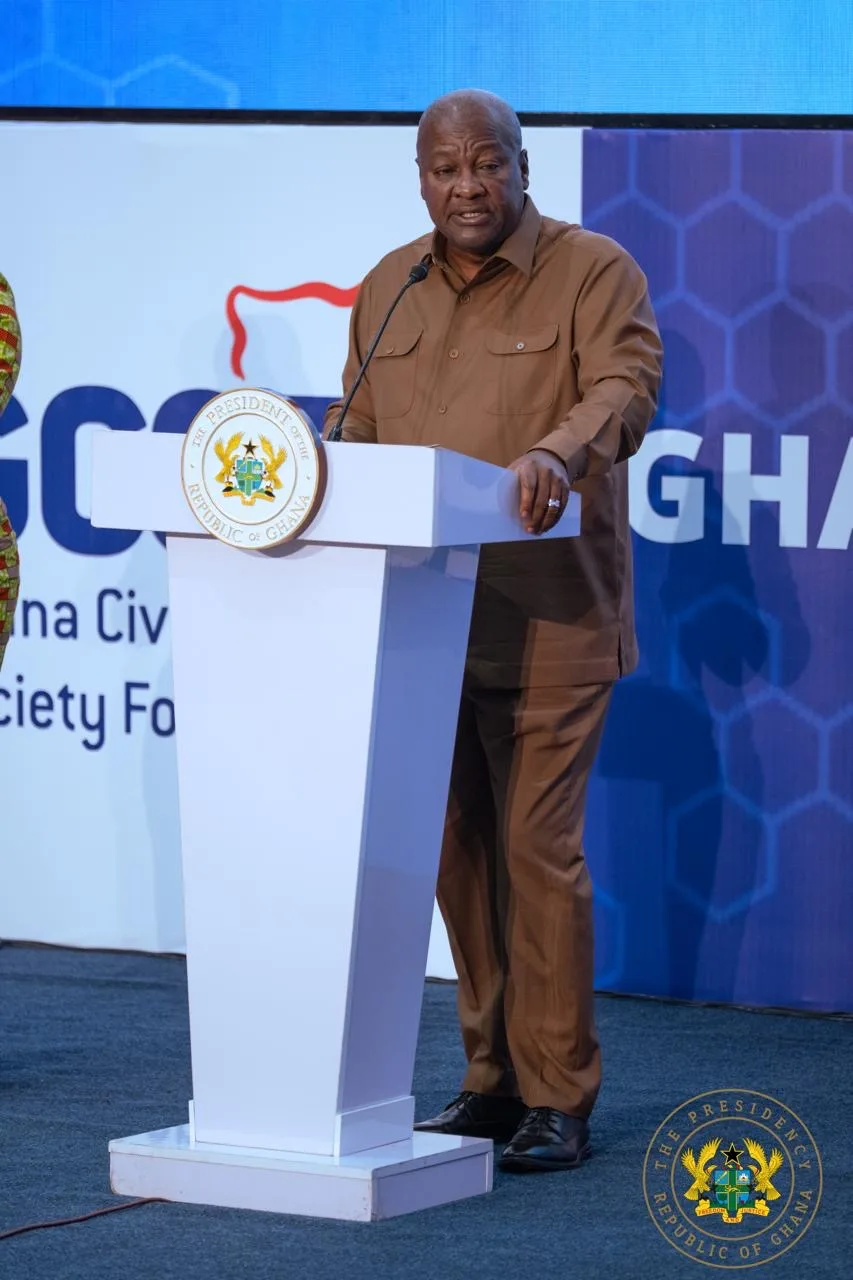
President John Dramani Mahama has reaffirmed his government’s commitment to working closely with civil society organisations, describing them as strategic partners in nation building rather than adversaries.
According to the President, civil society has played a vital role in Ghana’s democratic journey by promoting transparency, accountability, human rights and inclusive governance.
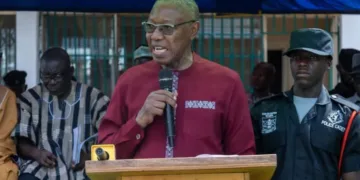
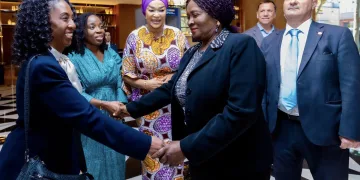
President Mahama made the remarks at the Ghana Civil Society Forum 2026, held at the University of Ghana under the theme, “Reimagining Partnerships for Democratic Consolidation and Inclusive Development.”
He noted that civil society organisations have consistently contributed to shaping public discourse, influencing policy decisions, strengthening accountability mechanisms and amplifying the voices of vulnerable and underserved communities.
“We welcome scrutiny, we welcome dialogue, and above all, we welcome partnership. This government does not regard civil society as an adversary; we regard civil society as a strategic partner in nation building,” he stated.
The President said the role of civil society has become even more critical as government pursues reforms in economic transformation, healthcare, education, youth employment, climate resilience, constitutional renewal and social protection.
He stressed that strong democracies are built on trust between citizens and public institutions, adding that civil society organisations help bridge the gap between government policies and the everyday experiences of ordinary people.
President Mahama also reiterated his administration’s commitment to participatory governance, citing the National Economic Dialogue and his recent engagement with a broad coalition of civil society organisations as evidence of government’s resolve to involve citizens in national decision-making.
He assured participants that government would continue to sustain such engagements to strengthen democratic accountability and ensure that diverse voices contribute to shaping Ghana’s development agenda.
The President urged civil society organisations, professional bodies, traditional authorities, faith-based organisations and citizens to remain actively engaged in governance, stressing that effective development is achieved when governments and citizens work together in partnership.