



























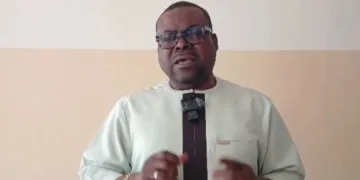














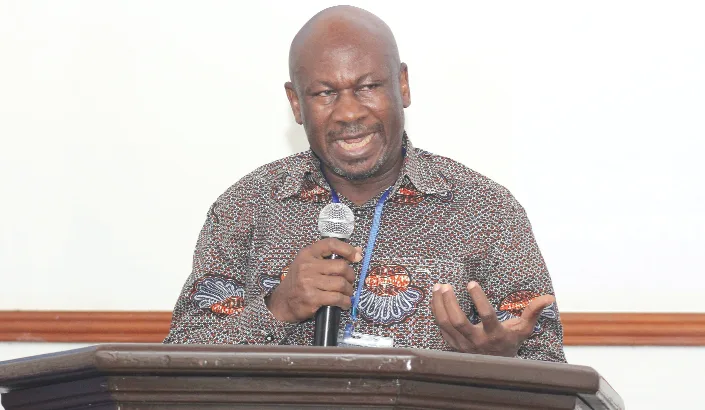
The Executive Director of STAR-Ghana Foundation, Alhaji Ibrahim-Tanko Amidu, has called for a shift in how civil society organisations (CSOs) are perceived and engaged in Ghana’s development process, urging that they be formally recognised as domestic development partners rather than merely stakeholders or recipients of donor support.
He made the call at the 4th Ghana Civil Society Forum 2026 held at the University of Ghana, Accra, where civil society actors, government representatives and development partners gathered to discuss the future of democratic governance and inclusive development.
According to him, CSOs play a central role in strengthening governance systems, promoting citizen participation, and bridging the gap between communities and decision-makers, yet they are often excluded from structured national development planning processes.
“I think given the role that civil society is playing, has played, and will play, we should also be recognised as development partners and invited to the table to discuss with government on how to make Ghana more sustainable and more inclusive,” Alhaji Amidu said.
He noted that in an era where global development financing is shrinking and traditional donor support is becoming less reliable, Ghana must rethink its development architecture and deepen collaboration among all actors.
“It’s clear that we cannot rely on external donors to finance our development, no matter how supportive or benign these donors would be, or are,” he stated.
Alhaji Amidu stressed that CSOs are often the closest actors to local communities and are well-positioned to provide evidence, mobilise citizen voices, and support accountability in public service delivery.
“Government collaboration with and support for civil society should therefore not be viewed as patronage. Rather, it should be understood as a strategic investment in better governance and more effective development outcomes for Ghanaians,” he said.
He argued that recognising CSOs as domestic development partners would allow for more structured engagement with government, improve policy design, and strengthen the implementation of development programmes.
The STAR-Ghana executive director further called for the creation of institutionalised platforms for regular dialogue between government, civil society, the private sector and other stakeholders at both national and sub-national levels.
“I would recommend that we institutionalise inclusive and constructive spaces and mechanisms at both national and sub-national levels for multi-stakeholder dialogues… to enable the kind of constructive dialogue and discussion and collaboration that will lead to sustainable development,” he said.
He also urged government and development actors to collaborate in mobilising domestic resources to reduce overreliance on external funding, warning that sustainability of development efforts depends on stronger internal financing systems.
Concluding his address, Alhaji Amidu underscored the importance of sustained partnerships in achieving Ghana’s democratic and development aspirations.
“The question before us, therefore, is not whether government can afford to invest in civic participation and civil society. It is whether Ghana can afford not to,” he said.
He added: “Together, we can build a Ghana where democracy delivers for all, and no one is left behind in our development efforts.”