


The Consultant for the National Air Conditioning and Refrigeration Workshop Owners Association (NARWOA), Mr. Kofi Adu Agyarko, has called on young Ghanaians to step up and fill the gap in the country’s cooling sector as many current technicians age.
Speaking during the World Refrigeration Day celebration at the Accra Technical Training Center on Friday, June 26, 2026, Mr. Agyarko said refrigeration, air conditioning, and heat pump technologies are now indispensable to daily life and sustainable development.

This year’s theme, “Cool Intelligence,” he noted, challenges the public to see cooling not just as technology, but as a “smart, efficient, sustainable, and people-centered solution for the future.”
“I’m delighted to speak directly to NARWOA, the men and women whose hands, skills, and expertise keep our cooling systems functioning safely and efficiently. It’s also refreshing to have you, students, here who will form the base of future technicians to support the cooling sector,” he said.

He continued: “The current NARWOA members are getting old, so they are losing their firepower. I’m expecting you to grow up quickly to come and fill in the gaps and put more fire in the association because it is an indispensable partner in the cooling space in Ghana.”
Mr. Agyarko said cooling has shifted from a luxury to a necessity in Ghana.

“In my university days, I entered Legon in ’88 and left in ’91. There was only one student who had a refrigerator in Legon Hall. Today, everybody has become Dada B.
“Even Kwadwo Nsiah ba is using a refrigerator in the university,” he stated.
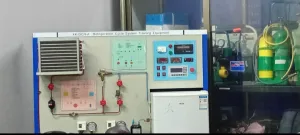
He explained that for many students, a refrigerator is now essential for food storage because cooking daily is not affordable.
“Cooling preserves our food, protects medicine and vaccines, ensures comfort in homes and workplaces, supports industrial production, and contributes to economic growth. In Ghana, where temperatures are often high throughout the year, cooling technologies have become essential for public health, food security, and productivity,” he added.

Mr. Agyarko said increasing demand for cooling must be matched with energy efficiency and environmentally friendly practices.
“For the AC in this room, I have been here for almost two hours now. I would have left long ago. But I have enjoyed the ambience. That is why I have all the patience to wait,” he joked.

Mr. Agyarko reiterated that “as demand for cooling increases, so does the need to ensure that cooling systems are intelligent, systems that consume less energy, use environmentally friendly refrigerants, and deliver greater performance with lower environmental impact.
“Cooling intelligence is about making smart choices. It means selecting the right equipment for the right application.”


