




















































The Media Foundation for West Africa (MFWA) says that within sixteen months of President John Dramani Mahama’s administration, the number of persons arrested surpassed those documented throughout the entire eight years of former President Nana Addo Dankwa Akufo-Addo.
The Foundation asserted this in a condemnation of the increasing spate of what appears to be the weaponisation of Section 76 of the Electronic Communications Act, 2008 (Act 775), and Section 208 (sometimes paired with Section 207) of the Criminal Offences Act, 1960 (Act 29), to criminalise speech in Ghana.
“Within 16 months of the current National Democratic Congress (NDC) government, under President John Dramani Mahama, more people have been arrested using these laws than happened under the entire eight years of the previous NPP administration led by President Nana Addo Dankwa Akufo-Addo,” It said in a publication on its website.
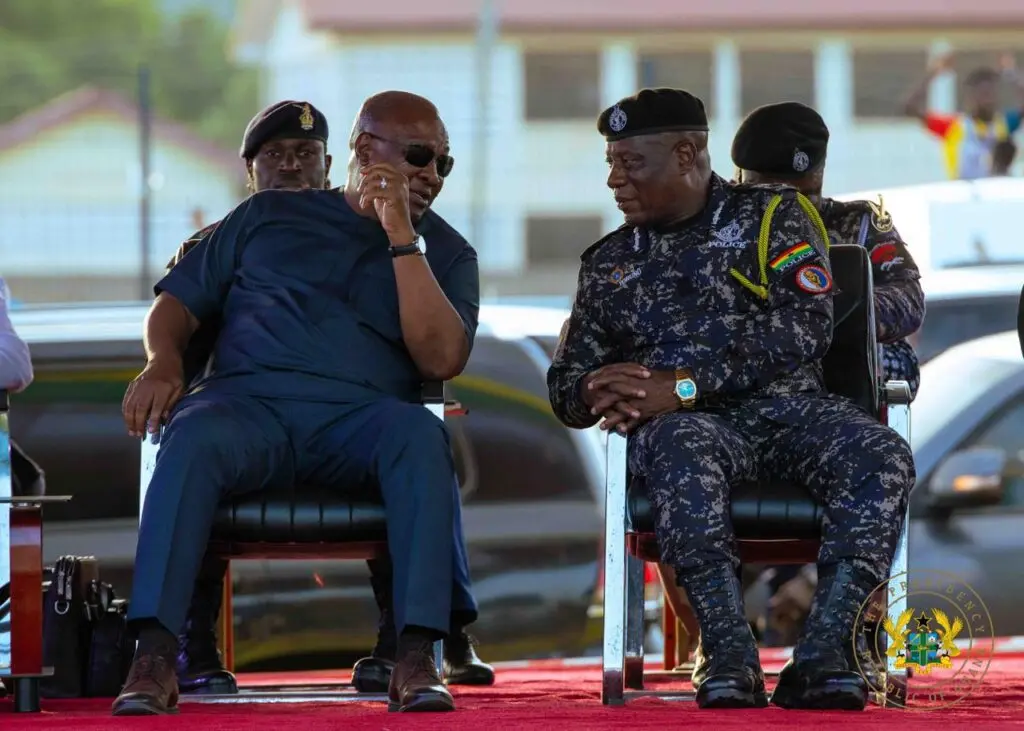
According to MFWA, it is worth recalling that while in opposition, President Mahama wrote an open letter to President Akufo-Addo expressing concern about what he described as the “growing criminalisation of speech and journalism in Ghana.”
“It is even more worrying when the power of the state is used as a pliant tool in this intimidating endeavour. This is a dangerous blueprint you are fashioning for our dear nation, and it must not be encouraged.”
“Your actions as President have totally discredited your self-acquired accolade as a human rights lawyer and activist. Ghana has long emerged from the unfortunate past where journalists were cowed by incarceration and brutalisation,” they quoted Mr. Mahama in the said letter written in 2022.
It also referred to page 139 of the NDC’s 2024 manifesto, where the party pledged to repeal anti-press-freedom laws and reverse what it described as a climate of fear, intimidation, harassment, and insecurity that affects media freedom and development.
“A few days after being sworn into office, President Mahama reaffirmed his commitment to uphold both press freedom and freedom of speech as guaranteed under the 1992 Constitution,” the Foundation noted.
MFWA, however, observed that these commitments appear to stand in contradiction to developments over the past sixteen months of President Mahama’s leadership of the country.
The period, they said, has been characterised by a disturbing rise in what appears to be the discriminatory and disproportionate application of Section 76 of the Electronic Communications Act, 2008 (Act 775) and Section 207 & 208 of the Criminal Offences Act, 1960 (Act 29).
“Since President John Mahama assumed office on January 7, 2025, these laws have been applied to arrest presenters, journalists, TikTokers, bloggers, political activists, and ordinary citizens for comments or publications they have made.”
MFWA added that it has recorded 14 arrests linked to the application of these laws within just 16 months, compared to eight arrests recorded over the entire eight-year tenure of the previous administration led by President Akufo-Addo, representing an increase of approximately 950% in the average rate of arrests.
It further acknowledged the two laws at the centre of these arrests are problematic for freedom of expression – Section 208 of the Criminal Offences Act, 1960 (Act 29), which states that: “A person who publishes or reproduces a statement, rumour or report which is likely to cause fear and alarm to the public or to disturb the public peace, knowing or having reason to believe that the statement, rumour or report is false, commits a misdemeanour.”
Although the law was intended to preserve public order, its broad and vague wording leaves room for abuse and selective interpretation. MFWA says the lack of clarity creates the possibility for authorities to use the law against journalists and citizens expressing dissenting or critical views.
“Similarly, Section 76 of the Electronic Communications Act, 2008 (Act 775), criminalises the electronic transmission of false or misleading information likely to prejudice life-saving services or endanger public safety. The law provides for penalties including imprisonment, fines, or both.
“While the MFWA recognises the legitimate need for laws that help prevent incitement to violence, harmful disinformation, and threats to public safety, we are deeply concerned about the discriminatory, disproportionate, and abusive use of these provisions in ways that have a chilling effect on freedom of expression.
“Section 208 of the Criminal Offences Act has historical roots in colonial-era restrictions on dissent, while Section 76 of the Electronic Communications Act was originally enacted to address harmful false communications and hoax distress signals. The broad and subjective nature of terms such as “false news,” “fear,” “alarm,” and “offensive conduct” creates significant discretion for law enforcement authorities and increases the risk of politically motivated enforcement. The situation also raises broader constitutional questions about proportionality, democratic tolerance, and the role of criminal sanctions in regulating speech.”
While MFWA calls on the government to take steps to cease the discriminatory and disproportionate use of these laws, it highlights its deep concern about the growing spate of reckless, baseless, and abusive political rhetoric in public discourses.
“We especially caution the media against allowing their platforms to be used as megaphones for content likely to disrupt social cohesion. We also caution content creators and the general public to desist from insulting and offensive comments that can cause social tensions.
The Foundation called on political parties to openly denounce vile rhetoric made by their members in the name of party politics, as such behaviour, if ignored or encouraged, only undermines Ghana’s democracy, peace, and development.
Notwithstanding, it reiterated their long-standing call for the repeal of Section 76 of the Electronic Communications Act, 2008 (Act 775) and Section 208 of the Criminal Offences Act, 1960 (Act 29).