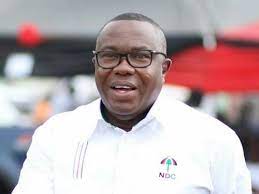



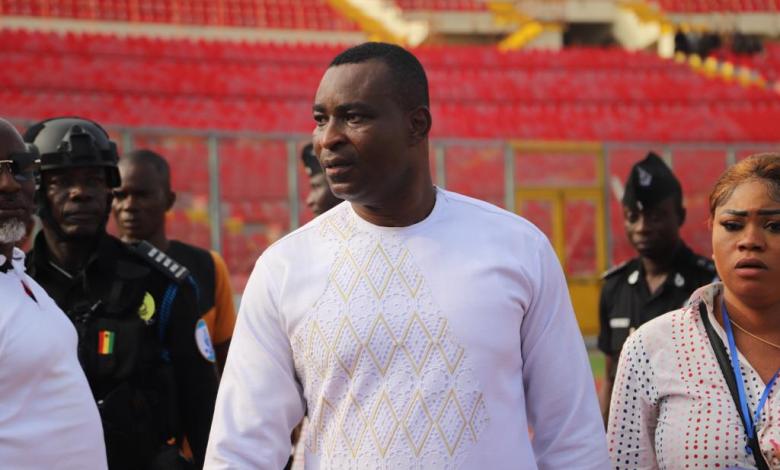



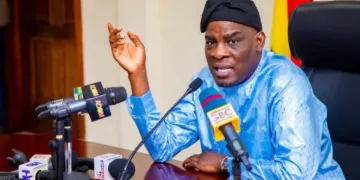

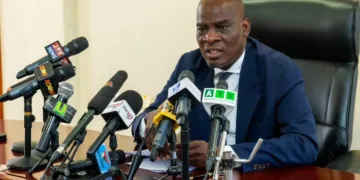





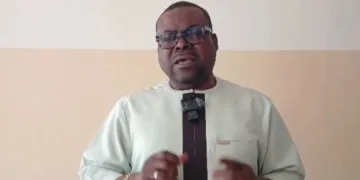









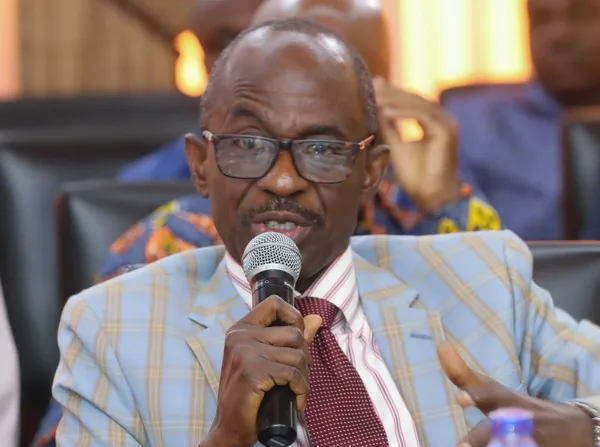
National Chairman of tye National Democratic Congress (NDC), Johnson Asiedu Nketia, has told the International Movement for the Freedom of Nations that political independence remains incomplete without economic independence.
He warned that modern forms of influence now operate through finance, trade, technology and global rules.
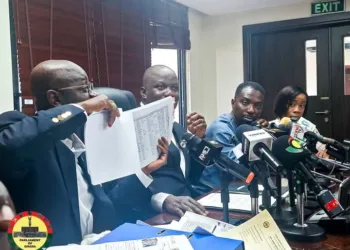
Speaking at the 3rd meeting of the Standing Committee in St. Petersburg on Wednesday, June 25, 2026, Asiedu Nketia invoked Kwame Nkrumah’s assertion that “political independence would be meaningless without economic independence.”
He argued that many developing nations exercise political sovereignty but still operate within economic structures, financial systems and institutions they do not control.
“Colonialism was visible. It governed openly and justified itself explicitly. Modern forms of influence are often embedded within financial markets, trade regimes, technology ownership, development finance, intellectual property systems, and international institutions,” he said.
On Africa’s experience, Asiedu Nketia said the continent’s history of extraction continues to shape present inequalities.
He said Ghana’s push for reparatory justice is not about “assigning guilt to present generations” but about acknowledging how historical processes affect development today.
He cited the 2023 Accra Reparations Conference, the Accra Proclamation, and UN General Assembly Resolution A/RES/80/250, adopted in March 2026 with support from 123 member states.
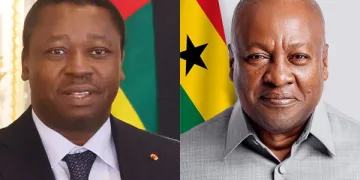
He noted that Ghana recently hosted a High-Level Consultative Conference on the UN resolution and that President John Dramani Mahama has been appointed African Union Champion on Reparations.
Asiedu Nketia also stressed that power is exercised “through rules,” and questioned whether developing countries participate meaningfully in shaping finance, trade, technology, and investment regimes or merely comply with them.
He cautioned Africa against relying on history as an explanation, arguing that resources alone do not equal influence.
“Africa possesses strategic minerals, vast agricultural resources, and one of the youngest populations in human history, but possession of resources has never been the same as possession of power,” he said.
He warned that as competition intensifies over critical minerals, energy, digital infrastructure and AI, Africa must avoid supplying raw materials while others capture the value.
The NDC Chairman concluded that the struggle against neocolonialism “cannot ultimately be won through rhetoric alone” but through governance, industrial capacity, technology, regional integration, and value creation.
He said Ghana seeks cooperation, not isolation, and an international order where “sovereignty is respected regardless of a nation’s size.”