



Public health experts, veterinarians, researchers, and One Health practitioners have called for stronger collaboration across the human, animal, and environmental health sectors to reduce the growing burden of rabies, snakebites, and other zoonotic diseases in Africa.
They stressed that preventing these diseases requires moving beyond treating patients after they are bitten to addressing the environmental, animal, and community factors that drive disease transmission.
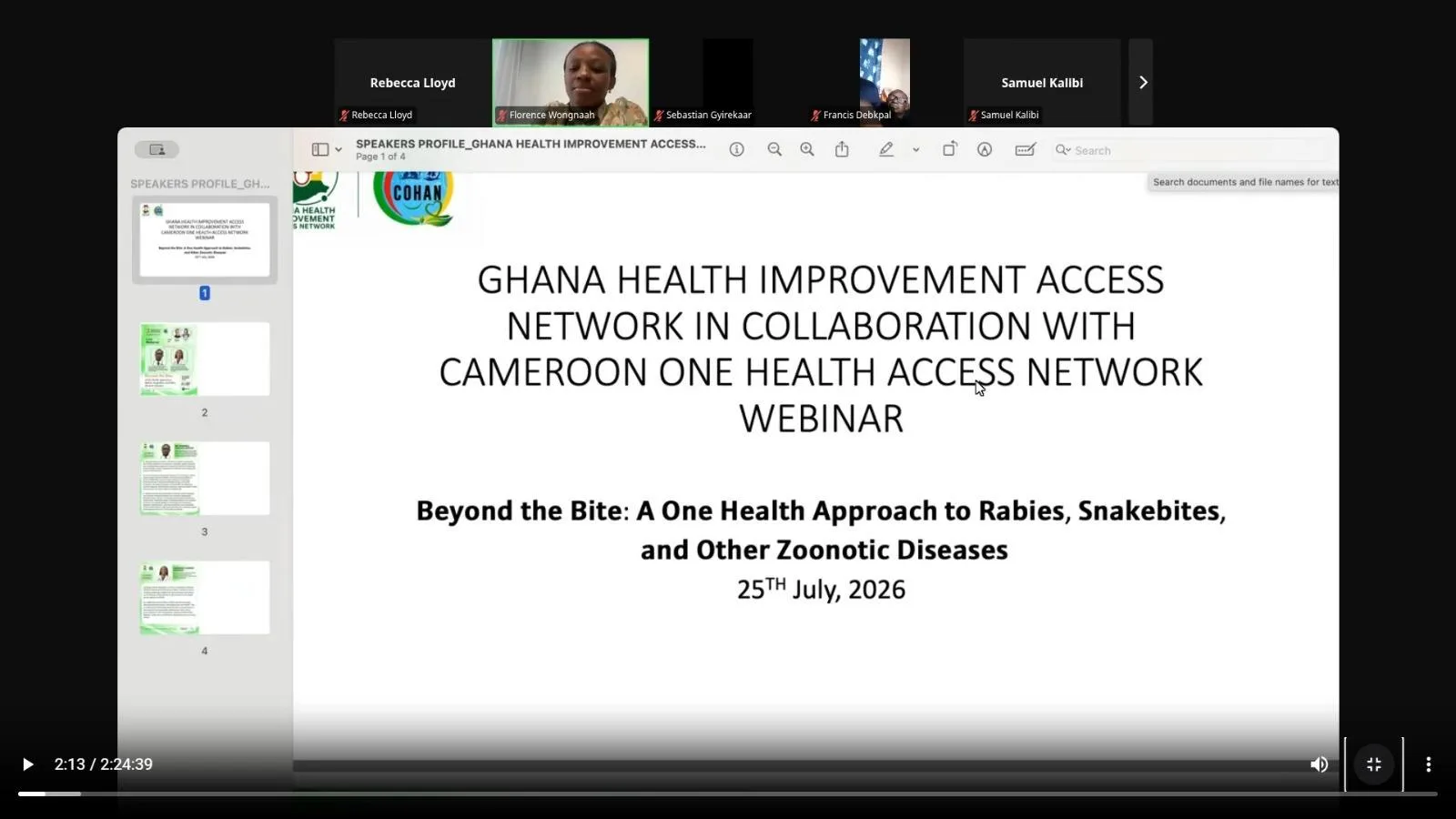
The call was made during a webinar organized by the Ghana Health Improvement Access Network (GHIAN) in collaboration with the Cameroon One Health Access Network (COHAN) on July 25, 2026, which brought together 164 participants comprising health professionals, researchers, veterinarians, students, policymakers, and community advocates from several African countries under the theme:
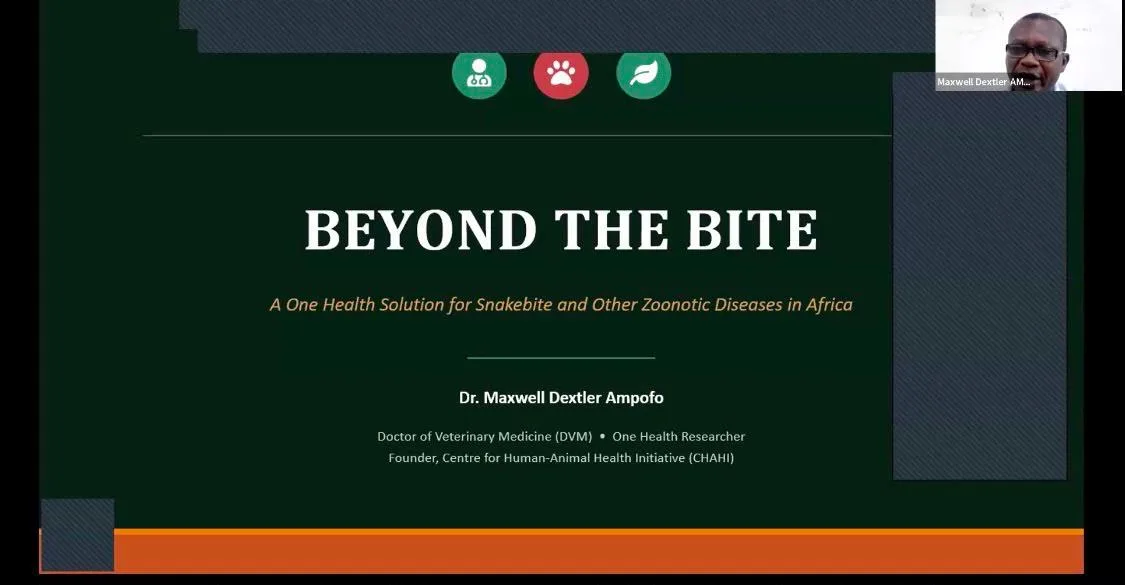
“Beyond the Bite: A One Health Approach to Rabies, Snakebites and Other Zoonotic Diseases.”
The webinar featured expert presentations from:
• Dr. Maxwell Dextler Ampofo – Veterinary Physician | One Health Researcher | Founder & Executive Director, Centre for Human-Animal Health Initiative (CHAHI), Ghana.
• Anubondem Godwin – Veterinary Medicine Candidate, University of Buea, and Chief Accountant, Cameroon One Health Access Network (COHAN), Cameroon.
The webinar was moderated by Florence Gyembuzie Wongnaah, CEO of GHIAN, and Mc Conrade J. Lynne, President of COHAN, who guided discussions on how stronger collaboration can improve health outcomes across Africa.
Looking Beyond the Bite
Opening the technical session, Dr. Maxwell Dextler Ampofo challenged participants to rethink snakebite not simply as a medical emergency but as the result of broader environmental and public health challenges.
He noted that an estimated 5.4 million snakebites occur globally each year, causing 81,000–138,000 deaths and leaving about 400,000 people with permanent disabilities.
He added that sub-Saharan Africa accounts for more than 30% of global snakebite deaths, with rural communities bearing the greatest burden because of limited access to healthcare and lifesaving antivenom.
Dr. Ampofo explained that snakebite is not simply an accident but an ecological warning. Environmental degradation, deforestation, agricultural expansion, mining, urbanization, and climate change are reshaping ecosystems and increasing contact between humans and snakes.
Rather than focusing solely on treating victims after they arrive at health facilities, he argued that a One Health approach asks a more fundamental question: Why did the human-snake encounter happen in the first place?
He further noted that many victims first seek treatment from traditional healers or arrive late at health facilities because of long travel distances, financial barriers, and shortages of lifesaving antivenom.
These delays often result in preventable deaths, amputations, lifelong disabilities, psychological trauma, and loss of livelihoods, particularly among farming communities.
Rather than dismissing traditional healers, he advocated engaging them as trusted community partners who can facilitate early referral of patients to health facilities while supporting community education on snakebite prevention and appropriate first aid.
Drawing on examples from Ghana and Cameroon, Dr. Ampofo highlighted innovative approaches to improving snakebite care, including the use of drone technology to deliver antivenom to underserved communities, ongoing research into safer and more effective antivenoms, and efforts to strengthen regional production of antivenom in Africa.
He emphasized that reducing snakebite deaths requires stronger surveillance systems, environmental management, community education, veterinary services, workforce development, and multidisciplinary research.
Only a coordinated One Health approach, he concluded, can significantly reduce the burden of snakebite and other neglected zoonotic diseases across Africa.
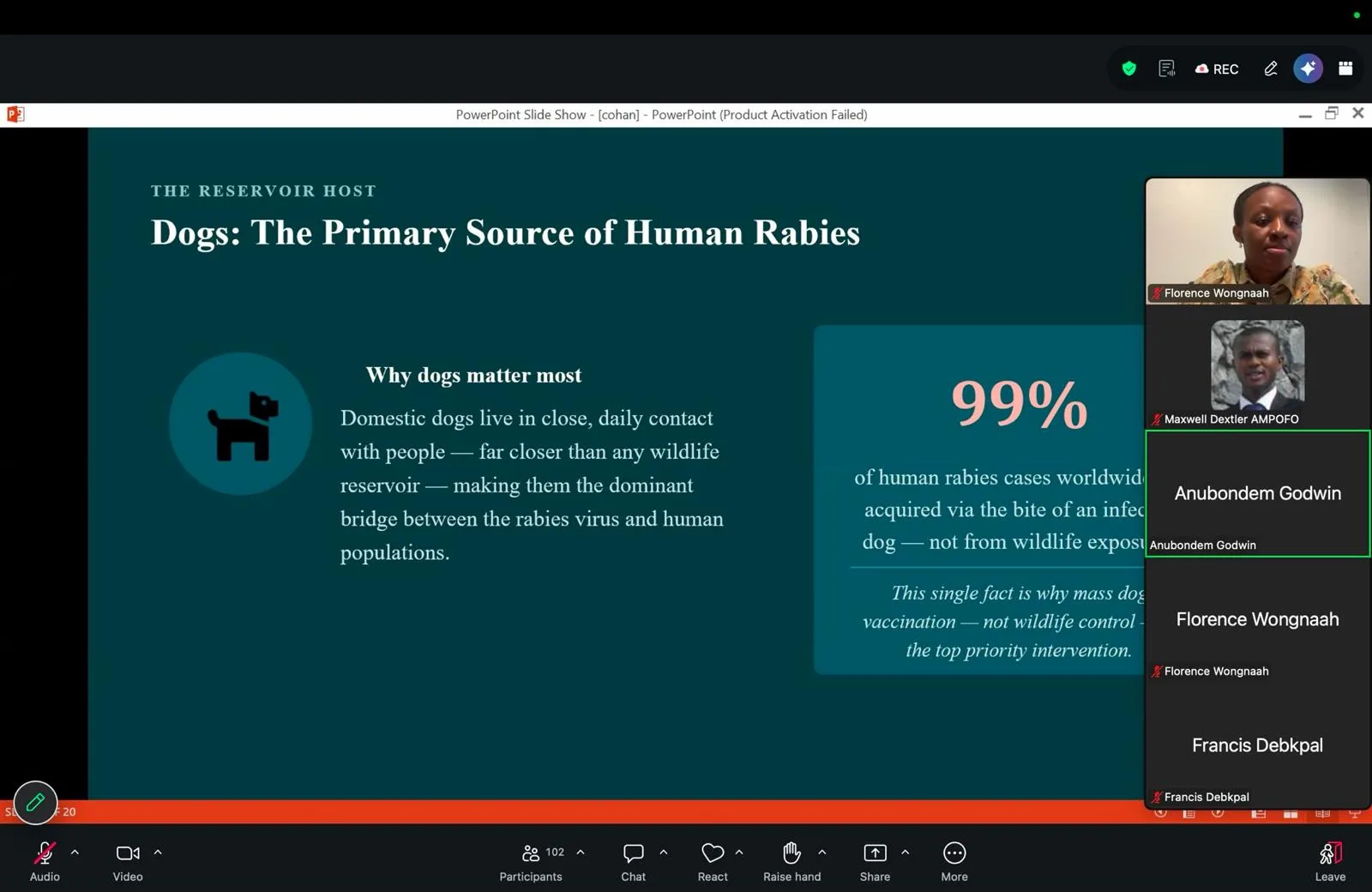
Rabies Elimination Requires Collective Action
Turning attention to rabies prevention, Anubondem Godwin, highlighted the critical role of coordinated One Health interventions in eliminating dog-mediated rabies.
He noted that approximately 99% of human rabies cases result from bites by infected domestic dogs, making mass dog vaccination one of the most effective public health interventions available.
He explained that achieving and sustaining at least 70% vaccination coverage among dogs is sufficient to interrupt transmission through herd immunity, dramatically reducing the risk of human rabies and moving countries closer to elimination.
Beyond mass dog vaccination, Mr. Godwin explained that eliminating rabies requires a comprehensive package of preventive measures.
These include immediate wound washing, timely access to post-exposure prophylaxis (PEP), responsible pet ownership, strengthened surveillance systems, and coordinated action among veterinary services, healthcare providers, environmental authorities, local governments, and communities.
He noted that rabies remains almost entirely preventable when these interventions are implemented consistently and at scale.
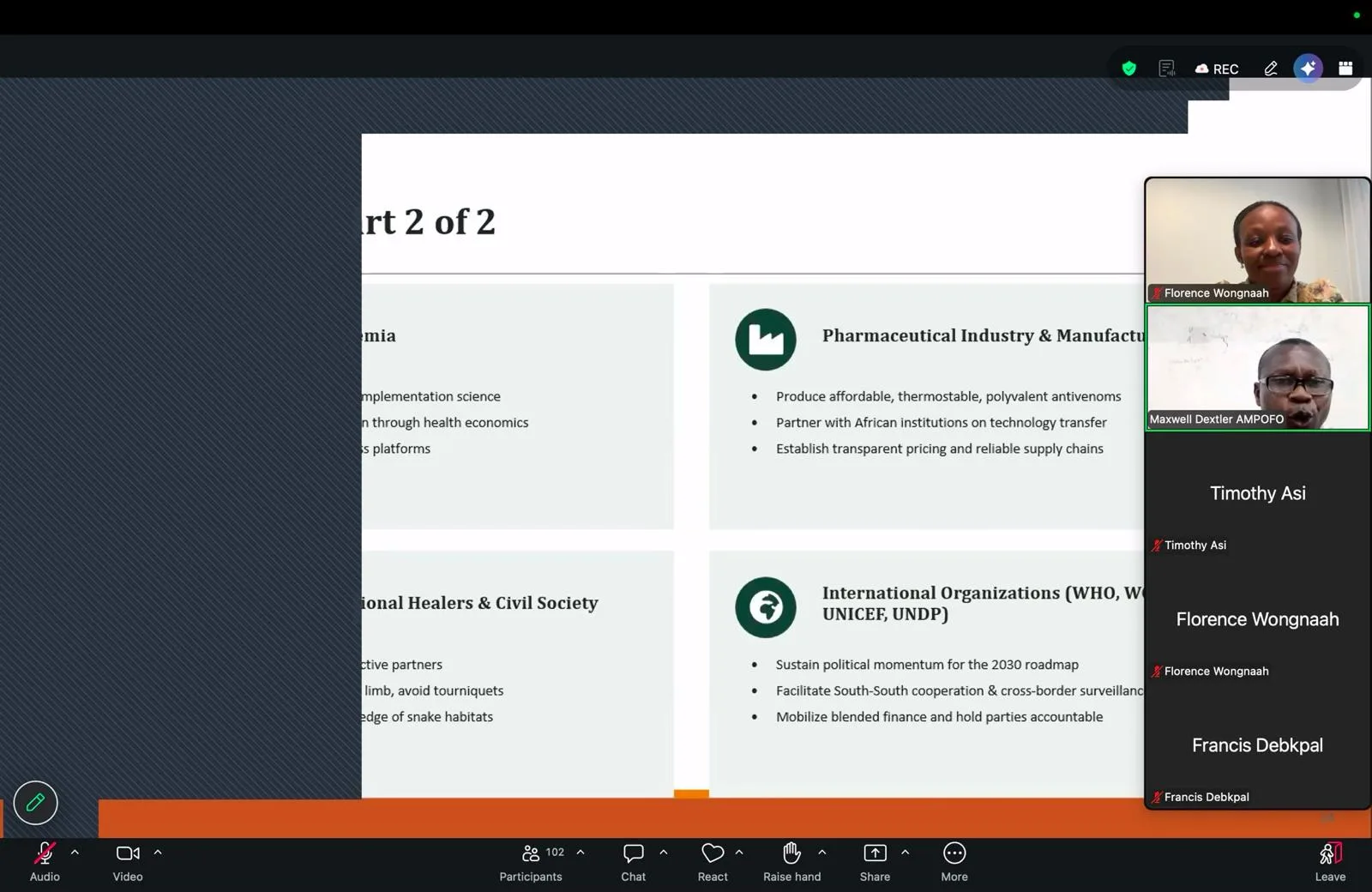
One Health Is a Practical Solution
Throughout the discussions, speakers emphasized that zoonotic diseases such as snakebite, rabies, Ebola, Rift Valley fever, avian influenza, and brucellosis cannot be effectively addressed through isolated interventions.
Instead, they advocated for integrated surveillance systems that connect human and animal health data, stronger laboratory capacity, improved information sharing, increased investment in local manufacturing of vaccines and antivenoms, and stronger partnerships between governments, researchers, veterinary professionals, environmental agencies, healthcare workers, and communities.
Speakers stressed that preventing zoonotic diseases begins long before patients reach hospitals.
Early detection of unusual events in animal populations, rapid sharing of surveillance information, and coordinated community-level responses can prevent diseases from spilling over into human populations.
They called for stronger district-level One Health coordination platforms, bringing together public health professionals, veterinarians, environmental officers, researchers, educators, local authorities, and community leaders to jointly identify risks and coordinate timely responses.
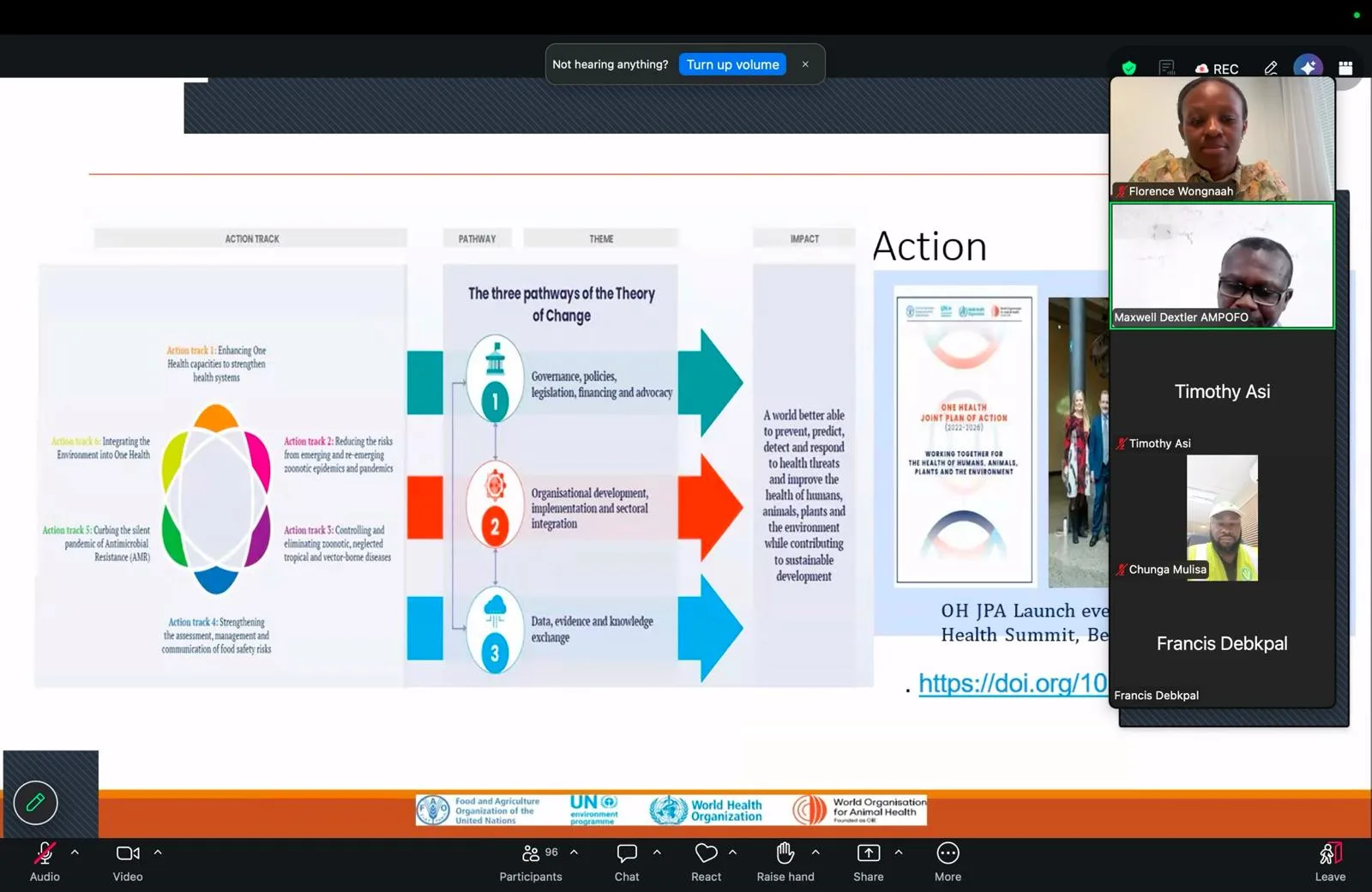
The webinar also highlighted successful examples from Ghana and Cameroon, including community-based surveillance, district-level epidemiological studies, innovative approaches to improving access to antivenom in underserved communities, and practical models for engaging traditional healers in early referral systems.
Speakers encouraged African countries to learn from these experiences and scale up evidence-based interventions across the continent.
Experiences from the Field
Participants enriched the discussion by sharing field experiences that highlighted the practical challenges of preventing and responding to zoonotic diseases.
The exchanges revealed gaps in rabies surveillance, including difficulties in obtaining laboratory confirmation of suspected animal cases, limited legal mechanisms to support public health investigations, and the need for stronger coordination between public health and veterinary authorities.
Participants also reflected on challenges in the clinical management of rabies, citing missed opportunities for timely post-exposure prophylaxis, weaknesses in maintaining the vaccine cold chain, and the importance of ensuring that healthcare workers are adequately trained to manage dog bite cases according to recommended protocols.
These experiences reinforced that eliminating rabies and reducing the burden of other zoonotic diseases requires more than effective treatment. Strong surveillance systems, reliable laboratory services, resilient supply chains, well-trained health professionals, supportive policies, and informed communities are all essential to preventing avoidable deaths.
Recommendations
Drawing on the presentations and discussions, speakers and participants identified several priorities for governments, development partners, academic institutions, and health agencies:
• Strengthen One Health coordination across the human, animal, and environmental health sectors to improve preparedness and response to zoonotic diseases.
• Expand integrated surveillance systems that link human and animal health data, supported by stronger laboratory networks for the timely investigation and confirmation of suspected zoonotic disease outbreaks.
• Review and strengthen legal and policy frameworks to facilitate public health and veterinary investigations, including the safe collection and testing of animal specimens when zoonotic diseases are suspected.
• Increase investment in regional production, equitable distribution, and reliable cold-chain systems for antivenoms, rabies vaccines, and other essential biological products.
• Strengthen the capacity of healthcare workers to ensure the appropriate management of animal bite cases, including adherence to national and international guidelines for rabies post-exposure prophylaxis.
• Expand mass dog vaccination campaigns and promote responsible pet ownership as the cornerstone of eliminating dog-mediated rabies.
• Improve community education on snakebite prevention, appropriate first aid, rabies prevention, and the importance of seeking prompt medical care following animal bites.
• Invest in research, workforce development, and innovative technologies, including digital surveillance systems, community-based reporting, and other solutions that improve access to lifesaving interventions, particularly in underserved communities.
• Promote cross-border collaboration and knowledge sharing to strengthen Africa’s collective capacity to prevent and respond to emerging and neglected zoonotic diseases.
A Shared Responsibility
Closing the webinar, Florence Gyembuzie Wongnaah said that preventing zoonotic diseases starts where people, animals, and the environment interact. She encouraged stronger collaboration through the One Health approach to build healthier and more resilient communities across Africa.
About GHIAN
GHIAN is a volunteer-led organization committed to improving public health through research, advocacy, education, and stakeholder collaboration. We work to identify gaps in health systems and develop evidence-informed solutions that guide governments, development partners, and other stakeholders in strengthening health systems and improving health outcomes.
Through our monthly webinars, we bring together experts from diverse disciplines and countries to exchange knowledge, promote evidence-based practice, and foster collaboration in addressing pressing public health challenges.


