






























“Our belief was that if we kept putting great products in front of customers, they will continue to open their wallets” – Steve Jobs
One of the longest running debates in economics is the state of Africa. There is no continent better endowed than the continent of Africa. Yet, Africa lags the rest of the world in every measure and indicator of economic and social development. The long running debate in the economics literature is the role played by institutions i.e., economic and political institutions. Such is its level of use that when it comes to Africa, the term institutions passes for a cliché. But there is more to it than meets the eye.
In Africa, institutions are more than the humanely devised constraints that structure economic, political and social interaction. In fact, it is the very structure on which these constraints that structure political, economic, and social interaction operate. It is the economic structure. The social structure. And the informal structure of African economies.
It cannot be gainsaid that the state of Africa is due to its informal economy where so much of what is supposed to be economic activity yields no revenue for the state. This means that every development project must be debt financed. And because there is little revenue from economic activity, more debt must be issued to service existing debt often using natural resources as a guarantee.
To appreciate this fact, let us consider the situation in Ghana for example where less than 2 million people out of an estimated 33 million people pay income tax. Yet, all the 33 million people are beneficiaries of developmental projects such as roads, schools and hospitals financed by issuing debt. Compare this with 65% in both Europe and the United States of America and one gets a sense of the extremely low income tax payment in Ghana/Africa. The adoption of mobile money technology will aid revenue mobilization in Sub-Saharan Africa. And here is an excellent example.
Ghana’s government is considering asking public transport operators – trotro to accept mobile money to increase the use of cashless payments. This is a step in the right direction and I will explain why.
First off, mobile money technology will increase access to financial services for many people in Ghana. It is estimated that over 85% of Ghana’s and Sub-Sahara Africa’s economy is in the informal sector. Hawkers who ply their trade by the roadside can use smartphone to receive payments for their wares. Furthermore, the government can also provide a smartphone application whereon hawkers and other traders such as barbers, hairdressers, food vendors etc. can register their small businesses. Registering their small businesses means that the government can use this data to provide services and benefits directly to these informal sector economic agents. And payment for a haircut can be made via mobile money. This will provide a record of this economic activity.
Secondly, the government can trace all transactions carried out using smartphone mobile money technology and tax these transactions appropriately. And here it is important to note that the government must not aim for suffocating taxes as these will disincentivize the adoption of the technology. This will significantly improve the government’s bottom-line and provide the needed revenue for developmental projects. Let’s imagine a baseline situation where the Government of Ghana earns GH₵3 from every Ghanaian each month in income taxes alone. That will be more than what we sometimes borrow from international financial corporations for developmental projects.
Africa has a debt problem. Zambia for example defaulted last year despite being a beneficiary of Debt Service Suspension Initiative (DSSI) by the G20 and such stories are not uncommon across the continent. The interesting bit is that Zambia received debt relief eight times between 1983 and 2002, and had its debt forgiven under the Highly Indebted Poor Countries initiative in 2005. Between 2011 and 2018, Zambia’s debt rose from 21% of GDP to 120%, and it then had $165.4 million (0.7% of GDP) of its debt-servicing obligations suspended under the DSSI. Nevertheless, in November 2020, Zambia defaulted.
Zambia grew its debt from 21% of GDP to 120% of GDP in 7 years yet the country’s economy is not one that anyone can say has been transformed. It remains a poor country or a third world country. And the economy remains informal. The only way Zambia and other African countries can break away from this endless cycle of debt and even more debt is local revenue mobilization and this where mobile money technology comes in because the only way to break the circular cycle of debt and even more debt is for debt to be used for utility generating economic activities that yields revenue for the state. But the informal nature of Sub-Saharan African economy means that raising revenue locally is almost non-existent and over 99% of revenue comes from the sale of natural resources.
Raising revenue solely from the sale of natural resources imply that there is no social contract between the government and the governed. This situation makes public sector corruption very appealing as the governed seem not to care how proceeds from the sale of natural resources are used.
Mobile money technology can have unintended benefits as the government can collect unemployment data from smartphone users simply by asking people to respond to a survey. This is very important as it has been extremely difficult for Sub-Saharan governments to have any insight into the level of unemployment of human capital in the economy and have often based their policy decisions on anecdotal evidence which can be inaccurate. Smartphone technology can also help governments target certain social services and developmental projects to areas where they are needed the most.
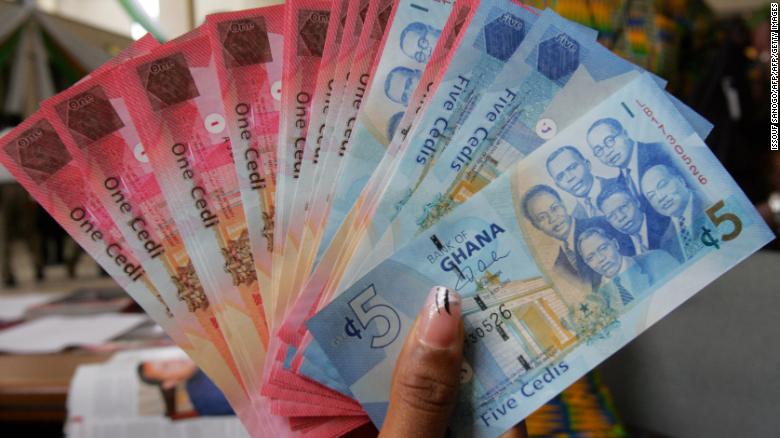
Furthermore, mobile money technology when fully adopted will save the treasury stacks of money paid to print money as money that has become unusable due to dirt or being torn will not need to be replaced as fewer notes will be in circulation leading eventually to a cashless society. Moreover, it will give government statisticians a good understanding of the ‘true’ size of the economy because private consumption is recorded, and this will appear in gross domestic product calculations i.e., gross domestic product = Private Consumption + Investment + Government spending + Net Exports.
In conclusion, smartphone technology as exampled by mobile money technology is the surest way to formalize Africa’s economy and ensure that the aims and objectives of Agenda 2063 is realised come the year 2063. The exciting and hopeful bit is that the technology is already available, and it is already in use in one form. The question now is that will Africa wholly and completely adopt this technology and march into an inclusive and prosperous future? Your guess is as good as mine.
Kwabena Meneabe Ackon is an economist.