

























































For some months now, Ghana’s tertiary education sector has been hit by a major impasse between the University Teachers Association of Ghana (UTAG) and the perceived regulator, the Ghana Tertiary Education Commission (GTEC).
Amid the tension, a new perspective is emerging that maybe UTAG has wrongfully framed their grievances, overemphasising personalities, leaving the core issue that is generating the tension.
According to Dr. Kwabena Donkor, a former legislator and a former minister, the issues are more of a deeper legal and governance conflict, and not about personalities.
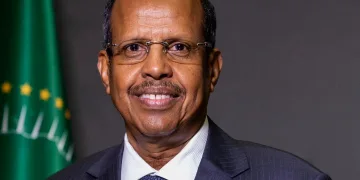
Among the core concerns raised by UTAG is the alleged attempt by the leadership of GTEC to usurp the universities’ autonomy, meddling in appointments and retirements. UTAG accuses the leadership of GTEC of overreach and, hence, demands the removal of the Director-General, Prof. Ahmed Jinapor Abdulai.
But Dr. Kwabena Donkor argues that standoff risks being misunderstood if reduced to calls for the removal of individuals rather than addressing the structural issues at its core.
A conflict rooted in law, not individuals
For Dr. Donkor, it is evidently clear that the core of the conflict is a contrast between legal frameworks.
On one side is the Education Regulatory Bodies Act, 2020 (Act 1023), which empowers GTEC to regulate and standardise tertiary education. On the other hand are the various statutes establishing public universities, particularly older institutions, which guarantee a high degree of autonomy.
He recounts that these tensions didn’t emerge overnight. They are the result of evolving governance needs, where university autonomy, in some areas, may have stretched beyond what policymakers consider sustainable.
In essence, the friction reflects an attempt to recalibrate the balance between institutional independence and regulatory oversight.
“There is no doubt that there is a conflict between the Ghana Teachers Education Commission Act and the various university statutes, the various acts establishing the public universities, especially the older universities, and their acts. There is that conflict. But it’s a conflict that has developed out of necessity,” he recounted.
He added, “The autonomy of universities, people believe, has been taken too far in non-academic areas. And so there is an attempt to rein them in to the Ghana Teachers Education Commission Act. So if GTEC has problems with their acts, the issue should be the act.”

UTAG’s approach under scrutiny
While acknowledging that UTAG may have legitimate concerns, Dr. Donkor is critical of how the association has chosen to present its case.
Rather than challenging the legal basis of GTEC’s authority or seeking judicial interpretation of conflicting statutes, UTAG has focused its demands on the removal of GTEC’s leadership.
For Dr. Donkor, this is a misstep since it leaves out the core problem and reduces the situation to personalities and personal attacks.
He notes that the Director-General and his deputy are just implementers. They execute decisions of the board, which itself operates within the powers granted by law. In his view, targeting individuals who are merely carrying out institutional mandates weakens the credibility of UTAG’s argument and shifts attention away from the real issue of conflicting legal provisions.
“I sincerely think UTAG is wrong in this approach. UTAG may have a case, but they are presenting their case so poorly. And I don’t expect that of a professional body,” Dr. Donkor indicated.
He added, “when you reduce these conflicts emanating from different acts, conflict of laws, to personalities, then you’ve lost the case. The Director General and his deputy implement the decisions of the board. If they had even called for the board of GTEC to be dissolved and given reasons, they would have earned our sympathy. But they are just calling for the sacking of the Director General and his deputy.”

Corporate governance and accountability
The critique goes further into the realm of governance. Dr. Donkor, who is also a corporate governance consultant, emphasises that in any properly structured institution, management is accountable to a governing board.
Therefore, holding executives solely responsible for decisions rooted in statutory authority misunderstands how organisations function.
If UTAG believes GTEC is acting beyond its legal mandate, he argues, the appropriate response would be to challenge those actions in court or seek legislative review or amendment.
By bypassing these routes and focusing on personalities, UTAG risks appearing less like a professional body and more like a pressure group.
A call for intellectual depth in advocacy
As a body representing academics, many of whom teach law, policy, and governance, Dr. Donkor believes UTAG is expected to lead with rigorous, well-structured arguments grounded in intellectual and legal clarity.
He maintains that when such a body reduces a complex legal conflict to a personality-driven campaign, it risks undermining its own authority.
“UTAG is supposed to know better,” he remarked, adding that, “they teach the law, their members teach the law, their members teach policy, and their members teach corporate governance. And so they should know better. Their members teach professional management. And so when UTAG reduces itself to a rabble-rousing trade association, devoid of intellectual and philosophical depth in its argument, then some of us worry.”
The bottomline
Dr. Donkor’s intervention shifts the conversation from confrontation to clarification. Instead of asking who should be removed, they should rather tackle the root cause of the conflict.
He insists that if the impasse is rooted in conflicting statutes, then its resolution lies not in personalities, but in process.