



















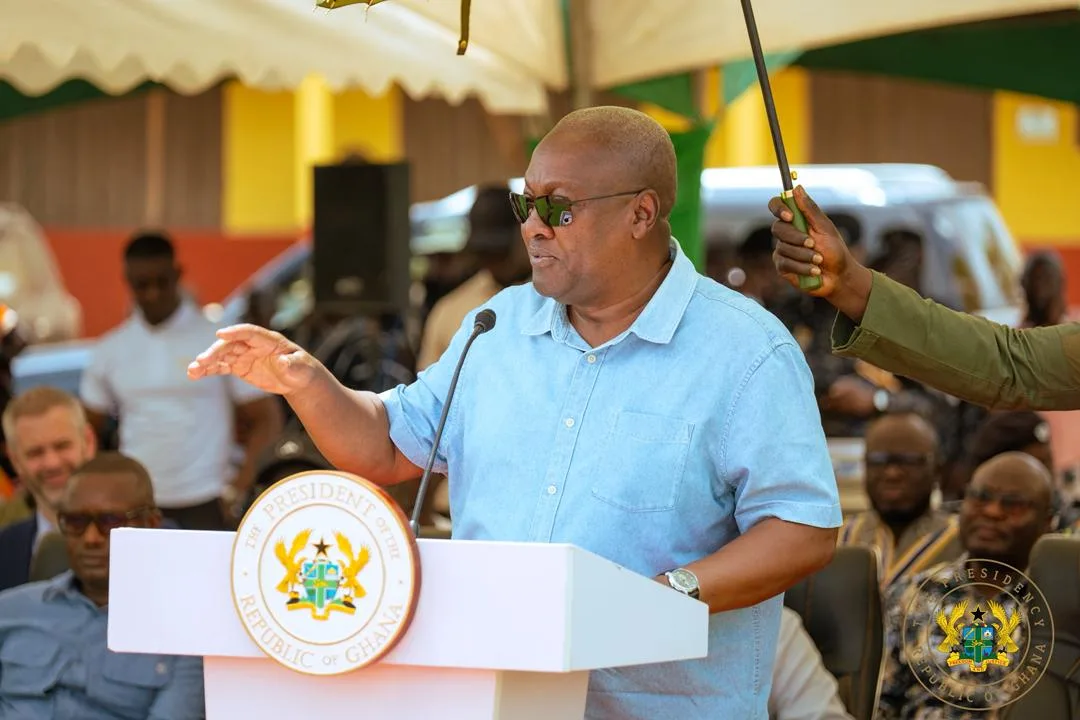
President John Dramani Mahama has announced that government will invest about ₵3.5 billion in school infrastructure and education reforms aimed at improving the quality of secondary and basic education across the country.
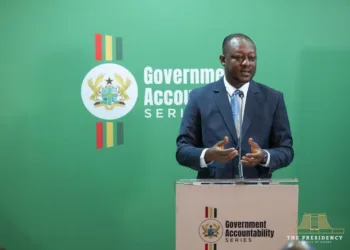
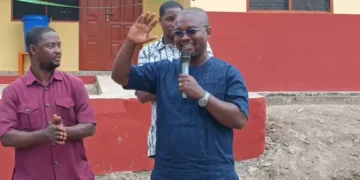
Speaking during a demonstration of the National B-STEM programme for primary and JHS students at Sawla E/A Primary School in the Savannah Region, President Mahama said the investment forms part of a major education transformation agenda being supported by the World Bank.
According to him, government plans to upgrade 30 Category C senior high schools to Category B status, while another 30 Category B schools will be upgraded to Category A.
“We are going to invest in 30 secondary schools that are considered Category C, to move them from Category C to Category B. And then we are going to invest in 30 Category B senior high schools, to move them from Category B to Category A,” he stated.
President Mahama explained that the initiative is intended to end the perception that some schools offer lower quality education because of their category rankings.
“With this, the annual ritual where people don’t want to be posted to some schools because they think they are Category C schools where they won’t get quality education will be a thing of the past,” he added.
The President disclosed that government is injecting about $300 million into the programme, equivalent to nearly ₵3.5 billion.
He further announced plans to end the double-track system in senior high schools by the end of 2027 through massive expansion of school infrastructure.
“By the end of 2027, no senior high school will be doing double track. We are reverting to the old system so that everybody will go to school at the same time,” he said.
According to him, government will construct additional dormitories, lecture halls, dining halls and auditoriums to increase the intake capacity of schools.
President Mahama also stressed the need to strengthen technical and vocational education, revealing that more TVET institutions will be built instead of additional traditional senior high schools.
“It is our intention to scale up technical and vocational educational training. Instead of building more senior high schools, our intention is to build more technical and vocational schools,” he noted.
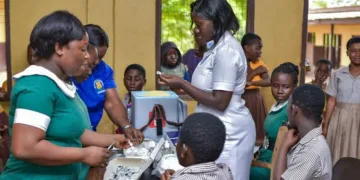
On STEM education, the President said government is working to decentralise science and technology learning by expanding practical STEM education to schools across the country.
He revealed that more than 5,000 schools have already benefited from STEM equipment distribution, while teachers are also being trained to support the programme.
President Mahama added that a new curriculum incorporating STEM, artificial intelligence and robotics is being developed to strengthen foundational learning at the basic school level.
Source: Mubarak Yakubu