
























































Health experts in Ghana have called for stronger investments in community mental health, workplace wellbeing, and frontline care, saying mental health must move beyond crisis response to become a public health priority.
The call came during a Ghana Health Improvement Access Network (GHIAN) Webinar on April 25, 2026, themed ‘Rethinking Mental Health in Ghana: Workplace Wellbeing, Community Support, and Frontline Care.’
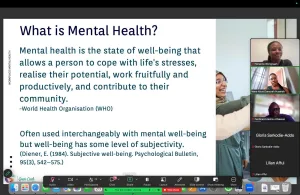
Over 120 participants joined. Speakers included Gifty Atampugbire of UGMC, Gloria Sarkodie Addo of Shai Osudoku District Hospital, Dr. Nana Akua Dansoah Nuamah of Pantang Hospital, and Dr. Delali Blood-Dzraku, Occupational Health Consultant.
Gifty Atampugbire said mental illness is often seen as witchcraft or spiritual punishment in communities, delaying care and increasing stigma.
She urged community education involving traditional and religious leaders to shift perceptions.
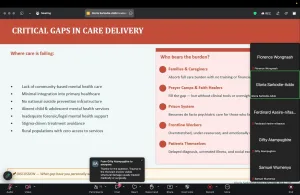
Gloria Sarkodie Addo flagged major gaps, saying that only 3% of Ghana’s health budget goes to mental health, with about 84 psychiatrists for 33 million people and three psychiatric hospitals nationwide.
According to her, treatment gap is estimated at 13%. Frontline workers face burnout, medication shortages, and weak continuity of care.
Dr. Nana Akua Dansoah Nuamah cited Gallup 2026 data showing only 14% of Ghanaian workers are thriving, while 55% face daily stress and 8% are engaged at work.
She said mental disorders cost Ghana about 7% of GDP, calling for workplace mental health policies and peer-support systems.
Dr. Delali Blood-Dzraku pushed for structured post-incident support for health workers exposed to trauma, citing an NHS framework of crisis management, demobilization, defusing, and debriefing.
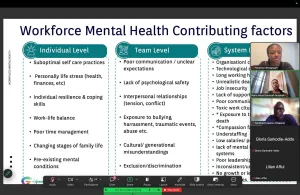
An ICU nurse’s story showed how unsupported grief can lead to emotional detachment.
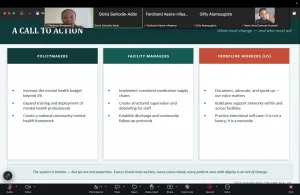
Recommendations included anti-stigma campaigns, integrating mental health into primary care, supporting frontline staff, workplace wellbeing policies, and more investment in infrastructure and workforce.
Chief Executive Officer (CEO) of GHIAN, Florence Gyembuzie Wongnaah said mental health is about “dignity, support, resilience, and building systems that help people feel safe, supported, and heard.”