





















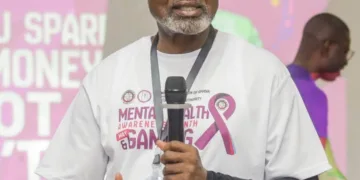

































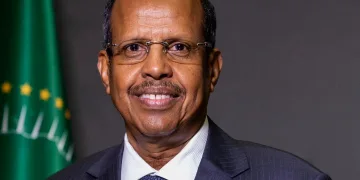



Chief of Staff Julius Debrah has stressed that poor public service delivery erodes citizens’ confidence in government, urging public and civil servants to place the needs of Ghanaians at the centre of their work.
Speaking at the launch of Citizen Experience: A Reset for Superior Public and Civil Service Delivery, which he co-authored with Professor Robert E. Hinson, Mr. Debrah said the primary purpose of public service is to improve the lives and well-being of citizens, describing every other objective as secondary.
According to him, the book was born out of conversations and reflections from his years in government, including his experience serving as Chief of Staff under two administrations.
“Public service has only one true purpose. It is to improve the life and wellbeing of our people. Everything else is secondary,” he stated.
Mr. Debrah said citizens develop confidence in government when they are treated with fairness, clarity, speed, and dignity by public institutions.
However, he warned that repeated experiences of delays, poor communication, and disrespect weaken public trust and damage confidence in the state.
“When a citizen is treated with fairness, clarity, speed and dignity, trust will grow. When a citizen is ignored, confused, delayed or humiliated, trust weakens. And when this happens repeatedly across institutions and across years, people do not only lose confidence in an office, they begin to lose confidence in the promise of the government itself,” he said.
He explained that President John Dramani Mahama’s Reset Agenda is aimed at rebuilding the relationship between citizens and the state, stressing that the initiative must go beyond economic policies to improve the everyday experiences of Ghanaians interacting with public institutions.
“The Reset Agenda is not merely a programme of government. At its deepest level, it is an invitation to renew the relationship between the citizen and the state,” he noted.
Mr. Debrah said the reset must be evident in governance, accountability, infrastructure, job creation, and the way public institutions engage with citizens.
He also reflected on one of the most difficult moments of his public service career when he announced the deaths of government officials in a military helicopter crash while they were on official duty.
Describing the experience as deeply personal, he said it reminded him that public service is founded on sacrifice rather than privilege.
“Service is not a slogan; it is a sacrifice,” he said.
Mr. Debrah expressed hope that his book would contribute to building a more responsive, humane, and efficient public service, urging public servants to remember that the highest honour in government is not to be served by the people but to serve them.
Source: Mubarak Yakubu