





























President John Dramani Mahama’s 24-Hour Economy and Accelerated Export Development Programme represents Ghana’s most ambitious economic blueprint in decades.
For a nation that imports everything from animal stomachs to basic foodstuffs while exporting raw materials, this comprehensive strategy could finally break the cycle of dependency. But that depends almost entirely on execution.
The programme’s strength lies in its integrated approach—linking agriculture, manufacturing, infrastructure, and human capital development into a cohesive system.
Rather than piecemeal reforms, 24H+ promises to transform Ghana from a trading economy, dependent on imports into a productive, export-driven powerhouse.
The real test
But vision alone won’t suffice. As someone who has spent years building businesses in the face of our nation’s challenges, Ghana does not lack ideas.
Ghana has seen grand economic plans before even if not elaborate, detailed and deliberately integrated as the 24H+ programme.
That is why the difference this time must be in execution. History has shown that Ghana previous grandiose programmes, though often poorly thought through and conceptualized have always suffered from lack of willpower, passion and sustained commitment to roll out these intensions in a manner that matters, not just excites a few foreign firms and entrepreneurs with tax rebates and other juicy incentives.
Consequently, the 24H+ programme’s success hinges on whether the government can resist the temptation to favor quick-win foreign investments over the harder work of building local capacity.
Broadly, the real test will be implementation. Can Ghana create the Volta Economic Corridor’s promised agroecological parks? Will the industrial zones actually materialize with reliable infrastructure? Most critically, will the Value Chain Financing Strategy deliver affordable credit to local entrepreneurs at the promised 12 percent rates?
If executed properly, 24H+ could be President Mahama’s defining legacy—transforming Ghana into a self-reliant economy that works for its people.
If implementation falters, it risks joining the graveyard of well-intentioned but poorly executed development plans.
The stakes couldn’t be higher. With hundreds of thousands of youngsters outside the labour bracket and disheartened by the quality of political governance in recent years, Ghana’s economic future depends not just on the brilliance of this vision, but on the government’s ability to deliver on its ambitious promises of sustainable jobs that give the youth to believe that the over decade old democracy is worth it.
What’s in the vision?
The 24H+ programme is not just about keeping businesses open around the clock. It is a comprehensive strategy that addresses the fundamental structural weaknesses that have kept Ghana dependent on imports while our talented entrepreneurs struggle to scale their operations.
With eight integrated sub-programmes—from Grow24’s agricultural transformation to Make24’s industrial renaissance—this initiative promises to create an economy that works for everyone, every hour of the day.
The statistics are sobering: Trade in imported goods now dominates our economy, overtaking agriculture as the biggest contributor to growth, while manufacturing has slipped from third to fourth place.
It is no longer news that we import almost everything we consume, including animal stomachs as our second-largest food import. This is unsustainable for a nation blessed with abundant natural resources and entrepreneurial talent.
Local must lead
While we await the implementation, the brilliance of the 24H+ programme lies in its recognition that sustainable economic growth must be anchored by local enterprises.
While foreign investments often come with strings attached and profits that flow back overseas, indigenous businesses reinvest locally, create lasting employment, and build generational wealth within our communities.
Ghana’s small scale enterprises (SMEs) currently face insurmountable challenges: limited access to finance, inadequate infrastructure, poor supply chains, and competition from cheap imports.
The 24H+ programme directly addresses these bottlenecks through its Value Chain Financing Strategy, which promises concessional loans at 12 percent interest rates, infrastructure tax credits, and performance-based incentives for companies that achieve export targets while supplying local markets.
Agbleduwo revolution and industrial parks
Perhaps the most exciting component is the Agbleduwo network—modern agroecological parks that will transform how Ghana farms.
These integrated zones combine irrigation, renewable energy, processing centers, and mechanization services, offering farmers and cooperatives a fully serviced environment to farm efficiently and profitably.
The Eden Volta initiative alone promises to unlock tens of thousands of hectares for farming, positioning the Volta Basin as West Africa’s breadbasket.
For local agribusiness entrepreneurs, this represents unprecedented opportunities to build processing facilities, supply chains, and export operations that can compete globally.
The Make24 sub-programme also envisions 50 industrial parks nationwide, but unlike previous attempts, these will be supported by reliable infrastructure, logistics, and utilities.
The Akosombo-Juapong Textiles and Garments Park, Legon Pharmaceutical Innovation Park, and Kumasi Machinery & Technology Park are designed as ecosystems where local manufacturers can access shared services, training, and export markets.
For Ghanaian entrepreneurs in pharmaceuticals, textiles, and machinery, these parks offer the scale and support needed to compete with international players while serving both domestic and regional markets.
Goosie Tanoh factor
Presidential Advisor Augustus Goosie Tanoh and his team at the secretariat deserve credit for conceptualizing this integrated approach that moves Ghana ‘from fragmentation to integration; from dependency to self-reliance.’
Their diverse ideas reflect deep understanding of our economic challenges. However, and for the avoidance of sounding repetitive, the true test lies in implementation.
Legacy opportunity
Many people across the world, including me have said that President Mahama has the best opportunity to regain public trust in Ghana’s democratic journey and leave a legacy that transcends political cycles.
With this well conceptualized 24H+ programme, President Mahama has a foot forward in actualizing that.
Unlike infrastructure projects that can be abandoned or policies that can be reversed, the 24H+ programme aims to fundamentally restructure Ghana’s economy. When local businesses become globally competitive, when farmers can feed the nation and export surpluses, when young people, majority of whom are currently idling or laboring in menial jobs, find meaningful employment in thriving industries—these changes become irreversible.
For someone who creates employment, the programme’s promise to create 1.7 million quality jobs over four years is not just about employment; it’s about building a generation of economically empowered Ghanaians who can create decent lives for their families and drive continued growth.
The path forward
In conclusion, the 24-Hour Readiness Programme, which will prepare over 5,000 businesses across all the 16 regions to operate around the clock, must prioritize local SMEs.
These businesses understand our markets, employ our people, and reinvest their profits locally. They are the foundation upon which sustainable economic transformation must be built.
Ghana’s future lies not in hoping for foreign saviors, but in unleashing the potential of our own entrepreneurs. The 24H+ programme provides that framework.
Now, we need the political will to make it work for Ghanaians first and having interacted with President Mahama and Mr Tanoh, I am more than convinced that execution will be flawless.
Indeed, this is our moment. Let us seize it!
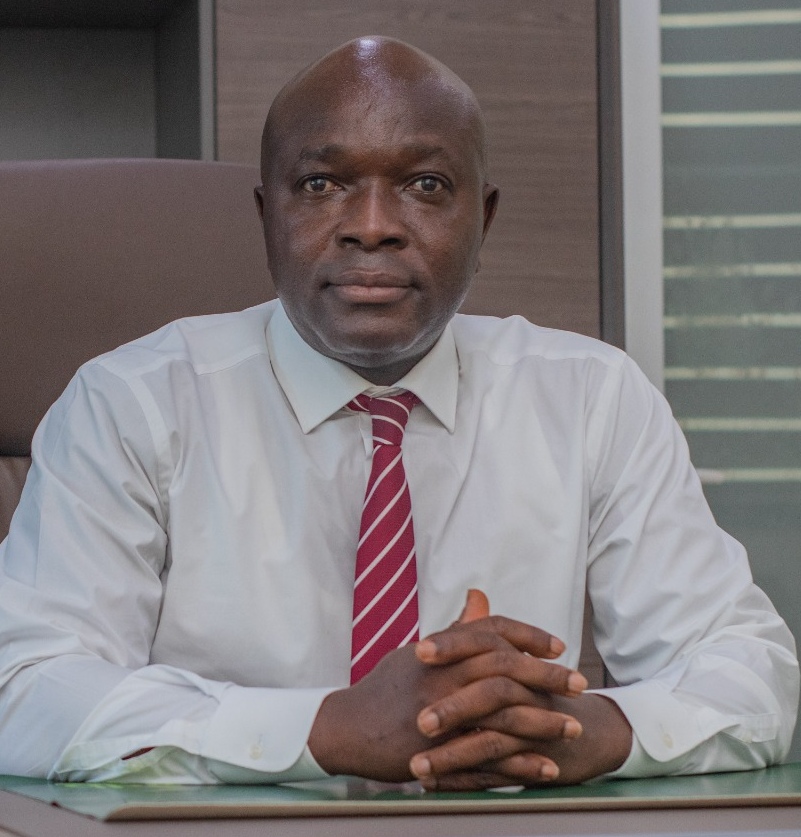
The writer is a businessman and philanthropist