



















































Let me say something that may be uncomfortable to some readers, particularly those who have been swept up in the partisan fury surrounding the Abronye DC saga: defending free speech does not require — and must never become — a licence to attack judges.
I believe in free speech with every fibre of my legal and intellectual being. Free speech is not a gift from governments to Ghanaians. It is a right that citizens retain against government.
Article 21(1)(a) of the 1992 Constitution does not ask for permission — it commands. And in Ghana in 2026, that distinction matters more than ever.
But what Minority Leader Alexander Afenyo-Markin did in attacking the Circuit Court 9 judge who denied Abronye DC bail was not defending free speech. It was something else entirely. It was partisanship dressed in the borrowed robes of constitutional principle. And it was wrong.
The Political Noise We Must Cut Through:
Let me first clear some air.
The New Patriotic Party (NPP) has accused the current government of weaponising state institutions against political opponents, journalists, social media commentators, and dissenting voices. They warn that Ghana’s democratic reputation is under threat. On the substance of that concern, they are not entirely wrong.
The deployment of Sections 207 and 208 of the Criminal Offences Act, 1960 (Act 29) against political speech is constitutionally indefensible — and I will address those provisions in a dedicated piece on this platform shortly, because they deserve serious legal scrutiny that the political noise of this moment has drowned out.
But I must also say this plainly: Ghana’s democratic credentials did not begin deteriorating in January 2025. Those who are shouting the loudest about institutional weaponisation today were conspicuously quieter between 2017 and 2024, when similar patterns were visible under the Akufo-Addo administration.
Democratic backsliding in Ghana is not a partisan phenomenon — it is a systemic one. It predates this government and will outlast it if we continue to treat it as a weapon to deploy against opponents rather than a crisis to confront with principle.
Political partisanship is not the solution to this spiralling trend. It is part of the problem.
On the Bail Denial: Measured Words Are Required
Abronye DC was brought before Circuit Court 9 in Accra on charges under Sections 207 and 208 of the Criminal Offences Act, 1960 (Act 29). The judge denied him bail. That decision triggered a storm of political outrage.
Here is what I want to say about that, clearly and without equivocation.
Bail is discretionary. It is not a constitutional right in the unqualified sense that many people — including, apparently, some politicians — seem to believe. Under Section 96(5) of the Criminal and Other Offences (Procedure) Act, 1960 (Act 30), courts have the discretion to grant or withhold bail based on a range of considerations, including the nature of the offence charged, the risk of reoffending, the likelihood of attendance at trial, and the interests of justice.
You may agree or disagree with how a particular judge exercises that discretion in a particular case. That is entirely legitimate.
But if you disagree with a bail decision, the law has provided you with a remedy. You go higher. You move the High Court. You appeal. That is precisely why Ghana has a structured court system with multiple tiers of review.
The Accra High Court subsequently granted Abronye DC bail in the sum of GH¢100,000 with two sureties. The system — imperfect as it is — worked.
When a judge denies you bail, it does not shut the door completely against you. It simply means you walk through a different door.
Afenyo-Markin’s Attack: Reprehensible and Inexcusable
Now to the central issue I wish to address, and the one that has disturbed me most in this whole episode.
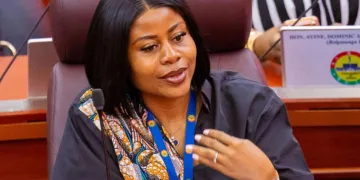
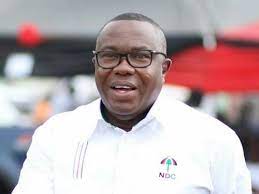
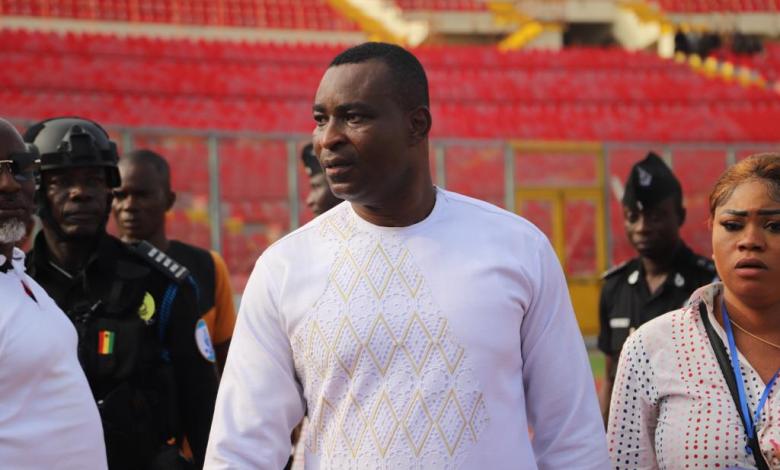
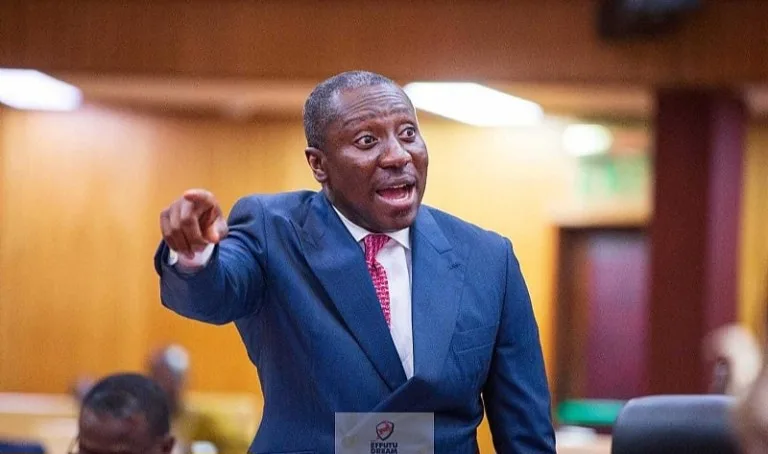
Minority Leader Alexander Afenyo-Markin, a senior member of the legal profession and a man of considerable legal training, chose to personally attack the Circuit Court 9 judge who denied Abronye DC bail. I will not rehearse the specific words used, but the tenor and target of those remarks were unmistakable. They were personal. They were partisan. And they were an attack on a judicial officer for performing a judicial function — the exercise of discretionary judicial power.
I want to be unambiguous: that was reprehensible, disappointing, and shameful.
I have no respect — professionally or personally — for those who attack judges in the manner Afenyo-Markin did. Let me explain why, and let me do so carefully, because this is a point that requires precision.
Judges are not above criticism. Judicial decisions must be open to scrutiny, academic commentary, professional critique, and where appropriate, public debate. Courts derive their legitimacy from their accountability to the law and to the society they serve, and that accountability requires that their reasoning be interrogable. I would never argue otherwise.
But — and this is the critical distinction — there is a vast and principled difference between criticising a decision and attacking a judge. There is a difference between saying “this bail decision was legally erroneous because the court failed to adequately weigh the defendant’s right to liberty against the risk factors presented” and personally assailing a judicial officer in the language of partisan political warfare.
The former is legitimate legal discourse. The latter is an assault on the independence of the judiciary.
Here is the principle that must govern us: if a judge has the right to make a good decision, that same judge equally has the right to make a bad decision. Judicial independence means nothing if it only extends to decisions we agree with. The protection of judicial authority — not the person of the judge, but the constitutional authority that a judge exercises — is not a partisan matter. It is the foundation on which every other right, including the very free speech rights that Afenyo-Markin was purporting to defend, ultimately rests.
When politicians attack judges for decisions they dislike, they do not strengthen democratic rights. They weaken the institutional architecture on which those rights depend.
The Dangerous Cloak of Partisanship:
What concerns me most about the Afenyo-Markin episode is not simply that one politician made intemperate remarks in the heat of political battle. Politicians make intemperate remarks. That is, regrettably, a familiar feature of our democratic landscape.
What concerns me is the ease with which the language of constitutional principle — free speech, institutional independence, democratic accountability — can be weaponised as a cloak for conduct that, if examined coolly and without partisan heat, is itself a threat to those very principles.
We must be very careful about the things we do under the cloak of partisanship. When we attack judges for decisions we dislike, we are not defending democracy — we are dismantling it. When we dress up political score-settling in the garments of constitutional principle, we cheapen both the score-settling and the principle.
Abronye DC’s legal situation raises genuine constitutional questions that deserve serious legal analysis — questions about the constitutional validity of Sections 207 and 208 of Act 29, about the proportionality of criminal sanctions for political speech, about the presumption of innocence. I will address all of those questions on this platform, with the rigour and specificity they deserve.
But those questions cannot be advanced by attacking the judge who denied bail in a case where bail denial — however debatable — is a lawful exercise of judicial discretion. They cannot be advanced by the Minority Leader performing outrage for a partisan audience. They can only be advanced by principled, measured, legally grounded engagement with the constitutional issues at stake.
A Word to Afenyo-Markin:
You are a lawyer. You know the difference between criticising a decision and attacking a judge. You know that judicial independence is not an obstacle to justice — it is a precondition for it. You know that the same judiciary whose independence you undermined with your remarks is the judiciary to which Abronye DC ultimately turned for relief — and found it.
Ghana’s democratic crisis is real. The deployment of Act 29 against political speech is a serious constitutional concern. But you cannot fight institutional abuse by becoming an abuser of institutions. You cannot defend free expression by suppressing judicial independence.
Free speech and judicial independence are not competing values. They are complementary pillars of the same constitutional architecture. Undermine one, and you weaken both.
We deserve better — from the government, from the opposition, and from every Ghanaian who has a platform and a responsibility to use it wisely.
Austin Kwabena Brako-Powers is a lawyer and writer. He writes on law, constitutionalism, and public affairs at brakopowers.com. Views expressed are his own.