
















A National Reflection on the Floods of Accra
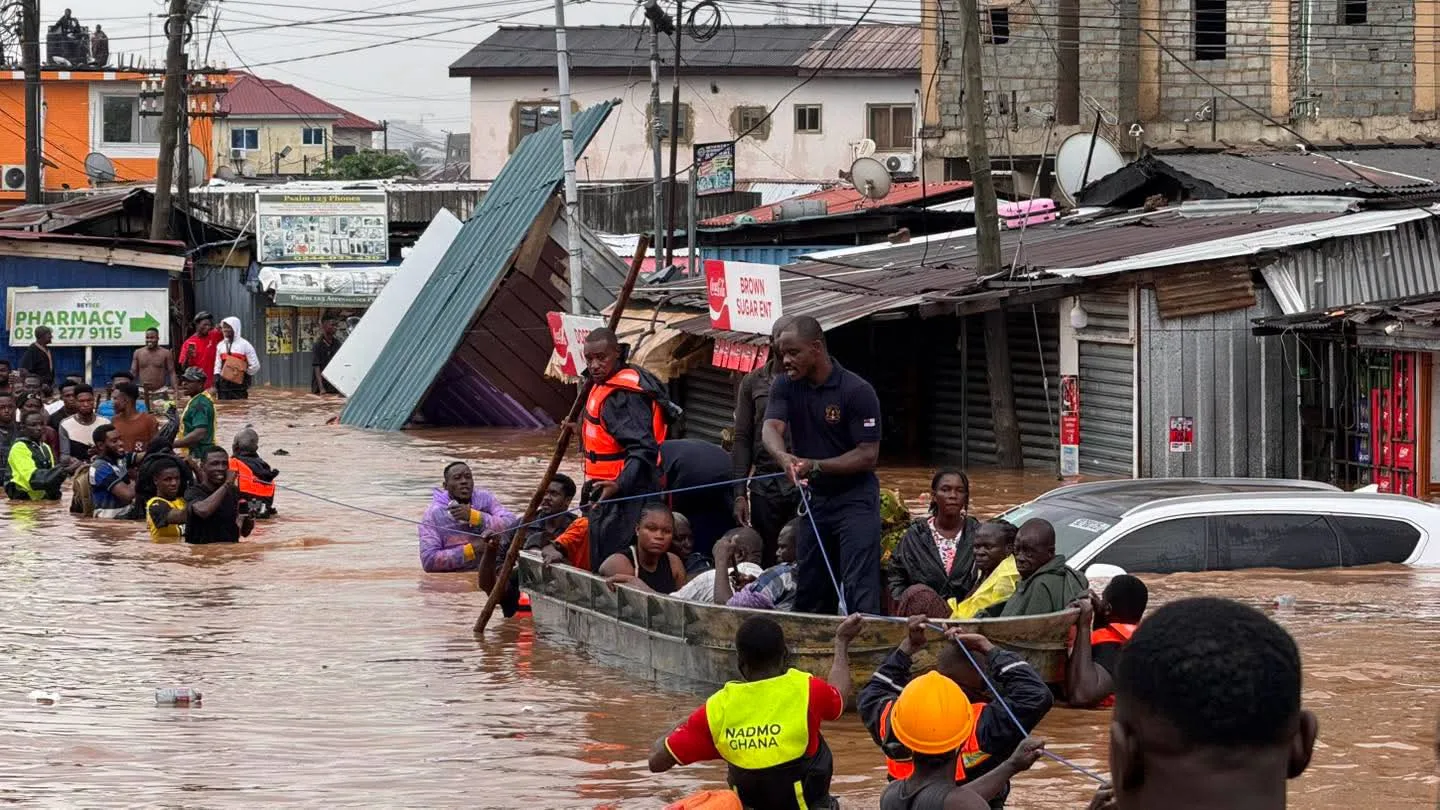
On the evening of 29th June 2026, Accra wept once again.
Homes disappeared beneath muddy waters. Businesses watched years of sacrifice dissolve within hours. Parents searched for their children.
Motorists became prisoners inside vehicles that had suddenly become floating coffins. Some families lost everything they owned. Others lost what can never be replaced by a loved one.
The floods that struck Accra claimed lives, destroyed livelihoods and shattered dreams, reminding us once again that what we often describe as a “natural disaster” is in many respects a human failure.
As I watched the heartbreaking images unfold, my mind travelled back to 3rd June 2015.
No Ghanaian who lived through that tragedy can ever forget it.
We promised ourselves that we would never again allow our capital city to become a graveyard because of rainfall.
We mourned together.
We prayed together.
We investigated.
We commissioned reports.
We organised conferences.
We made promises.
Yet eleven years later, the rain returned not because it remembered us but because we forgot the lessons it tried to teach us.
The rain has never been our enemy.
Our choices have been.
One of my long-held convictions is this:
“Nature rarely punishes us. More often it simply returns to us the consequences of our own neglect.”
Today, however, another question troubles me even more than the floods themselves.
Why are we still discussing who is to blame instead of discussing what must be done?
Almost immediately after every national disaster, we retreat into familiar political corners.
The government blames previous governments.
Opposition blames the current administration.
Citizens blame institutions.
Institutions blame citizens.
Social media becomes a courtroom where everyone prosecutes someone else.
But while we argue, the drains remain blocked.
The waterways remain encroached upon.
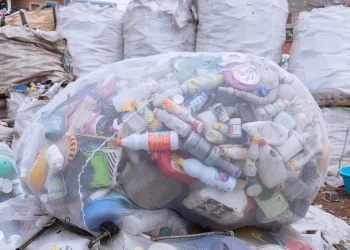
The plastics remain in our gutters.
And the next flood quietly prepares its arrival.
Perhaps one of the greatest tragedies confronting Ghana is not merely flooding.
It is our remarkable ability to politicise pain.
Disasters should unite a nation.
Instead they divide us.
Surely there comes a time when patriotism must become louder than partisanship.
Perhaps that time is now.
One of the oldest sayings reminds us that:
“Heaven helps those who help themselves.”
If that is true, then perhaps heaven is still waiting for Ghana to help herself.
Perhaps the most uncomfortable question Ghana must now answer is this:
Why has it taken us so long to seriously consider banning polyethene, what we commonly call polythene or “rubber bags”, despite overwhelming evidence of their destructive impact?
Every sachet of water.
Every shopping bag.
Every takeaway package.
Every piece of plastic was carelessly discarded.
Each appears insignificant in isolation.
Collectively, they become walls inside our drains.
Plastic does not disappear because we stop seeing it.
It simply waits.
It waits beneath the gutters.
It waits inside streams.
It waits inside lagoons.
It waits in culverts.
Then one day, when the heavens open, the plastic reminds us that nothing we throw “away” is ever truly away.
Flooding is undeniably a complex challenge.
Climate change is intensifying rainfall.
Rapid urbanisation continues to outpace planning.
Illegal construction on waterways, wetlands and flood plains continues almost unchecked.
Poor enforcement of planning regulations persists.
Drainage systems remain inadequate.
Many drains are left uncleared.
Refuse is indiscriminately dumped, especially during rainfall.
Sand winning degrades natural drainage paths.
Encroachment upon wetlands continues.
Blocked culverts restrict water flow.
Weak enforcement of sanitation laws emboldens offenders.
Population growth places enormous pressure on urban infrastructure.
All these factors converge to create disasters that should never have become routine.
Yet among these interconnected causes lies one silent accomplice that accompanies almost every flood scene.
Plastic waste.
Anyone who has ever looked into a drain after heavy rainfall has seen the evidence.
Plastic bags.
Sachet water wrappers.
Food packaging.
Disposable shopping bags.
They gather into artificial dams, preventing water from doing what water has always done.
Flow.
This is why I believe Ghana must stop treating plastic pollution merely as an environmental concern.
It has become a national security issue.
An economic issue.
A public health issue.
A humanitarian issue.
And ultimately a leadership issue.
What pains me most is that Africa has already shown us another path.
Countries such as Rwanda, Kenya, Morocco, Tanzania, Senegal and Uganda chose courage over convenience.
They refused to wait until flooding became a seasonal obituary.
Rwanda introduced one of Africa’s earliest and most successful bans on plastic bags.
Kenya implemented one of the toughest plastic bag prohibitions in the world.
Morocco, Tanzania, Senegal, Uganda and several others adopted bold legislative measures that transformed public behaviour and significantly improved environmental sanitation.
They did not wait for disaster before acting.
They acted so that disaster would not become normal.
Today, visitors admire the cleanliness of Kigali not because Rwandans are naturally cleaner than Ghanaians but because leadership made environmental responsibility non-negotiable.
That is what visionary governance looks like.
Leadership is not merely solving today’s problems.
Leadership is preventing tomorrow’s tragedies.
As I have often said:
“Civilisation is measured not by the height of our buildings but by the wisdom of the systems that protect the people inside them.”
Some may ask who I am to raise these questions.
Some may even tell me to leave the philosophy and go to the gutters.
I take no offence.
For I believe citizenship carries no academic qualification.
One does not need permission to love one’s country.
One does not require political office to defend future generations.
One does not need public approval before speaking for the common good.
I write because I care.
I ask because silence has never solved a national problem.
If my questions provoke thought, then they have already served their purpose.
This moment therefore demands more than sympathy.
It demands courage.
It demands honesty.
It demands statesmanship.
I respectfully appeal to the Rt Hon. Speaker of Parliament and through him every Honourable Member of Parliament, regardless of political affiliation, to lead a comprehensive bipartisan national conversation culminating in bold legislation on single-use polyethene products.
Let this become Ghana’s environmental independence moment.
Let this Parliament become remembered not merely for the laws it passed but for the disasters it prevented.
Floodwater does not ask whether its victim belongs to the NDC, the NPP or any other political tradition.
Floodwater recognises no manifesto.
It only follows blocked pathways.
Parliament now has an opportunity to write one of the most consequential environmental chapters in Ghana’s history.
A national strategy should prohibit problematic single-use plastic bags while simultaneously creating affordable alternatives through incentives for local manufacturers of biodegradable packaging, strengthening recycling industries, introducing extended producer responsibility, reclaiming waterways, restoring wetlands, modernising drainage systems, enforcing sanitation laws, rigorously embedding environmental education throughout our schools, investing in waste segregation at source and empowering Metropolitan Municipal and District Assemblies to enforce compliance without fear or favour.
Enforcement alone will never solve the problem.
Culture must change.
Education must accompany legislation.
Citizenship must accompany policy.
We cannot continue believing that cleanliness begins at our compound gate and ends in the public drain.
There is no public environment.
There is only our shared home.
The Ghana we destroy eventually becomes the Ghana we inherit.
History teaches us that every generation receives two opportunities.
The first is to solve its problems.
The second is to explain to future generations why it failed.
I sincerely hope ours chooses the first.
For if another decade passes and another flood comes, history will ask us one painful question.
You knew the causes.
You saw the evidence.
You buried the victims.
What then prevented you from acting?
May we never become a nation that mistakes repeated tragedy for normality.
The greatest danger facing Ghana today is not flooding.
It is becoming accustomed to flooding.
Because the day a society accepts preventable disasters as inevitable is the day it quietly begins to surrender its future.
The rain is not asking us to fear it.
It is asking whether we have finally learned.
May our answer not be another committee.
Not another blame game.
Not another political argument.
But a united national resolve.
For history will not remember who won the debate.
History will remember who saved the nation.
Dr Nathaniel Nsarko (Chief Nat) holds a PhD in Development Communication and has devoted much of his professional life to development policy innovation, humanitarian intervention governance and nation building. He writes not as one who claims to possess all the answers but as a Ghanaian deeply committed to asking the questions that may help shape a better future for generations yet unborn.
Director General, IHRC-RFT | Development Communication Scholar | Development Expert | Nation Builder
LinkedIn: Dr Chief Nathaniel Ebo Nsarko
Email: Preznatty@gmail.com
Telephone: +233244613246