

























































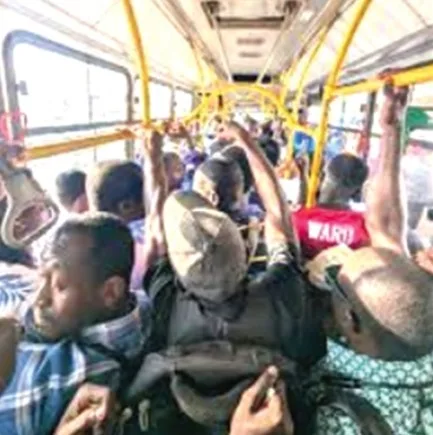
It is 6:45 a.m. at a bus stop in Accra, and the Aayalolo bus pulling up is already full. Bodies press against the windows, yet the mate leans out and calls for more passengers to squeeze in. Nobody protests too loudly. Everyone has somewhere to be. So they push in anyway, shoulder to shoulder with strangers, some neatly dressed for the office, others already sweaty from the morning rush, all breathing the same thin air for the next hour.
An article by Kwadwo Baffoe Donkor, published in Graphic Online on March 2, 2026, drew attention to the practice, describing how conductors continue loading passengers long after buses reach capacity. What is meant to be an affordable, reliable service is instead turned into a cramped ordeal. What often gets lost in that familiarity is a quieter, more serious problem: overcrowding is not just uncomfortable; it is a public health hazard that commuters, drivers and transport authorities have learned to normalise.
Commuters Endure Daily Overcrowding
For those who ride with these buses daily, discomfort is only the beginning.
“Traveling in an overcrowded Aayalolo bus is usually uncomfortable because passengers are packed closely together,” one regular commuter said. “Sometimes it becomes difficult to move or even breathe comfortably. We have no choice, because the trotro drivers are into short-short trips, and sometimes you don’t have a lot on you, so you’ll wait for the bus.”
Another commuter described the physical toll: body aches, exhaustion from the heat trapped inside a packed bus, and the sense that her health is being traded for a fare she can afford. When time is short and no trotro is in sight, she boards anyway, even knowing the risk, since ride-hailing options like Bolt and Yango cost more than many commuters can spare.
Both commuters said they have seen passengers struggle to keep balance and others grow dizzy in the heat and poorly ventilated conditions. Their appeal was simple: more buses and stricter enforcement of passenger limits.
Drivers Cite Pressure to Take More Passengers
Ask a mate why he keeps waving in passengers when the bus is clearly full, and the answer rarely changes: it is not his call.
Drivers and conductors say they are aware when a bus has reached capacity, but continue loading because of pressure from management and operational targets they are expected to meet. Some also say they find it difficult to leave commuters behind after watching them wait for long periods. Having experienced similar delays themselves, they see taking one or two extra passengers as an act of empathy, even though it often leads to disputes with passengers already squeezed inside.
Management has not yet responded to questions about why the practice continues.
Health Experts Warn of Serious Risks
The danger is not just discomfort. A study by the Public Health Communication Centre found that overcrowded buses often suffer poor ventilation, with carbon dioxide concentrations reaching up to eight times outdoor levels. This increases exposure to exhaled air and raises the risk of airborne disease transmission. The study recommended improved ventilation, increased bus frequency, and opening bus doors at every stop.
Dr Kennedy Amevort of 37 Military Hospital identified tuberculosis and varicose veins as key risks associated with overcrowded buses. Tuberculosis spreads through respiratory droplets in crowded, poorly ventilated environments, while prolonged standing can contribute to varicose veins.
“Among passengers, it is very easy to spread such diseases, and the risk is not something to talk about,” he said.
He added that pregnant women, older adults, children, and people with conditions such as asthma are especially vulnerable, and called for strict enforcement of seating capacity so no passenger stands once seats are filled.
Experts Call for Urgent Action
Commuters and health experts agree that the solutions are straightforward but overdue.
Transport operators are urged to strictly enforce passenger limits and strengthen monitoring during peak hours. Government and regulators are encouraged to increase the number of buses in operation so drivers are not forced to choose between helping stranded commuters and complying with safety rules.
They also recommend sustained public education on the health risks of overcrowding, alongside investment in safer, better-ventilated public transport systems, to ensure Accra’s buses remain a lifeline for commuters rather than a quiet threat to their health.
Source: Bernard Isaac Opoku (L300 Journalism Student, UNIMAC)