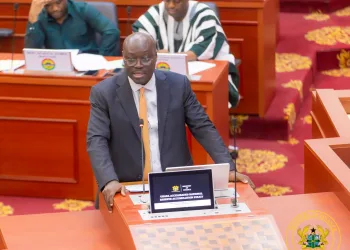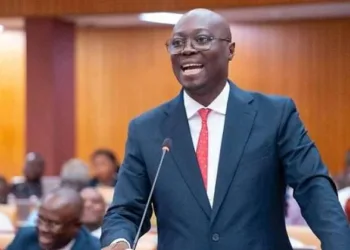






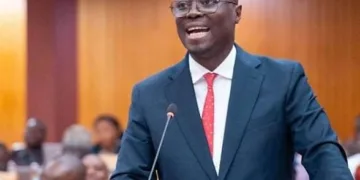

























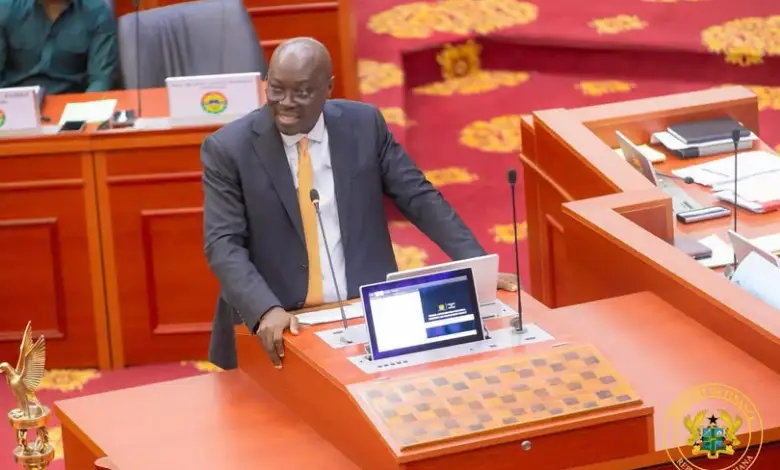
Finance Minister, Dr Cassiel Ato Forson, has unveiled a US$10 billion economic transformation programme named ‘The New Economy: New Ghana, Jobs and Prosperity’.
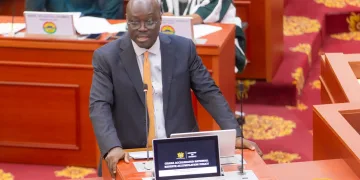
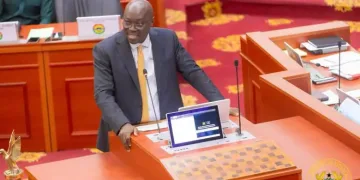
Presenting the 2027 Budget Statement and Economic Policy to Parliament on Thursday, November 12, the minister said the four-year programme, which is expected to begin in 2027, forms part of government’s broader efforts to address longstanding structural weaknesses in the economy and accelerate Ghana’s industrial and economic transformation.
“The New Economy is the Government of Ghana’s four-year programme, beginning in 2027, to confront these weaknesses and transform the structure of the Ghanaian economy,” he said.
Dr Ato Forson said the initiative would focus on expanding domestic production, processing more of the country’s natural resources locally and turning Ghana’s wealth into decent jobs, higher incomes and lasting prosperity.
“We will expand, act, process more of our resources at home, and turn our nation’s wealth into decent jobs, high incomes and lasting prosperity,” he said.
He explained that the programme was designed to move the country away from its heavy dependence on raw material exports and limited value addition, which he identified as some of the major challenges holding back Ghana’s economic transformation.
According to him, although Ghana will mark 70 years of independence in 2027, the economic transformation envisioned by the country’s first President, Osagyefo Dr Kwame Nkrumah, remains largely unrealised.
Dr Ato Forson said the 70th anniversary must therefore serve as a turning point for the country to rethink its economic priorities and build an economy capable of delivering prosperity for future generations.
“Our 70th anniversary must mark a decisive turning point. The New Economy is the Government of Ghana’s four-year programme, beginning in 2027, to confront these weaknesses and transform the structure of the Ghanaian economy,” he stated.
He stressed the need for government to ensure that every cedi of available fiscal space is invested in initiatives that generate employment, reduce imports, boost exports and create lasting economic value.
“Use the fiscal space wisely. Every cedi of that space must answer a national question: what jobs will it create, what import will it replace, what export will it generate, and what lasting value will it leave behind?” he stated.
The Finance Minister further disclosed that the programme would be implemented around eight interconnected pillars.
He said the ultimate goal is to build a fully developed, first-world Ghana as the country begins the next 70 years of its national journey.
Source: Abigail Ekua Arhin