



























































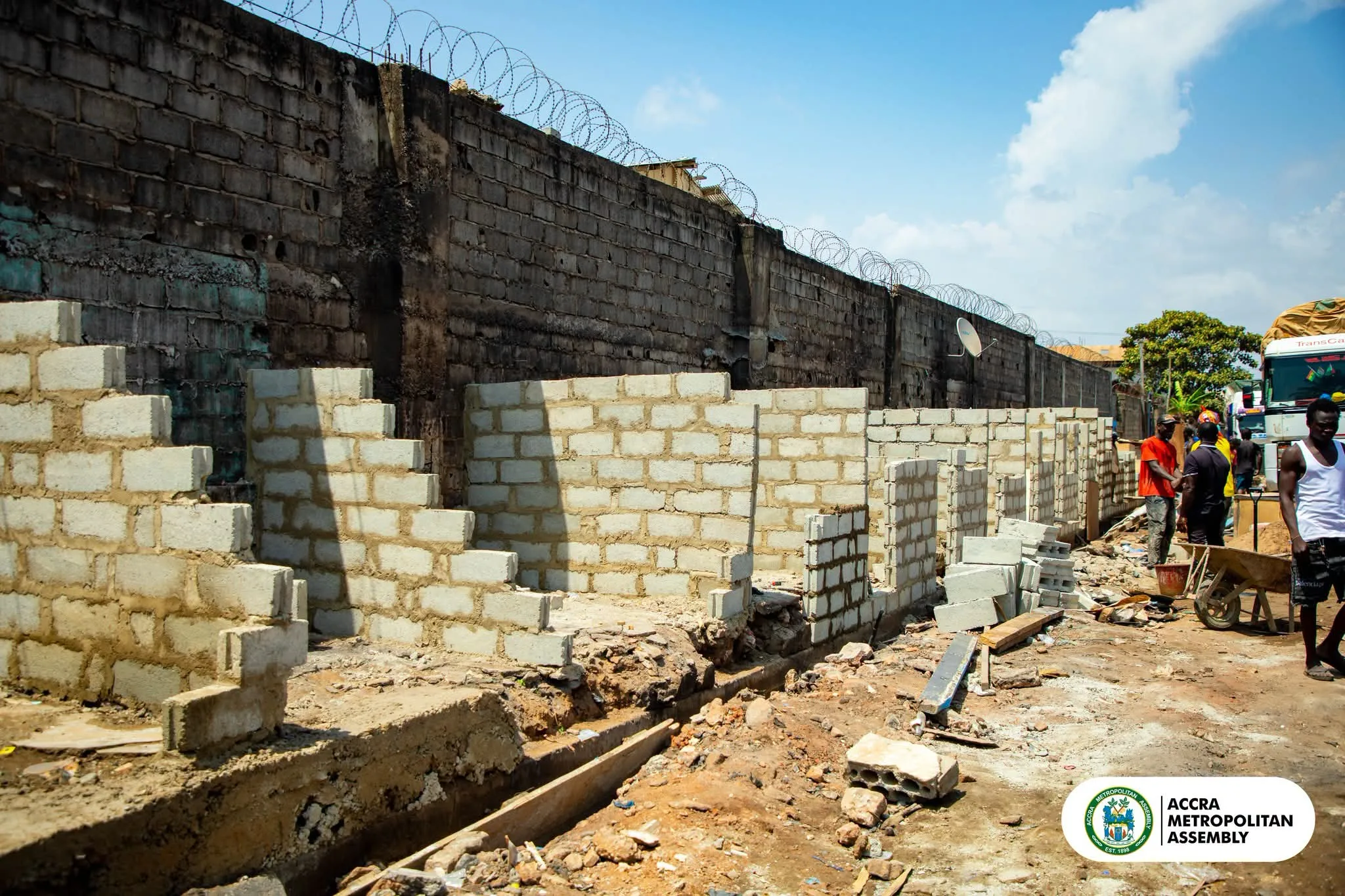
The Accra Metropolitan Assembly (AMA) has begun round-the-clock construction of single-room housing units at Kofikrom, in Avenor, with 10 rooms reaching lintel level and more than 100 others progressing to the second course of blockwork.
The project, being undertaken at the recently fire-ravaged squatter settlement, forms part of the Assembly’s efforts to replace the makeshift wooden structures previously occupied by squatters with permanent block buildings.
This is expected to improve their living conditions and reduce the risk of future fire outbreaks.
The first phase of the project is expected to be completed within one week. At the site, workers were seen laying concrete blocks to form the walls of the proposed single-room housing units, with the buildings at various stages of development.
While some of the structures had reached lintel level, several others remained at the early stages of blockwork, with their walls raised to approximately two courses and the layouts of individual rooms beginning to take shape.
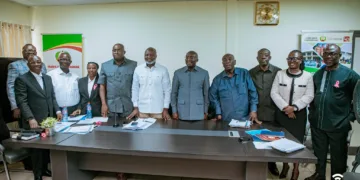
Speaking during the working visit, the Mayor reiterated the Assembly’s commitment to providing safer and more durable accommodation for the affected residents.
He explained that the redevelopment was intended to address the risks associated with the proliferation of makeshift wooden structures in the settlement.
He indicated that the decision to undertake the construction works around the clock was aimed at accelerating the delivery of the housing units and minimising delays in providing permanent accommodation for the squatters.
Mr. Allotey stressed that the Assembly was determined to transform the settlement into a more organised residential environment with improved access to essential amenities and infrastructure.
As part of the redevelopment, Mayor Allotey had earlier announced plans to provide electricity, borehole water supply, and streetlights free of charge to enhance the safety, security, and comfort of residents.
The housing project follows a devastating fire outbreak at Kofikrom in the North Industrial Area, which destroyed numerous makeshift wooden structures, displaced several residents, and claimed two lives, a mother and her daughter.
The fire also affected portions of adjoining industrial facilities, including Duraplast, raising concerns about the safety of residents and the occupation of areas close to industrial installations.
Following the disaster, the Assembly undertook clearance exercises to remove burnt structures, debris, and other obstructions to restore access and prepare the area for redevelopment.