





















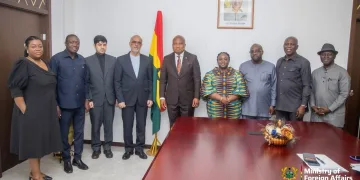

Civil society organisations (CSOs) have rejected the government’s proposal to extend the presidential and parliamentary terms from four to five years, rejected the practice of MPs serving as ministers, and pushed for the election of MMDCEs.
The positions came out of a two-day engagement between the Constitutional Reform Implementation Committee (CRIC) and more than 100 civil society organisations on proposed amendments to the 1992 Constitution.
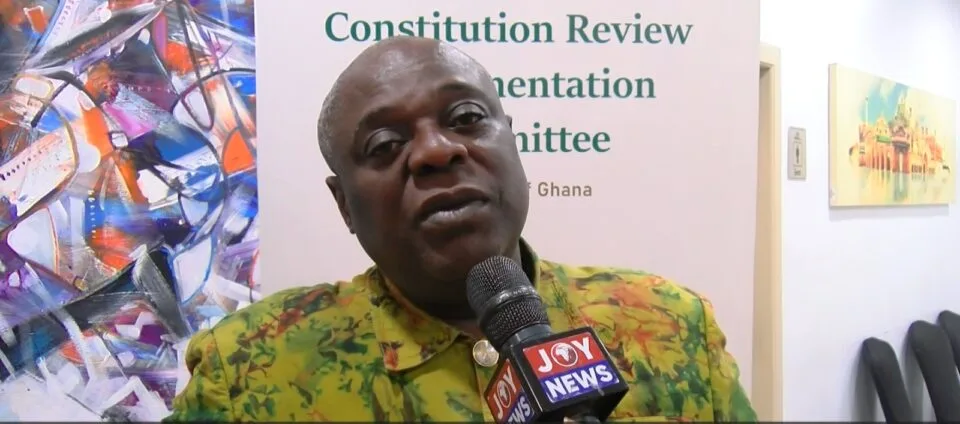
An adviser to the General Secretary of the Christian Council of Ghana, Koku Anyidoho, said the groups were united in rejecting the extension of the term.
He said 18 position papers were presented during the engagement, with broad agreement on several issues, but a firm rejection of the term extension.
“Two specific issues that come up is the fact that, to a man, that is every grouping here gathered, does not accept the government position on increasing the term limits of the President from four years to five years. Same as the MPs,” he said.
Mr Anyidoho argued that eight years in total is sufficient.
“They believe that within the four-year space, it should be possible to carry out a governance agenda that will sit well. The person gets four years, gets another four years, that’s eight years. It looks like the consensus is that that is enough,” he stated.
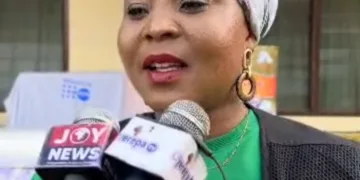
The Head of Programmes at Star Ghana Foundation and co-convener of the Citizens Platform on Constitutional Reforms, Eunice Rachel Agbenyadzi, also confirmed that maintaining the four-year term was a key position of stakeholders.
“One of the things is maintain the presidential term at four years,” she said.
She explained that the Constitution Review Commission had proposed a five-year term, which government endorsed, but other political parties rejected.
The CSOs also rejected the proposal to allow Members of Parliament to continue serving as ministers.
The groups say MPs should focus on their law-making and oversight duties, and not double as ministers in the Executive.
On local governance, the groups pushed for Metropolitan, Municipal and District Chief Executives (MMDCEs) to be elected, instead of appointed.
They say electing MMDCEs will make local governance more accountable to the people at the district level.
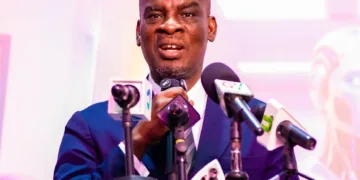
The Executive Secretary of the Committee, Oliver Barker-Vormawor, said the engagement made significant progress, with CSOs agreeing to about 89 per cent of the government’s proposed reforms.
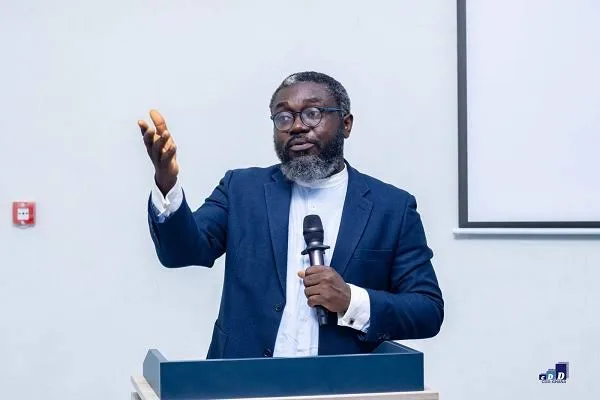
He said discussions had reduced the number of unresolved reform topics from 41 to 10. The three issues are among the 10 topics still left for Cabinet to decide on.
“Now the issues on which we are not able to reach some consensus, in particular the question of the four or five-year term, for instance the demand for MPs not to be ministers, those questions we have a mandate to refer back to Cabinet, because the decision-maker is Cabinet, for Cabinet then to revisit its positions on those issues,” he said.
He stressed that the Committee’s job is to accurately communicate stakeholders’ concerns to Cabinet, since the document under discussion is a Cabinet position.
“Our understanding is that the document is a Cabinet position, which then means that for changes to happen, Cabinet has to reconsider,” he added.
Beyond the three issues, the engagement also discussed proportional representation. Those issues, where no consensus was reached, will also be referred to Cabinet.
The Committee is expected to present the outstanding issues to Cabinet for a final decision on the way forward.