





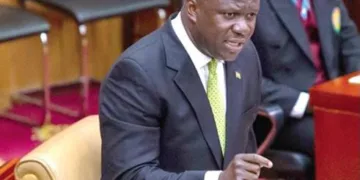







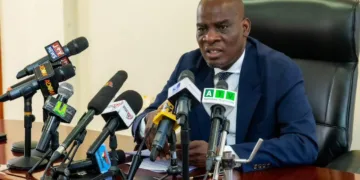
























Former Lands and Natural Resources Minister, Samuel Abu Jinapor, has taken a swipe at the Mahama administration over what he describes as a sharp deterioration in Ghana’s mining sector, accusing the government of allowing illegal mining to flourish.
According to the The Ghanaian Publisher newspaper monitored by Angelonline on Wednesday November 25, the minister has characterised the current period as a “golden age of galamsey”, contrasting it with what he considers the significant gains made by the previous Akufo-Addo government in the extractive industry.
“Under President Akufo-Addo, we had a golden age of mining. Today, under President Mahama, we have a golden age of galamsey. That is what we have. That is your record,” he said.
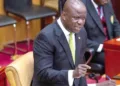
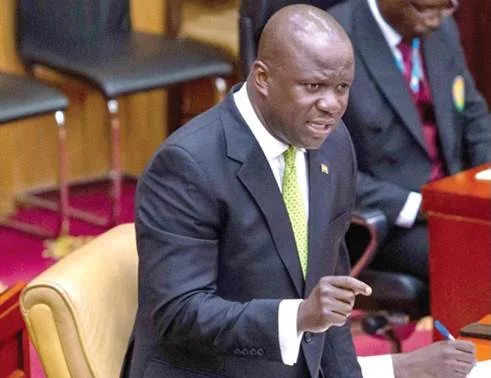
Speaking during parliamentary debate on the 2027 Budget Statement and Economic Policy, the Damongo MP criticised the government’s handling of the mining sector, arguing that the gains made under the previous administration were being undermined by weak regulation and ineffective enforcement.
Mr Jinapor recalled that the Akufo-Addo administration supervised Ghana’s first discovery of lithium and facilitated the revival of major mining operations, including the Bibiani Mine.
He said these milestones marked an important chapter in the country’s mining history, but argued that the sector had since witnessed a worrying reversal.
Taking a direct swipe at his successor, Mr Jinapor said the spread of illegal mining had reached a point where national executives of the governing National Democratic Congress (NDC) had been referred to the Attorney-General for investigations over alleged involvement in galamsey.
“It is always difficult to criticise your successor, but the Minister will note that today, galamsey is so pervasive that national officers of the National Democratic Congress (NDC) have been referred to the Attorney-General for investigation with respect to illegal mining,” he stated.
He said the development raised serious questions about the government’s commitment to tackling the menace.
His remarks come against the backdrop of sustained criticism from the Ghana Catholic Bishops’ Conference, which has repeatedly raised concerns about the environmental and social consequences of illegal mining.
The Bishops have called for more decisive interventions, including a targeted state of emergency in heavily affected communities, specialised courts to expedite galamsey prosecutions and accountability for individuals involved in the illegal activity, regardless of their political connections.
They have also urged government to intensify land reclamation, afforestation and alternative livelihood programmes while strengthening community involvement in the fight against illegal mining.
Beyond the mining sector, Mr Jinapor questioned the government’s fiscal management, accusing the Ministry of Finance of failing to release funds approved for public expenditure.
He described the practice as “mentua” governance, arguing that the administration had made budgetary commitments without providing the corresponding financial resources.
According to him, government planned to spend GH¢259.1 billion but had released only GH¢239.3 billion, leaving nearly GH¢20 billion in outstanding releases.
He also referred to figures from the Institute for Fiscal Studies (IFS), which reportedly showed a GH¢35.6 billion shortfall in government releases as of June 2026. The National Health Insurance Fund, he added, had also suffered a GH¢1 billion release gap.
Mr Jinapor further accused the government of failing to honour its commitment to lifeline electricity consumers, despite making allocations of GH¢50 million in both the 2026 and 2027 budgets.
He maintained that no money had been released for the intervention, describing the repeated allocations as promises unsupported by actual funding.
On the country’s fiscal position, the former minister challenged the government’s reported 1.4 per cent of GDP surplus, arguing that it was largely the result of drastic cuts in capital expenditure.
Referencing the World Bank’s September 2026 Ghana Country Review and October 2026 10th Ghana Economic Update, he said capital spending had fallen 58 per cent below the approved budget, questioning the sustainability of the reported fiscal improvement.
Turning to employment concerns, Mr Jinapor raised doubts about the future of the government’s 24-Hour Economy policy, claiming the administration had shifted its attention to a proposed “New Economy” programme expected to take effect in 2030.
He questioned the rationale for postponing the initiative, particularly at a time when youth unemployment remained high.
Citing July 2026 data from the Ghana Statistical Service, he said unemployment among young people aged 15 to 24 stood at 32.4 per cent, raising concerns about the government’s ability to address the country’s employment challenges.
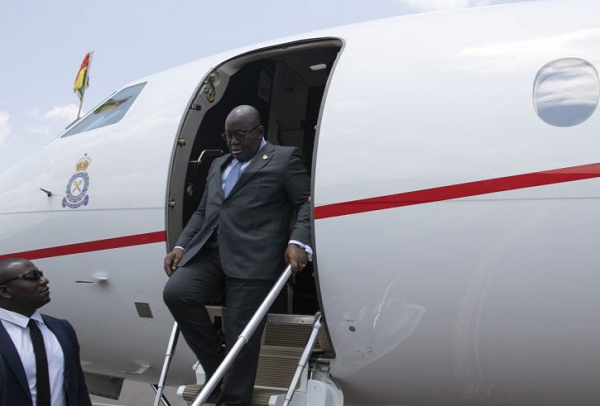
The Damongo MP also faulted the administration’s spending priorities, describing the GH¢720 million acquisition of a second presidential jet as an insensitive use of public funds amid mounting financial obligations.
He argued that the expenditure was difficult to justify when nurses, teachers and university lecturers were resorting to industrial action over unresolved concerns, while suppliers under the Free Senior High School programme were still owed money.
Mr Jinapor insisted that the existing presidential aircraft remained airworthy and in good condition, questioning the need for government to acquire another jet while claiming to face limited fiscal space.
He further described the new aircraft as a luxury addition, pointing to its bedroom, private bathroom and other high-end fittings.
According to him, the decision to spend such a substantial amount on presidential air travel exposed a disconnect between the government’s spending choices and the financial difficulties confronting ordinary Ghanaians.
He challenged the administration to explain the rationale behind the purchase to public sector workers and households struggling with the cost of living, insisting that resources should have been directed towards more pressing national priorities.
Source: Abigail Ekua Arhin