
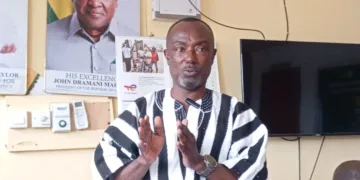


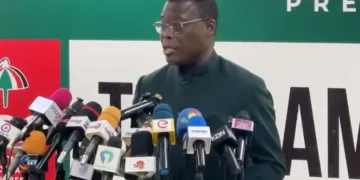
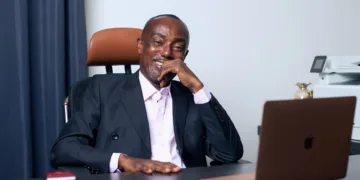
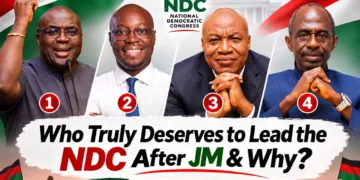




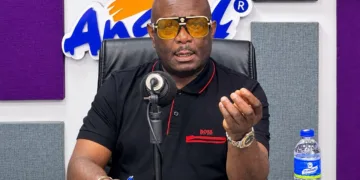
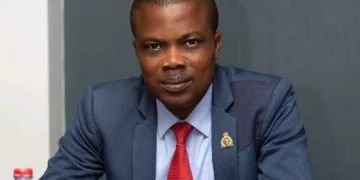




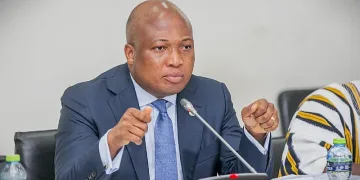
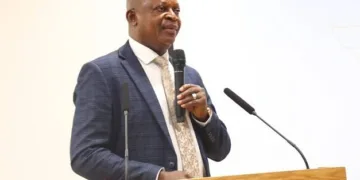

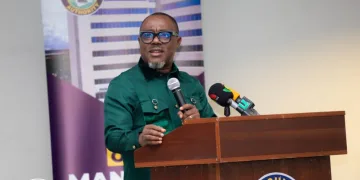



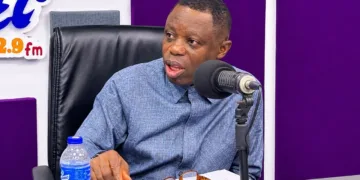
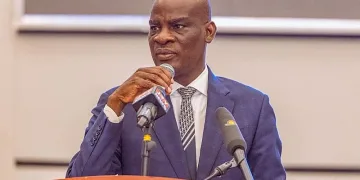
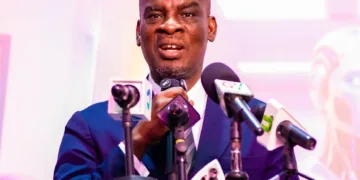




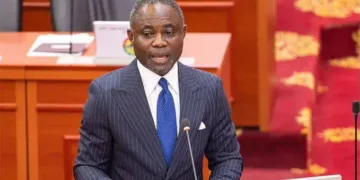
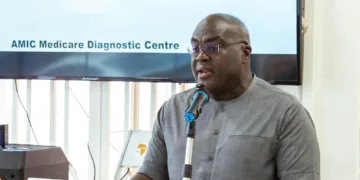



















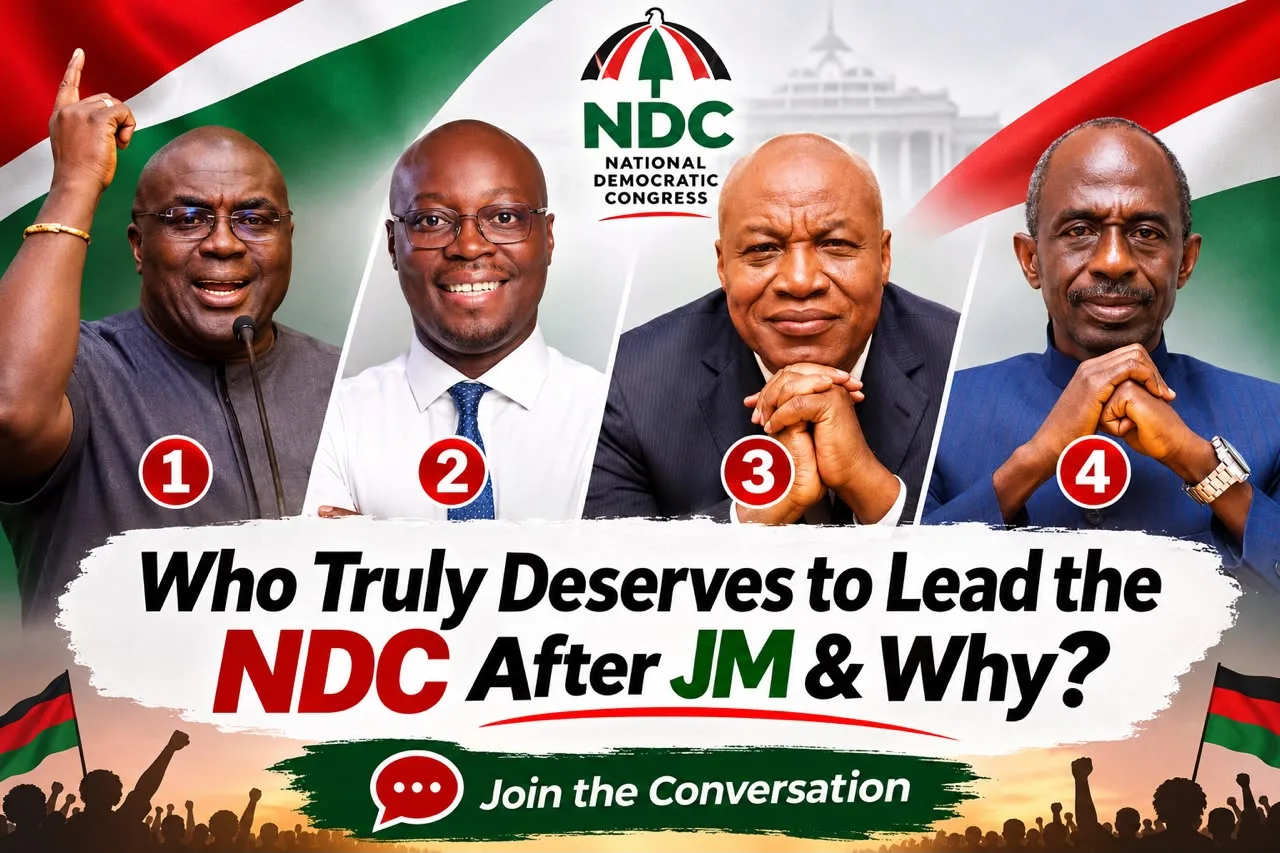
The conversation about the future of the National Democratic Congress (NDC) after John Dramani Mahama has already begun. And four names keep coming up.
Julius Debrah, the Chief of Staff.
Cassiel Ato Forson, the Minister for Finance.
Professor Joshua Alabi.
Johnson Asiedu Nketiah, the current National Chairman of the NDC.
All four are well known in the party. All four have supporters who believe they can lead. But if the question is who truly deserves to lead, and why, then the discussion must go beyond popularity, loyalty and political connections. It must consider competence, vision, integrity, experience and the ability to unite the party and deliver for Ghanaians.
So far, much of the public debate has followed a familiar pattern.
Johnson Asiedu Nketiah is a household name in the NDC. He has been in the party system for a very long time, and his name is familiar to almost every supporter. Many people are rooting for him simply because they have known him for so long, and his name has become synonymous with the party itself. In many conversations, his long service is presented as enough reason.
Julius Debrah and Cassiel Ato Forson also have their supporters, largely because of the positions they currently hold in goverment and their closeness to the centre of power. Their names come up often in discussions about who is next, who is trusted and who is visible.
But long service alone is not the full test. Neither is closeness to power. Does familiarity equal readiness? Do supporters who mention a name know the person’s educational background, his record in administration or his vision for the party beyond the NDC? These are fair questions to ask of any contender.
And that is where the debate becomes interesting, because there is one name on the list that has received comparatively little attention, even though his record invites serious consderation.
That name is Professor Joshua Alabi.
Professor Alabi brings to the conversation a record that is difficult to overlook. His leadership journey began in student politics, where he served as a two-term president of the National Union of Ghana Students in Russia from 1983 to 1985, and later as president of NUGS for the entire European Region from 1985 to 1986.
He went on to serve in football administration as Director of Administration of Accra Great Olympics, General Secretary of the Ghana League Clubs Association, a member of the Ghana Football Association, and later as Coordinator of the Senior National Team, the Black Stars, where he worked with players such as Abedi Pele and Tony Yeboah.
In mainstream politics, he was Member of Parliament (MP) for Krowor from 1997 to 2001, and served as Regional Minister for both Greater Accra and the Northern Regions. After the NDC lost power in 2000, he was elected Greater Accra Regional Chairman and led the reorganisation of the party in the region from 2001 to 2005. Professor John Evans Atta Mills later appointed him as his campaign manager for the 2004 general election.
His work in education and public institutions is perhaps the most widely recognised part of his record. He served as Pro-Rector of the University of Professional Studies, Accra from 2005 to 2008, Rector from 2009 to 2012, and eventually as the first Vice Chancellor of the University of Professional Studies, Accra (UPSA) from 2012 to 2016.
He is widely credited with transforming the then Institute of Professional Studies into the modern UPSA, growing it from three undergraduate programmes to many undergraduate, masters and diploma programmes by the time he left office.
At the Social Security and National Insurance Trust (SSNIT), where he served as Chairman of the Governing Board, his leadership left visible results. Through SSNIT’s Corporate Social Responsibility, he oversaw the construction of the Bukom Boxing Arena, now an iconic venue for boxing in Ghana and Africa, and the Children’s Library at Kawokudi in Accra. During his tenure, pension allowance was increased by an unprecedented 100 percent.
As Chairperson of the Board of Accra Technical University (ATU), he led reforms to improve infrastructure and helped secure acres of land near Nsawam for the expansion of the university.
At GCB Bank Plc, where he serves as Board Chairman, the bank has moved from a difficult period to consistent profitablity, with discussions far advanced for the establishment of international branches, including in Liberia.
In the recent history of the party, John Mahama appointed him as Campaign Manager for the 2020 general election and subsequently as National Campaign Manager for the 2024 election.
With a record such as this, the relative silence around Professor Alabi raises a fair question. Are we measuring who has delivered, or simply who is most familiar?
The future of the NDC after Presdient Mahama will not be decided by slogans or by name recognition alone. It will be decided by who can unite the party, inspire public trust, and present a credible vision for Ghana.
So the question remains open to supporters, delegtes and sympathisers:
Who truly deserves to lead the party after JM, and why?
Julius Debrah, Cassiel Ato Forson, Joshua Alabi, or Johnson Asiedu Nketiah?
Let us discuss leadership, track records and the future of the NDC.