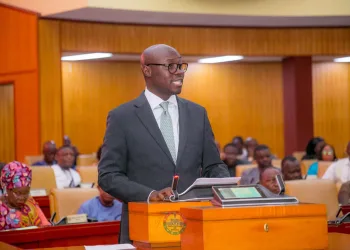



















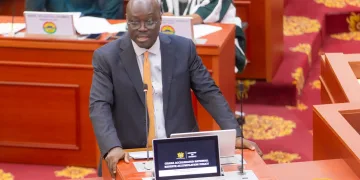



































Finance Minister, Dr Cassiel Ato Forson, has highlighted significant improvements in Ghana’s economic indicators, citing stronger economic growth, declining inflation and reduced borrowing costs as evidence of the country’s economic recovery.
Presenting the 2027 Budget Statement and Economic Policy to Parliament on Thursday, November 12, the minister said the economy recorded a real Gross Domestic Product (GDP) growth of 6.2 per cent in the first half of 2026, exceeding the government’s full-year growth target of 4.8 per cent.
“Mr. Speaker, let me report on our performance against the targets reaffirmed in the Mid-Year Fiscal Policy Review. Real GDP grew by 6.2 percent in the first half of 2026, compared with the 2026 growth target of 4.8 percent,” he stated.
He also add that Non-oil GDP growth has reached 5.9 per cent within the same period, surpassing the target of 4.9 per cent.
Ato Forson said the country’s gross international reserves had increased to US$12.7 billion at the end of September 2026, representing 4.5 months of import cover.
He further disclosed that headline inflation had declined to 5.5 per cent in October 2026, while the Monetary Policy Rate had been reduced from 21.5 per cent in September 2025 to 14 per cent in September 2026.
The Finance Minister said the improvements had also translated into lower borrowing costs for businesses and households, providing relief to economic operators.
He noted that the Ghana Reference Rate had dropped by 1,971 basis points, from 29.72 per cent in January 2025 to 10.01 per cent in October 2026.
Average commercial bank lending rates had similarly declined from 22.2 per cent in October 2025 to 15.94 per cent in October 2026, while credit to the private sector expanded by 35.5 per cent between August 2025 and August 2026.
Ato Forson also reported significant reductions in Treasury bill rates between December 2025 and the first week of November 2026.
“The 91-day Treasury bill rate fell by 653 basis points, from 11.09 per cent to 4.56 per cent, while the 182-day rate declined by 632 basis points, from 12.52 per cent to 6.20 per cent. The 364-day Treasury bill rate also dropped by 346 basis points, from 12.94 per cent to 9.48 per cent,” he said.
The Finance Minister said the declining interest rates and improved access to credit demonstrated how the gains from economic stability were beginning to benefit households and businesses.
“Mr. Speaker, cheaper credit is now passing on the gains of stability to households and businesses,” he stated.
Source: Abigail Ekua Arhin