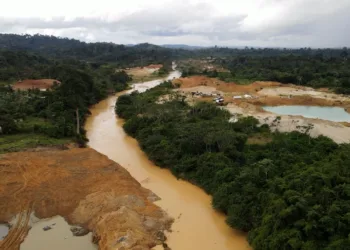






















































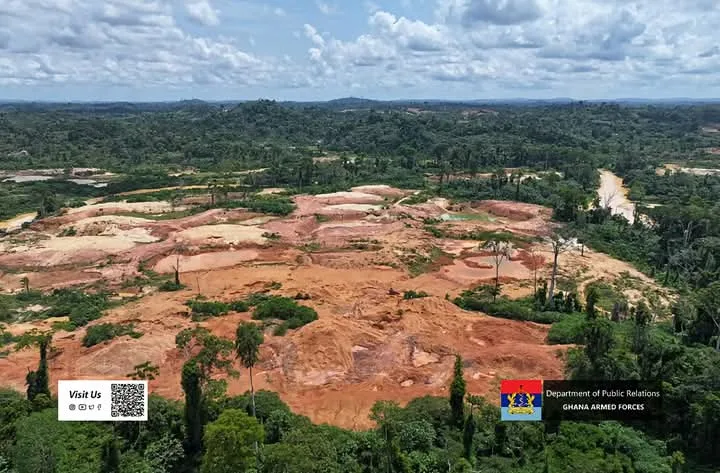
The Ghana Army’s 14 Engineer Brigade has reclaimed 50 hectares of land degraded by illegal mining activities at the Tano-Nimiri Forest Reserve in Samreboi, Western Region.
The reclamation involved extensive engineering works to restore land ravaged by abandoned mining pits and damaged watercourses, while reopening access to an area that had become largely inaccessible.
The project also included the construction of 13.6 kilometres of access roads to facilitate movement through the difficult terrain.
The Brigade undertook the excavation and backfilling of abandoned mine pits, reshaping and grading of disturbed ground, drainage improvements and the spreading of topsoil. It also reopened blocked watercourses to restore the natural flow of water through the area.
The reclaimed land, together with a Forward Operating Base (FOB), was formally handed over to the Ghana Gold Board (GoldBod) on Wednesday, November 18, 2026.
The ceremony, which marked the completion of the first phase of the reclamation project, was led by the Commander of the 14 Engineer Brigade, Brigadier General (Brig Gen) Richard Kinney.
Speaking at the ceremony, Brig Gen Kinney described the exercise as a “major intervention to support environmental recovery and protect the area against further destruction.”
According to him, the degradation of forest reserves through illegal mining remained a serious threat to the environment and national development, requiring deliberate action, effective cooperation and sustained commitment from all stakeholders.
He described the completed project as a testament to the “dedication, discipline and professionalism of the Ghana Armed Forces Engineering team.”
Brig Gen Kinney, however, noted that the greater challenge ahead was to protect and conserve the reclaimed land, calling for a sustained and visible presence by the Forestry Commission to prevent renewed illegal mining.
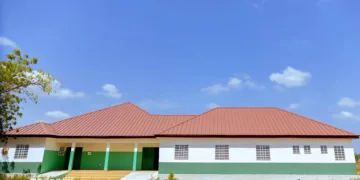
The FOB, constructed to accommodate 10 personnel, is equipped with a borehole, solar power system, washrooms and a kitchen. It will serve as a base for Forestry Commission personnel tasked with protecting the reclaimed area and safeguarding the gains made against renewed illegal mining.
The Deputy Director for Responsible Mining and Sustainability at GoldBod, James German, said the Board played an important role in supporting the formalisation and sustainable development of Ghana’s artisanal and small-scale mining sector.
He emphasised that an integrated approach was necessary to ensure that degraded lands were restored while preventing further environmental destruction.
Mr German commended Brig Gen Kinney, the project team and all personnel who contributed to the reclamation. He also acknowledged the support of the Forestry Commission and other stakeholders.
He noted that while reclaiming degraded land was an achievement, restoring its ecological value remained the ultimate measure of success.
He pledged that the FOB would strengthen the protection of the area against renewed illegal mining activities.
Mr German further observed that the Tano-Nimiri project should serve as a reminder that environmental restoration was possible when institutions worked together towards a common purpose.
He stressed that beyond reclaiming the 50 hectares, stakeholders had a greater responsibility to protect the much larger forest areas that remained vulnerable to destruction.