



























































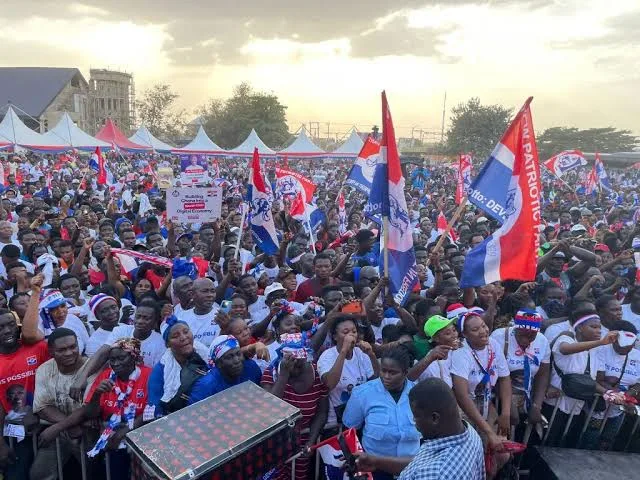
Fifteen out of eighteen active chapter chairpersons of the New Patriotic Party (NPP) in the United States have called for the suspension of the branch elections scheduled for November 28, 2028, citing unresolved concerns over the credibility and security of the electronic voting process.
The chairpersons, representing more than 80 per cent of the party’s active chapters in the United States, are demanding that the elections be postponed until adequate safeguards are put in place to ensure transparency, impartiality and credibility.
“Fifteen of the eighteen active Chapter Chairpersons of NPP-USA, representing more than 80 percent of the Branch’s active chapters, today called on the Branch Elections Committee to suspend the elections scheduled for November 28, 2028. They ask that the poll be held only after material questions about its electronic voting arrangements have been answered in writing,” they said.
In a statement released on November 25, the group raised concerns about the administration of the electronic voting platform, Simply Voting, questioning whether the current arrangements provide sufficient guarantees for a free and fair election.
They are particularly demanding written confirmation of a formal service agreement with the voting service provider, independent administration of the ballot and a reliable voter-verification system before members are allowed to cast their votes.
According to the chairpersons, the Elections Committee appears to favour retaining direct administrative control of the platform instead of engaging Simply Voting’s fully managed service, a situation they believe could undermine confidence in the electoral process.
They also expressed reservations about the impartiality of the committee, noting that some of its members hold executive positions within the party and could be perceived as having an interest in the outcome.
“The principles of fairness, impartiality and transparency in internal elections are not procedural niceties. They underpin the Party’s constitution and its electoral guidelines, and they are the basis on which members accept outcomes they did not vote for,” it was stated.
Although the group stressed that it was not accusing any individual of wrongdoing, it maintained that the electoral arrangements must be structured in a manner that eliminates any reasonable doubts about the committee’s neutrality.
The chairpersons further disclosed that enquiries made with Simply Voting had raised questions about whether a formal service agreement had been signed for the elections and whether the platform demonstrated to members was an actual contracted voting environment or merely a demonstration system.
They insist that these concerns must be clarified in writing before the exercise proceeds.
Another major concern is the 48-hour period allocated to verify the email addresses and telephone numbers of approximately 900 eligible voters, which the group considers inadequate.
They warned that the limited timeframe could prevent some members from correcting errors in their details and securing access to the voting platform, potentially disenfranchising eligible voters and triggering disputes after the results are declared.
“The current timetable allows 48 hours to validate the email addresses and telephone numbers of approximately 900 eligible voters. That is not enough time for every member to confirm their details, correct errors and secure access to the ballot,” the statement said.
The chairpersons argue that chapter leaders, who maintain membership and voter records, should be actively involved in the verification exercise to ensure accuracy and fairness.
They have consequently outlined five demands, including the suspension of the November 28 elections, the engagement of Simply Voting under its fully managed service and the publication of the contract and details of the platform’s security and administrative procedures.
The group is also calling for a revised voter-verification process involving chapter chairpersons and a comprehensive electoral roadmap covering platform testing, voting procedures, independent oversight, collation and declaration of results.
Meanwhile, the fifteen chairpersons have appealed to the party’s National Chairman, John Boadu, to urgently convene the Elections Committee, branch executives and chapter leaders to resolve the disagreements.
They have also called on the party’s flagbearer, Dr Mahamudu Bawumia, to intervene to ensure that their concerns are addressed before voting begins.
The group warned that proceeding with the elections despite opposition from more than 80 per cent of active chapter leaders could undermine the legitimacy of the outcome and deepen divisions within the party’s US branch.
They further cautioned that an internal electoral dispute could affect the party’s mobilisation efforts ahead of the 2028 general elections, particularly as Dr Bawumia would require a united diaspora base to support his political ambitions.
“A branch absorbed in an electoral dispute cannot organize, fundraise or speak for the Party with authority. A disputed election now becomes a liability the Party carries into 2028,” it was stated.
The statement also noted that NPP-USA is expected to represent the party at the International Democratic Union (IDU) Conference in Washington, D.C., during the first week of December, warning that unresolved internal disagreements could weaken the branch’s ability to represent the party effectively.
The chairpersons, however, clarified that their position is not in support of any particular candidate or faction and should not be interpreted as a challenge to the Elections Committee’s authority.
They maintain that their demand is aimed at ensuring that the elections are conducted under conditions that guarantee confidence in the process and acceptance of the eventual results.