





















































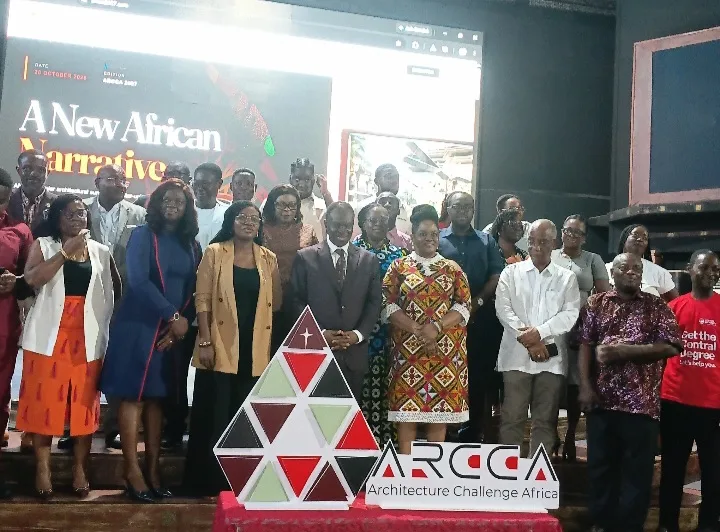
The School of Architecture and Design (SADe) at Central University has officially launched Architecture Challenge Africa (ARCCA), a continental architectural summit and student design competition.
The official launch, themed ‘Reimagining African Architecture: Identity, Innovation and Sustainability’ was held on Wednesday, October 28, 2026, at the Christ Temple Campus, Abossey Okai, Accra.
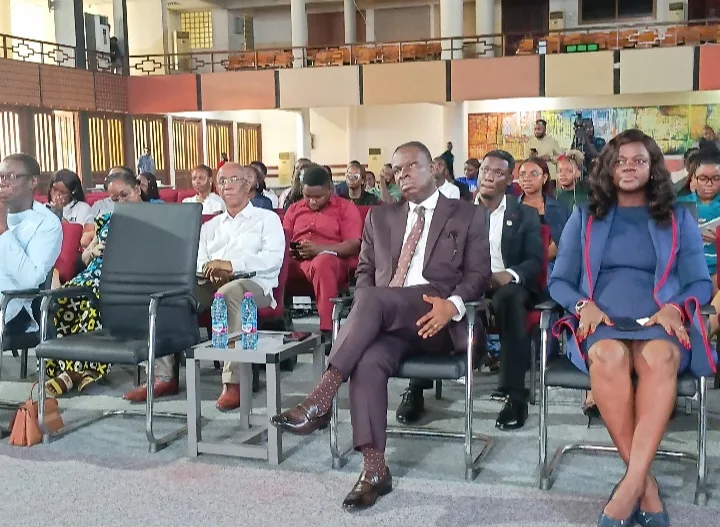
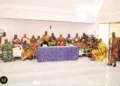
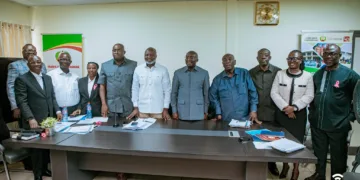
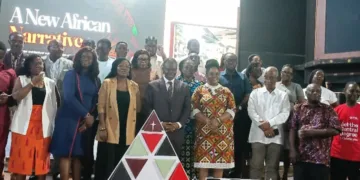
The event brought together the University leadership, the Ghana Institute of Architects (GIA), academics, students, industry partners and the media for what organizers described as the beginning of a movement to shape Africa built future.
It came with a strong call to stop allowing Africa built environment to be hacked and to take charge of its morphology and direction.
The Vice Chancellor of Central University, Prof. Kwasi Dartey Baah, said ARCCA was born at Central University but conceived for a purpose far greater than the institution.
Every building tells a story. The question is whether Africa will continue to inhabit stories written by others or begin to design… That is why we are gathered here today, he said.
According to him, Africa rapid urbanisation demands more than accommodation, it demands identity, environmental protection and improved quality of life.
We must draw wisdom from our heritage without being imprisoned by the past. We must embrace innovation without surrendering our identity, and we must pursue modernity without compromising the environment, he stated.
Prof. Dartey Baah cited SADe students winning the IFC Excellence in Design for Greater Efficiencies (EDGE) Student Design Competition as proof African talent can compete globally.
He also acknowledged Prof. Richard Boateng for his intellectual contribution to shaping ARCCA.
The Vice Chancellor made a direct call to corporate Ghana, construction firms, real estate developers, financial institutions and technology companies to come on board.
Do not see ARCCA merely as an event to sponsor. See it as an opportunity to shape an industry, nurture future talents, influence the built environment and help determine what African cities would look like for generations to come, he said.
Your investments can connect classroom innovation to real world projects, he added, noting that Central University is committed to ensuring ARCCA grows into a lasting continental platform.
He said the goal is for Ghana to be remembered not just as where ARCCA began, but where a movement gained its voice.
The Acting Dean of SADe, Arc. Mrs. Ninettte Quaofio, said ARCCA is designed to challenge conventional thinking and celebrate African creativity.
Architecture is much more than the design and construction of buildings. It shapes how we live, how our environments develop, how we preserve our heritage and how we respond to the environmental challenges of our time, she said.
For his part, the President of the Ghana Institute of Architects (GIA), Arc. Tony Asare, described the competition as a civic instrument that gives students a platform to think, question, propose and be seen.
Ghana is better when merit is the way of life. When merit rules and the criteria is clear to all, judgement is fair and excellence is duly rewarded. Such competition strengthens confidence in our institutions, he said.
He charged adjudicators to judge with wisdom, courage and impartiality, and urged students to be bold.
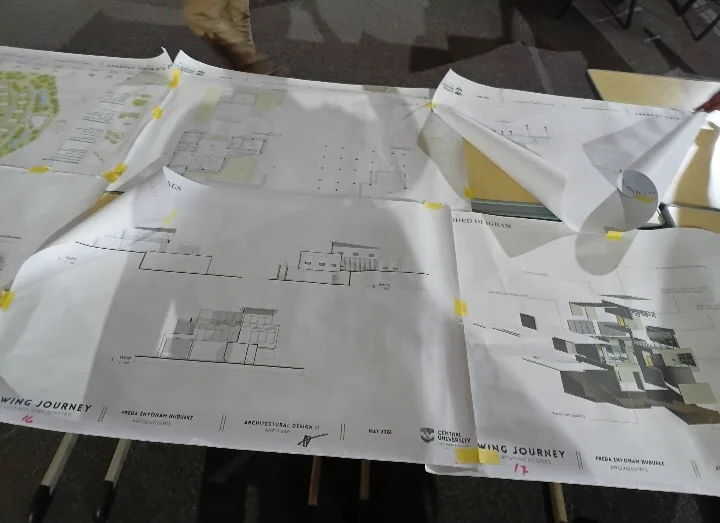
Do not enter merely to win. Enter to discover what you believe architecture can do for Ghana. Be bold. Be original. Do not plagiarize. Do not copy, Arc. Asare advised.
Unveiling what ARCCA is really about, Lecturer at SADe, Arch. Sam Sawyer, said the initiative is more than an event.
This is not just an event, it is a movement and I want you to come along, he said.
Drawing an analogy from a recent attempt to hack a platform he manages, he noted: As architects, as educators, as builders, players in the built environment, we can either sit back and allow our spaces to be hacked or we can determine the morphology and direction of the built environment.
He announced that the inaugural ARCCA conference is planned for Accra in September next year.
The conference will bring together students, educators, architects, researchers, industry leaders and policymakers to explore architecture that is culturally grounded, climate responsive, innovative and sustainable.
Arch. Sawyer outlined future competition categories including The New African Town, Iconic African Institution, Modern African Palace, Sustainable African Landscapes and African Interior.
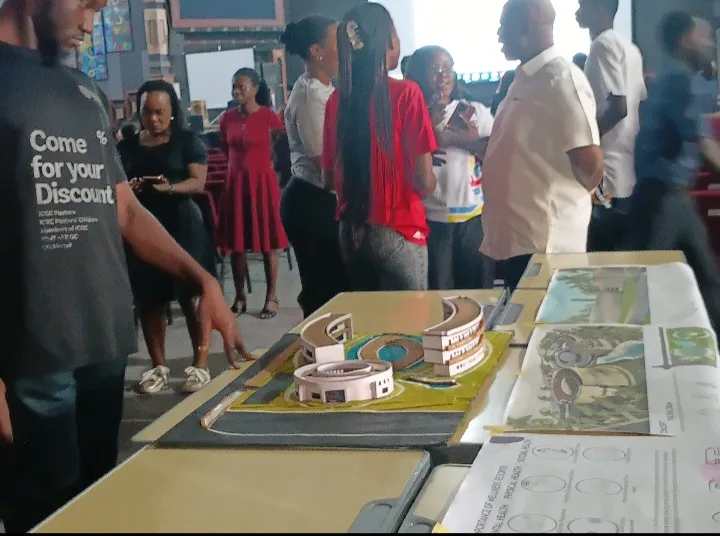
For the maiden main competition, he unveiled the flagship project: The Museum of African Innovations (MPAI).
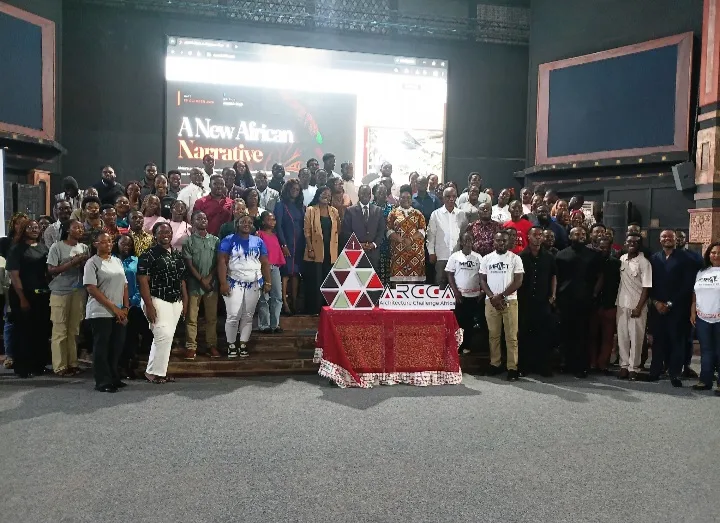
Students from across Africa are invited to conceive a museum that celebrates Africa past achievements, present day innovations and future possibilities, not just a place of display but a living environment for learning, experimentation, dialogue and inspiration, he explained.
He said design program elements will include technology and digital innovation, science, traditional medicine, sustainable agriculture, indigenous climate knowledge, creative arts, and social innovation spaces exploring African philosophies like Ubuntu.
Designers are encouraged to draw on African visual traditions, cultural narratives, fractal patterns, communal gathering spaces, locally appropriate materials and passive cooling strategies.
On eligibility, he said the competition is open to students enrolled in African universities from Cape Town to Cairo and Dakar to the rest of Africa, in teams of 2 to 5 or individually, each supervised by a lecturer.
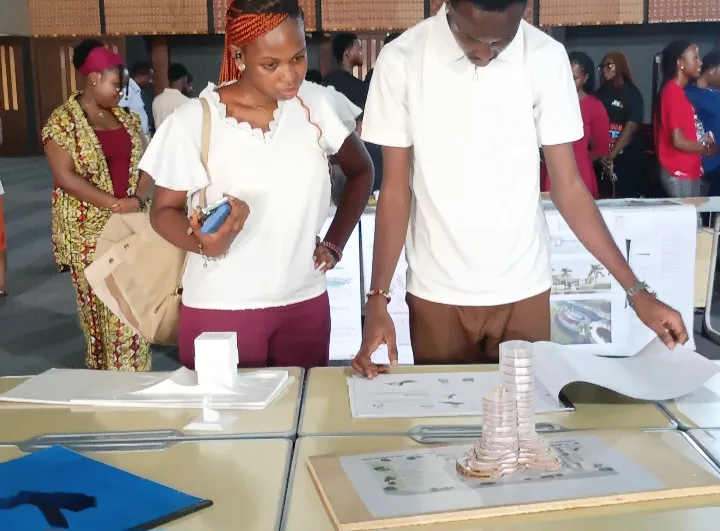
Participants can choose any site in Africa. Submissions will require six A1 landscape presentation boards, with a file size limit of 100MB, and entries will be anonymous.
He announced timelines of official launch in October and registration opening in November, with keynote presentations, final pitch sessions before a grand jury, and awards.
I believe that we launch today not just a competition, we are actually launching a platform for the next generation of architects, the architects that will shape how Africa is built, how Africa is seen and perceived and experienced, Arch. Sawyer said.
Africa is ready and Architecture Challenge Africa, ARCCA, is born, he declared.
As part of the launch, Design Lecturer at SADe, Mr. Desmond Adusa, demonstrated the official ARCCA website, which will serve as the central hub for all information.
He described the website as well designed and African centred, featuring sections for Events, Compete, Explore and Connect, with the project brief and timeline.
The final challenge is scheduled for May 2027.
According to him, the platform caters for students, academics, industry professionals, sponsors, media partners and virtual participants, each receiving a personalized dashboard, WhatsApp community access and instant event tickets upon registration.
Organisers say ARCCA is intended to grow beyond its inaugural edition into a continental movement shaping Africa built future.