

























































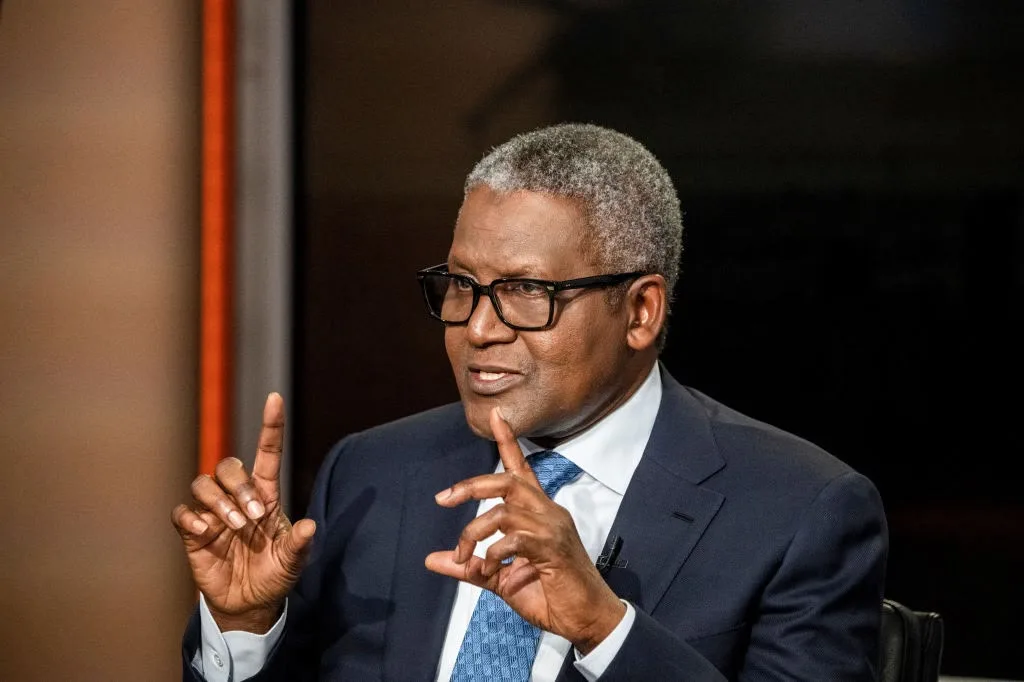
Nigerian business magnate, Aliko Dangote, has called on Ghana to position itself as a major manufacturing hub in West Africa by expanding local production and tapping into a regional market of approximately 450 million people.
According to the Daily Post newspaper monitored by Angelonline on Tuesday, November 17, he said the country must move beyond its domestic market and invest in productive industries to take advantage of the vast commercial opportunities available within the subregion.
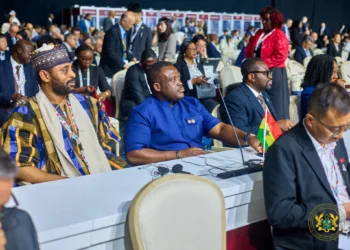
Speaking at the maiden Invest in Ghana Summit on Monday, November 16, Mr Dangote said Ghana could significantly expand its economic prospects by leveraging regional trade agreements under the Economic Community of West African States (ECOWAS).
He urged Ghanaian entrepreneurs and investors to adopt a regional business approach rather than limit their operations to the country’s population.
“When you are talking about Ghana’s market, it’s not only the population of Ghana. Ghana’s market, I was telling you, is 450 million people’s market,” he said.
Mr Dangote noted that improved regional integration would enable businesses in Ghana to scale up production and access markets across neighbouring countries.
He also called for strategic investment in transport infrastructure to facilitate trade, proposing the construction of a 1,000-kilometre road connecting Ghana, Nigeria and Côte d’Ivoire.
According to him, the proposed road would ease the movement of goods and strengthen commercial activities among the three countries.
He said he intended to engage President John Dramani Mahama and other regional leaders to ensure the project receives priority attention.
“I think we are really going to engage with the President and the other Presidents to make sure that this road is given a priority,” he stated.
Mr Dangote also urged African countries to reduce their dependence on imported finished goods, arguing that economic prosperity and sustainable job creation depend largely on the development of domestic industries.
He warned that countries that depend heavily on imports without investing in local manufacturing risk transferring employment and investment opportunities to foreign economies.
“If you are a consumer, you are not a producer, you will never, ever create jobs. You will never, ever create prosperity,” he said.
Citing Ghana’s rice industry, he encouraged consumers and policymakers to support locally produced rice, even when it costs slightly more than imported alternatives.
He explained that patronising locally produced goods would create opportunities for Ghanaian farmers, processors and other businesses along the production chain.
Meanwhile, Mr Dangote has identified sugar production, cocoa processing and rice milling as potential areas for expanding his business group’s investments in Ghana.
He disclosed that discussions were ongoing with the government over a proposed sugar production investment expected to generate nearly 50,000 jobs.
He also expressed interest in establishing an additional 500,000 metric tonnes of rice-processing capacity in the country, subject to an agreement with the government.
The proposed investment is expected to strengthen Ghana’s rice-processing industry and provide a market for locally cultivated rice.
Mr Dangote stressed that African countries must prioritise developing their domestic production capacity to meet local consumption needs before focusing on expanding exports.
Source: Abigail Ekua Arhin