

















































The Alliance for Accountability Governance (AFAG) has raised concerns about the proposed National Petroleum Authority (NPA) Bill, 2026, warning that it could undermine the financial and operational position of the Bulk Oil Storage and Transportation Limited (BOST).
In a statement issued on Tuesday, November 17, 2026, AFAG said while it supports efforts to modernise Ghana’s petroleum downstream regulatory framework, its review of the Bill points to provisions that could weaken BOST’s ability to invest in infrastructure, maintain strategic fuel reserves, operate its storage network and remain commercially viable.
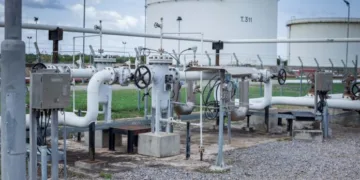
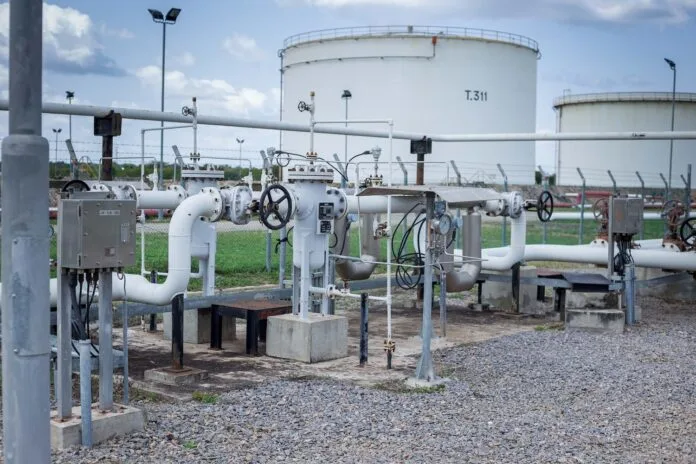
AFAG described BOST as a strategic national asset, noting that its infrastructure and operations are directly linked to national fuel security, including petroleum storage, transportation, strategic reserves and logistics.
“How can any government claim to strengthen petroleum regulation by systematically gutting the very national infrastructure company tasked with carrying our strategic, commercial, and emergency fuel-security responsibilities?”
The group cited BOST’s 2025 financial results, which it said included revenue of approximately GH¢3.81 billion, profit after tax of GH¢683.96 million, total assets of GH¢3.99 billion and shareholders’ equity of GH¢1.47 billion. It also noted that the company paid its first dividend to the Government.
AFAG singled out Clause 116 of the Bill, which it said empowers the Minister to designate BOST depots as strategic fuel depots, with Clause 117 placing monitoring under the NPA.
The group argued that strategic reserves require significant capital for inventory, storage, insurance, security, maintenance and stock rotation, and said the Bill does not clearly provide for how BOST would be compensated for holding the reserves.
“National fuel security must not become an unfunded liability engineered to wreck BOST’s balance sheet,” AFAG said. It called for a statutory Strategic Fuel Reserve Cost-Recovery Mechanism to ensure BOST is fully compensated for all incremental costs associated with holding national strategic reserves.
On storage and transportation, AFAG said Clauses 104 and 105 would require depot operators and bulk transporters, including pipelines, barges and rail tankers, to provide open access without discrimination, while capping tariffs subject to prior written approval by the Authority.
The group said storage tanks, pipelines and marine logistics require substantial capital expenditure and continuous maintenance, and called for a cost-reflective tariff framework that allows operators to recover operating, maintenance, depreciation and financing costs while earning a reasonable return on capital.
AFAG also raised concerns about Clauses 130 and 131 on fair competition, arguing that the Bill does not adequately distinguish between BOST’s public-service obligations and the commercial operations of private operators.
It further questioned how the proposed Distribution Fund and Infrastructure Fund would interact with BOST’s existing infrastructure network, saying the Bill does not clarify ownership, operation, maintenance, depreciation and investment returns for assets financed by the Funds.
On Clause 157, AFAG said the Bill gives the Minister sweeping authority during war, a state of emergency or a national crisis to assume direct control of petroleum infrastructure and products.
The group called for a clear principle of full financial compensation for all costs incurred under Ministerial emergency directions, as well as a comprehensive framework for exercising such powers.
AFAG also warned that reduced commercial revenue could affect investment, operational scale and specialised employment at BOST, and called for a full employment and skills-impact assessment before the Bill is laid before Parliament.
AFAG outlined seven demands, including protecting BOST’s strategic role as Ghana’s national strategic storage and transportation backbone, mandating reserve cost recovery, enacting cost-reflective tariffs, protecting existing investments through transitional provisions, clarifying fund ownership to prevent duplication or undermining of BOST assets, compensating BOST for costs incurred under emergency directives, and conducting a mandatory pre-laying impact assessment on BOST’s profitability, borrowing capacity, energy security contribution and employment levels.
The group urged government to address the concerns before presenting the Bill to Parliament and said it will submit a petition to the Speaker of Parliament on the matter in the coming days.
“We demand a strong NPA, a stronger BOST, and total protection for Ghana’s energy security,” AFAG said.