















































The Ghana Geological Survey Authority (GGSA) has completed 48 mineral occurrence maps as part of its comprehensive programme to block out mineralised lands across the country.
The maps highlight each district’s mineral potential to investors, job creation and how they can stimulate local economic development.
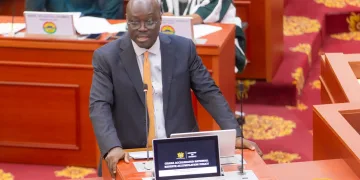
The Director-General of the GGSA, Dr Prosper Aduah Akaba, who made this known in Accra yesterday, said the development of the district mineral occurrence maps was the preparatory step towards its target to block out mineralised lands across the country.
He said 2027 had been earmarked for the scaling up of GGSA nationwide mineral exploration and geological investigations to promote responsible mining, curb illegal operations (galamsey), and support government’s broader critical minerals industrialisation agenda.
However, Dr Akaba stressed that doing further geological investigations to establish the mineral-bearing lands in the country was capital-intensive and required heavy investment.
“What we have mapped out are occurrence maps, not delineated resources. We have the capacity in terms of human resource, but we need money to deliver on our mandate; and we are ready to collaborate with stakeholders to investigate the occurrences further,” he said.
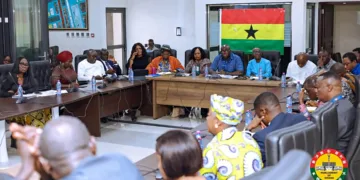
The Director-General of the GGSA stated this when the authority took its turn at the Progress Report Series by the Ministry of Lands and Natural Resources.
The Progress Report Series is an accountability forum launched by the Ministry of Lands and Natural Resources in October, 2026 to report on developments and performance across its agencies.
The GGSA operates under the statutory framework of the Ghana Geological Survey Authority Act, 2016 (Act 928), which replaced the older Survey Act of 1962 (Act 127) and elevated the former Geological Survey Department into an independent authority.
The authority traces its origins back to the establishment of the Gold Coast Geological Survey in 1913 during the colonial administration.
The primary mandate of the GGSA, as stipulated by Act 928, is to advise, promote and conduct comprehensive research on geoscientific issues spanning mineral resources, groundwater reserves, environmental preservation, geo-hazards and sustainable land-use planning.
Priority
Dr Akaba stressed that carrying out geological investigations to identify and block out mineralised lands remained the top priority for the authority.
He explained that properly mapping out mineral-bearing lands was a bold step towards promoting responsible mining and curbing the destruction of the environment through indiscriminate mineral exploration activities.
The GGSA boss added that under its mining support initiatives, the authority was investigating more mineralised areas, including ongoing studies in Upper West and Ashanti regions, to build an investment-grade asset portfolio.
He stated that the expanded exploration would feed directly into the government’s 2027 Budget Statement, which committed $1.5 billion to local value addition for gold, lithium, manganese, and bauxite.
Achievements
Dr Akaba said the GGSA had played a crucial role in the government’s programmes being implemented to ensure responsible small-scale mining.
Particularly, he said, the authority had been resourced to undertake geological survey activities in some mining communities aimed at blocking out mineralised lands for community mining.
He said that initiative was being funded by the Ghana Gold Board (GOLDBOD) and the Minerals Development Fund (MDF), while steps were underway to bring the Minerals Income Investment Fund (MIIF) on board.
He also said Parliament had approved seven Legislative Instruments (L.I. 2526 to L.I. 2532) under the Ghana Geological Survey Authority Act, 2016 (Act 928), which took effect on August 26, 2026.
Dr Akaba explained that those regulations, which closed a 10-year regulatory gap, covered key operational areas for the GGSA, including large-scale geological map categorisation, earthquake monitoring, data licensing, ground investigations, geoscientific standards, geoheritage sites, and mineral resource exploration up to pre-feasibility.
Way forward
Touching on the outlook for 2027, he said the GGSA was looking forward to creating more district mineral occurrence maps and further geological investigations to help promote responsible mining in blocked-out areas.
Credit: Daily Graphic