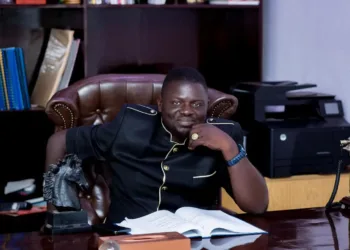


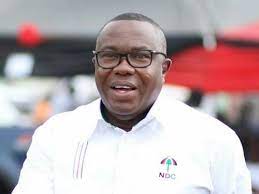














































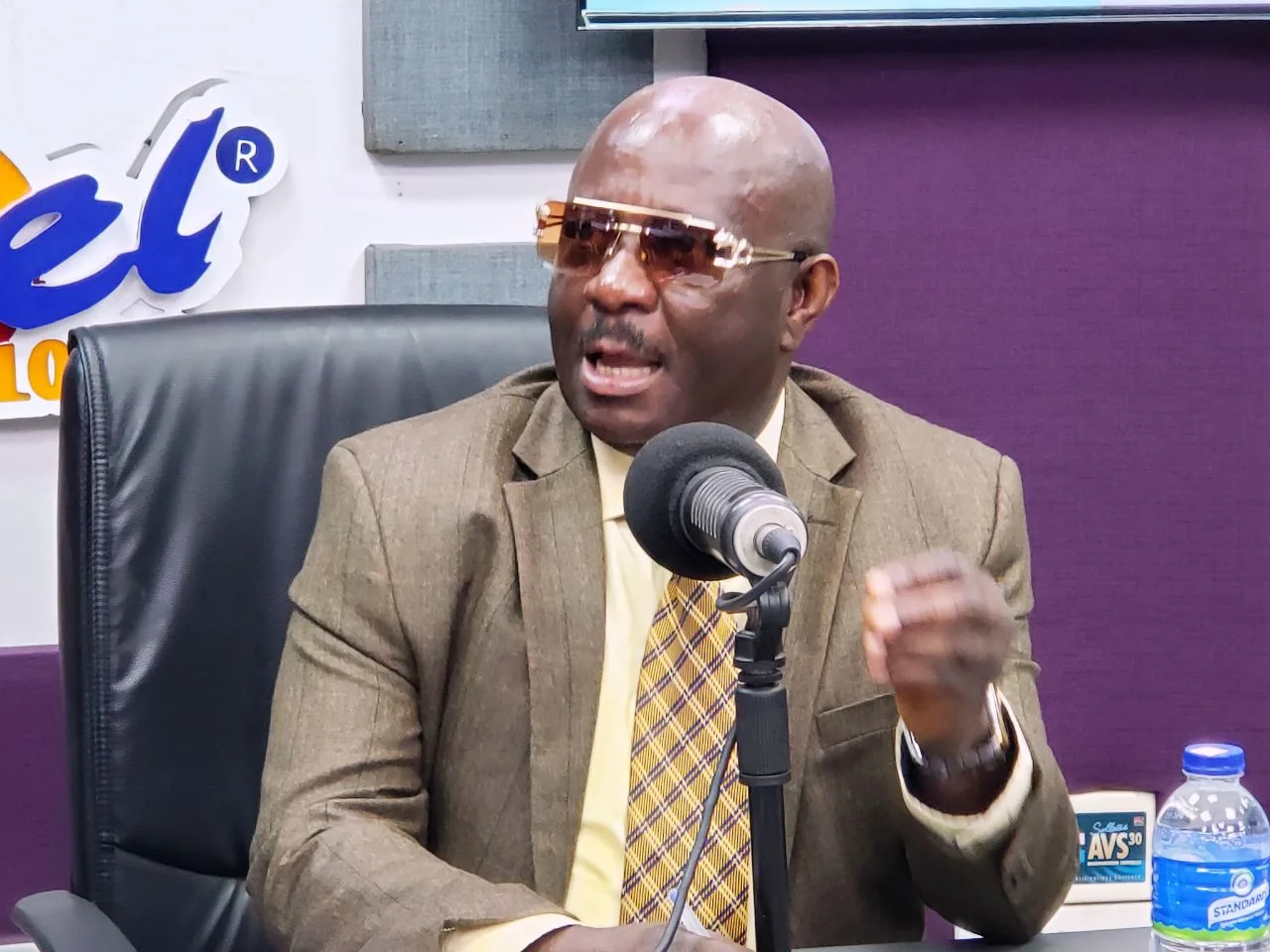
Businessman and Leader of the Union Government, Akwasi Addai Odike, has said Ghana cannot achieve sustainable economic growth unless the private sector is placed at the centre of national development.
Speaking on Angel FM’s ‘Anɔpa Bɔfoɔ’ on Monday, July 27, 2026, he stated that although successive governments since 1992 have consistently described the private sector as the engine of economic growth, little has been done to empower local businesses.
“Since 1992, every government has said the private sector is the engine of growth, but when you assess the economy, the private sector has been left behind,” he stated.
According to him, government expenditure continues to focus largely on the public sector, with a significant portion of the national budget going into the public sector wage bill instead of productive investments.
He explained that capital expenditure, including infrastructure projects, is still dominated by government, stressing that the country cannot develop without a vibrant private sector driving economic activities.
“We can’t develop the country without the private sector becoming the forefront of our economic growth,” he emphasised.
Mr. Odike recalled the indigenisation policy introduced during the era of former Head of State, Ignatius Kutu Acheampong, explaining that the initiative empowered local entrepreneurs to take control of key sectors of the economy.
He argued that Ghanaian businesses must be given the opportunity to dominate the country’s economy, adding that although foreign direct investment expands economic activity, much of the profits leave the country instead of contributing to national development.
Touching on the government’s 24-hour economy policy, Mr. Odike observed that the Mid-Year Budget Review did not provide enough clarity on how the policy would be implemented.
“I did not hear anything convincing about the 24-hour economy in the budget. The government appears to be struggling with its implementation,” he observed.
He proposed what he described as the “Ten Key Projects”, explaining that government should collaborate with the National Development Planning Commission and sector ministries to identify priority projects, particularly in agriculture, to increase production, add value through processing, and boost exports.
Concluding his submission, he maintained that factories established under the initiative should be managed by qualified professionals to ensure efficiency and sustainability.
“If President Mahama wants to implement the 24-hour economy successfully, all he needs is the Ten Key Projects,” he remarked.
Source: Georgina Ewuresi Boison