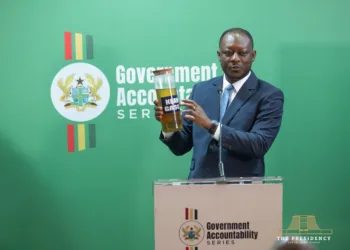














































The Managing Director of the Tema Oil Refinery (TOR), Edmond Kombat, has said the government is targeting to meet about 70 per cent of Ghana’s national fuel demand through local refining by 2028, as part of plans to expand the refinery’s capacity and reduce dependence on imported petroleum products.
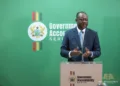
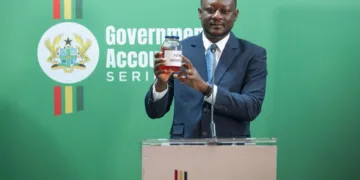
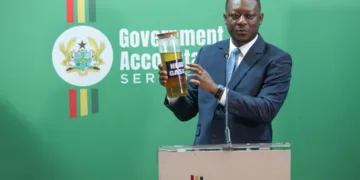
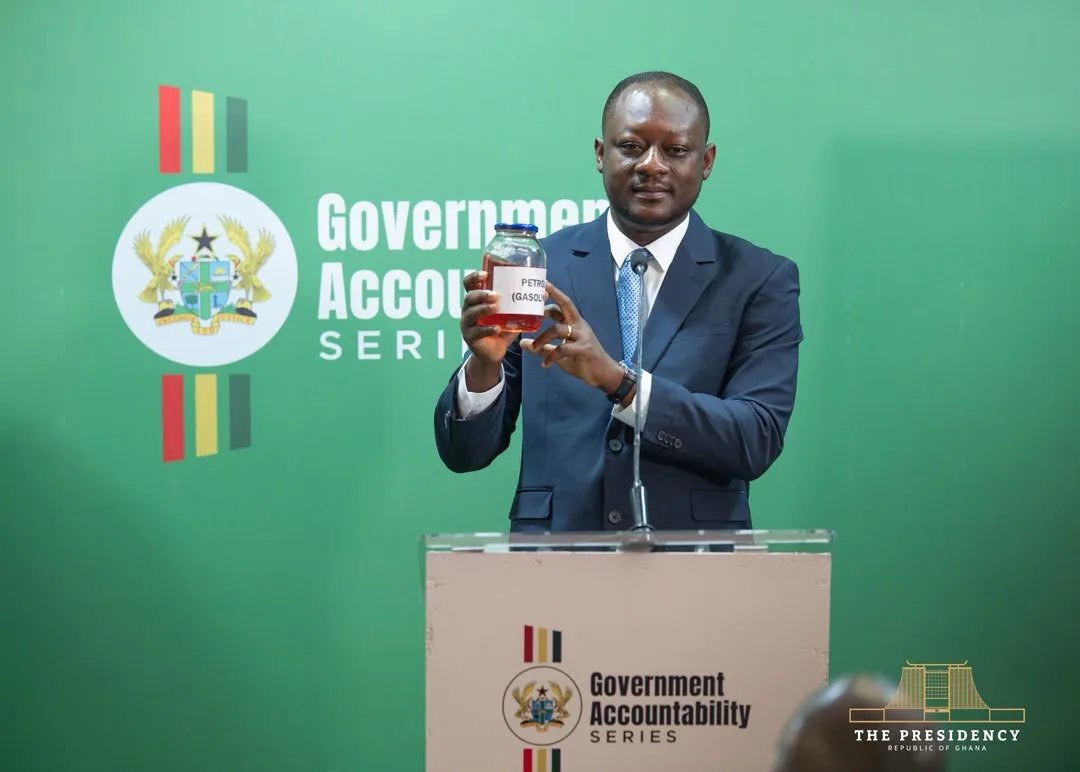
Speaking at the Government Accountability Series at the Presidency on Monday, October 26, 2026, Mr Kombat said the government was pursuing plans to increase TOR’s processing capacity from its current level to 100,000 barrels per day, with a further expansion target of 200,000 barrels per day.
He said President John Dramani Mahama had directed the Minister for Energy and Green Transition to work with the TOR Board and management to develop a strategic roadmap for the refinery’s expansion.
According to Mr Kombat, the President also announced plans to restructure TOR to enable it to operate on sound commercial principles without undue political interference.
He said, “On August 1, 2026, H.E. The President directed the Hon. Minister for Energy and Green Transition to work with the TOR Board and management on a strategic roadmap to raise processing capacity to 100,000 barrels a day with a further plan to increase it to 200,000 barrels per day end-state.”
Mr Kombat said the Ministry of Finance was also working with TOR to consider writing off 120 million dollars of the refinery’s legacy debt owed to the government or converting it into equity.
He explained that the expansion formed part of a wider plan to increase domestic refining, improve the supply of petroleum products and strengthen Ghana’s energy security.
The Managing Director said plans were also being advanced for a new refinery and petrochemical facilities, alongside additional storage capacity.
He said, “Beyond the existing plant, management is advancing plans for a new 100,000 barrel-a-day greenfield refinery and petrochemicals facilities, with additional storage capacity that meets current environmental standards.”
Mr Kombat further outlined the refinery’s Restoration and Legacy Projects programme for 2026 to 2029, which proposes expanding the existing refinery and establishing a new facility to increase Ghana’s overall refining capacity.
He said, “It proposes a brownfield expansion of the existing refinery from 45,000 to 85,000 barrels per stream day, and a new greenfield refinery with capacity of 115,000 barrels per stream day will bring the total to 200,000bpsd.”
The plans, he said, would be pursued with strategic partners and in line with the climate-compliance principles set by the President.
Mr Kombat noted that TOR had resumed crude processing on December 19, 2025, following maintenance on its Crude Distillation Unit (CDU), which had been out of operation since April 2021.
He said the refinery’s current throughput stood at about 28,000 barrels per day, with engineers working to increase it to between 45,000 and 55,000 barrels per day.
“We do not claim the work is finished,” he said, adding that management remained focused on addressing the refinery’s outstanding obligations and sustaining the progress made.
The government’s target of meeting about 70 per cent of national fuel demand through local refining by 2028 is part of its broader plan to strengthen domestic petroleum production and reduce the country’s reliance on imported finished products.