





















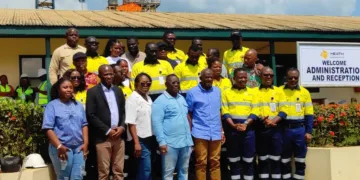






































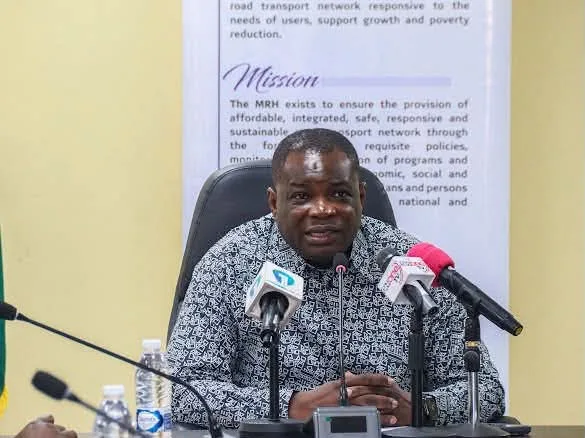
The Minister for Roads and Highways, Kwame Governs Agbodza, has launched the Future-Ready Skills for Road Construction Project, an initiative aimed at addressing skills gaps in Ghana’s road construction industry and improving the quality and durability of the country’s road infrastructure.
The launch builds on an earlier commitment by the Minister in May this year to train heavy equipment operators to address shortages in the road construction sector amid the unprecedented number of road projects ongoing across the country.
The project, being undertaken in collaboration with GIZ, MC-Bauchemie, GBM Plant & Construction and the Koforidua Training Centre, expands on that commitment by strengthening technical and vocational skills development across the industry.
The programme is expected to equip workers with the requisite skills and provide contractors with access to a more stable and skilled workforce nationwide.
Speaking at the launch, Mr Agbodza said the initiative represented a broader commitment to “repositioning the road construction industry through skills development, innovation, modern technology and strategic partnerships.”
He emphasised that investments in road infrastructure must be matched with adequate human resource capacity.
He noted that the competence of engineers, technicians, artisans, equipment operators and other industry professionals was critical to delivering quality roads and ensuring value for money.
“This programme is about the skill set that we need within the value chain of our sector. We believe that when we are able to implement this, we should be able to see better value for the Ghanaian taxpayer.
“We should get to a point where it should be impossible for you to see roads failing six months after construction. It is not always because of the use of low-quality materials, but sometimes about the skill of the person doing the work,” he said.
The Minister identified the Koforidua Training Centre (KTC) as a key institution in the initiative and called for its transformation into a centre of excellence for road construction technology, professional development and practical skills acquisition.
He urged industry players to regard training as an investment in productivity, quality and safety rather than an avoidable cost.
He further encouraged development partners to sustain their technical collaboration and support for local institutional capacity.
The Minister commended GIZ, MC-Bauchemie, GBM Plant & Construction, the Koforidua Training Centre and other stakeholders for their contributions to the initiative, describing their collaboration as essential to developing a future-ready workforce for Ghana’s road construction industry.