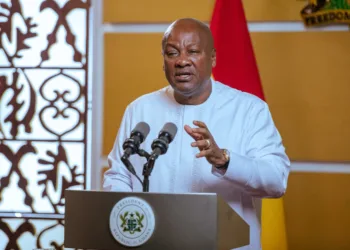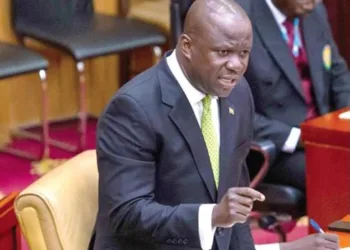








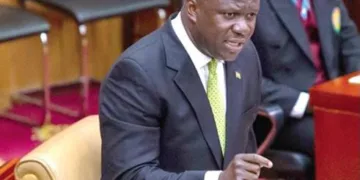




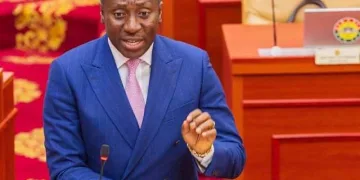



































Member of Parliament (MP) for Akuapem North, Sammi Awuku, has criticised the Mahama administration over what he describes as its poor record in delivering on campaign promises to tackle unemployment, particularly among the country’s youth.
According to The Daily Gist, he accused the government of failing to turn its numerous employment pledges into tangible opportunities, arguing that successive budget statements had offered little evidence of progress on key job creation initiatives.
Speaking during the parliamentary debate on the 2027 Budget Statement and Economic Policy, Mr Awuku said the administration appeared more interested in introducing new policy slogans than demonstrating the impact of its existing employment programmes.
He characterised the government’s approach as “promise, allocation and silence”, alleging that several job creation interventions outlined in the NDC’s 2024 manifesto had either suffered funding cuts or been dropped from the latest budget.
Drawing attention to page 19 of the party’s manifesto, which places job creation at the centre of its development agenda, the MP said a comparison of the manifesto and subsequent budget statements exposed significant gaps between the government’s commitments and their execution.
He pointed to the National Apprenticeship Programme, which he said was allocated GH¢300 million in the 2025 Budget, but saw its funding reduced to GH¢170 million in 2026 before disappearing entirely from the 2027 Budget.
Mr Awuku also demanded explanations for the apparent omission of the General Programme and the National Employment Trust from the latest financial plan, questioning whether the initiatives were still being pursued.
He dismissed suggestions that the government had committed approximately GH¢1 billion towards addressing youth unemployment, arguing that financial allocations alone could not be presented as evidence of a functioning employment strategy without clear implementation details.
The MP further questioned the GH¢35.5 billion allocation to the Ministry of Youth Development and Empowerment, noting that GH¢1 billion of the amount was designated for National Service allowances.
Although he acknowledged the importance of meeting the financial obligations owed to National Service personnel, he maintained that paying allowances to service personnel should not be equated with creating jobs.
On the One Million Coders Programme, Mr Awuku questioned the government’s ability to meet its initial commitment to train one million young people over four years.
He said the targets communicated by government officials had repeatedly changed, citing figures that included an annual target of 400,000 trainees.
The MP argued that the inconsistencies surrounding the programme’s targets cast doubt on the administration’s preparedness to achieve the objective it initially announced.
He also turned his attention to the 24-Hour Economy policy, challenging the government to account for the jobs generated through its proposed three-shift working arrangement.
Mr Awuku said despite the passage of several budget cycles, the administration had not provided reliable figures to establish the programme’s contribution to employment.
He recounted that officials of the 24-Hour Economy Secretariat, as well as the Labour Minister, had reportedly been unable to give definite figures when questioned about the number of jobs created.
“One job, three shifts, three people, three budgets later, the only thing working three shifts in this country is a slogan,” he said.
Beyond the employment initiatives, Mr Awuku questioned the frequent changes in the government’s economic messaging, pointing to the succession of the Reset Agenda, 24-Hour Economy, Big Push and the latest New Economy agenda.
He said the shifting policy descriptions had made it difficult to establish a consistent direction for the government’s economic programme.
He also cited what he considered contradictory explanations from the President and the Finance Minister regarding whether the New Economy would be driven primarily by the public or private sector.
The Akuapem North MP urged the administration to move beyond policy announcements and focus on providing evidence of results.
Referencing paragraph 668 of the 2027 Budget, Mr Awuku also questioned the government’s handling of the country’s economic recovery.
He drew attention to the Finance Minister’s warning about Ghana’s recurring tendency to recover from economic difficulties, become complacent, overspend and eventually slide back into crisis.
According to him, the administration was demonstrating a similar cycle in its treatment of campaign promises, with commitments announced, implementation delayed and accountability seemingly pushed aside.
He said his contribution was aimed at demanding answers on behalf of his constituents and the many young Ghanaians still waiting for the employment opportunities promised by the government.
Mr Awuku further criticised the administration’s expenditure priorities, especially against the backdrop of concerns over outstanding arrears and working conditions among teachers, nurses and judicial service personnel.
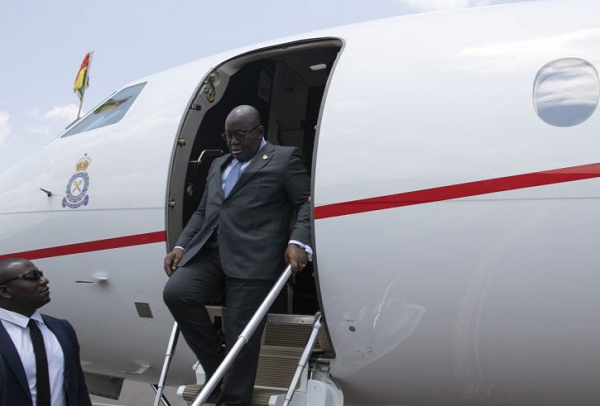
He questioned why substantial resources were being committed to other government projects, including the proposed acquisition of a presidential aircraft, while workers in critical public sectors continued to raise concerns about unpaid entitlements and conditions of service.
He insisted that the government must demonstrate greater commitment to addressing the needs of public sector workers and fulfilling its employment pledges rather than relying on repeated political assurances.
Source: Abigail Ekua Arhin