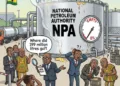














































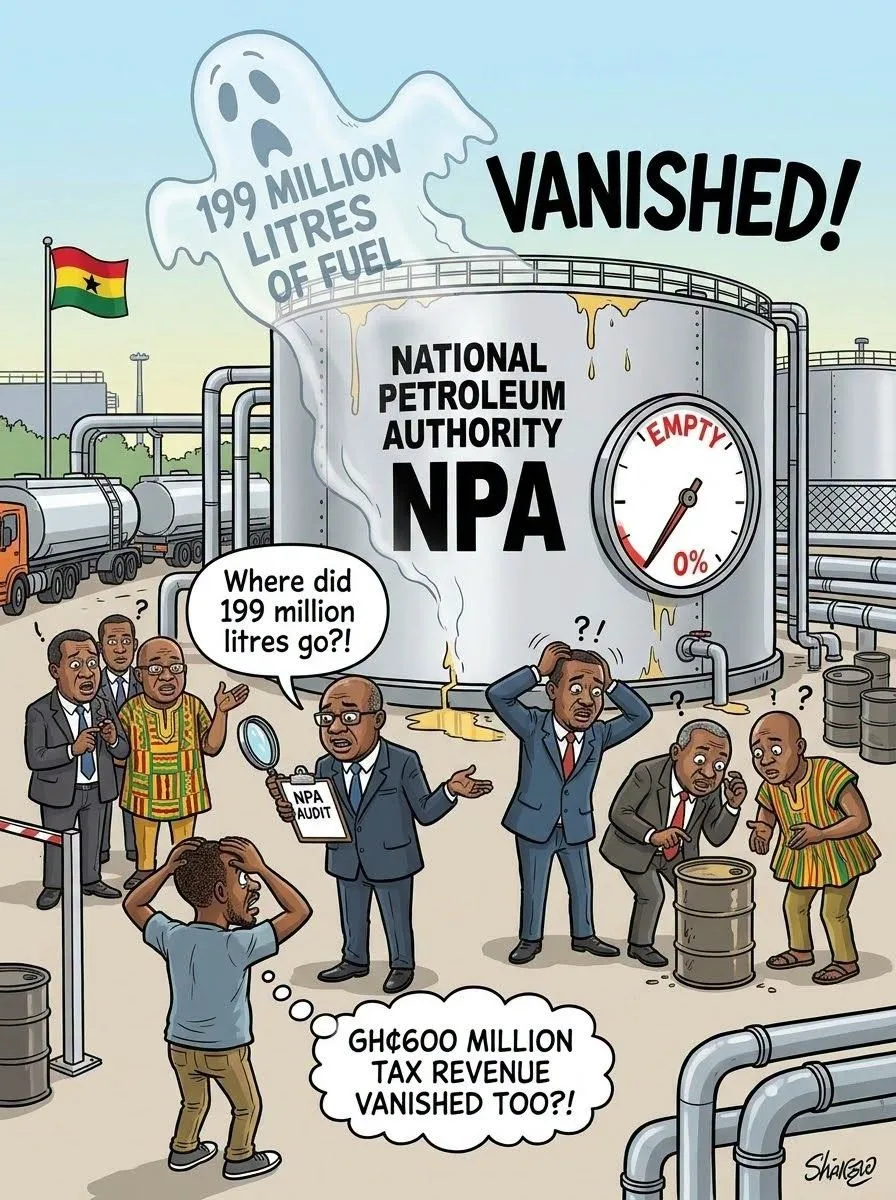
The NPP Projects Bureau’s AI-generated cartoon shows 199 million litres of fuel “vanishing” from an NPA storage tank, and asks NPA’s CEO to answer for it. It makes good propaganda, but Ghana’s own laws expose it as a false story. Worse, it attacks the very leadership that is fighting fuel leakages.
What the law says NPA does
The National Petroleum Authority Act, 2005 (Act 691), as amended by Act 913, is clear about NPA’s job. Section 2(1) states that “The object of the Authority is to regulate, oversee and monitor activities in the petroleum downstream industry.” That makes it a regulator. Nowhere does the Act make NPA a fuel storage company.
policyvault
What the law says about who stores fuel
The same Act puts storage in other hands. Under Section 25(1), the Minister designates a network of strategic storage depots, to be managed by BOST or another body on the Government’s behalf. Sections 26 and 27 deal with licensed depot operators, who must offer storage and trans-shipment services on request, without discrimination, to bulk customers and licensed transporters and marketers.
Policyvault
Even monitoring of the strategic stock isn’t NPA’s duty. Under Section 33, the Ministry monitors the release and storage of stock held at strategic storage depots and ensures a minimum stock is kept as a reserve.
So the law gives storage to BOST and licensed depot operators, and gives strategic stock monitoring to the Ministry. A cartoon of fuel leaking from an “NPA tank” is a cartoon of a tank that doesn’t exist.
The fuel didn’t vanish from any tank, and no cash disappeared
The 199 million litres figure comes from the 2025 Petroleum Product Analysis Report. The unaccounted-for litres were identified through a reconciliation of national petroleum stocks. The report largely attributes this to illegal activities within the sector, despite ongoing automation and regulatory interventions. Analysts point to weak tracking systems, under-declaration, fuel diversion and possible smuggling.
The GH¢600 million isn’t money that disappeared from the NPA either. It’s lost tax. The Ghana Revenue Authority revealed that the government lost more than GH¢600 million in tax revenue in 2025 due to unaccounted petroleum products. Collecting tax on fuel and fighting smuggling at the borders are also tasks the law places with the GRA and its Customs Division, now under the new Customs Act, 2026, which introduces modernised procedures for the clearance of goods, valuation mechanisms and enhanced provisions for revenue mobilisation at the country’s borders.
The problem isn’t new. One think tank puts it at more than 200 million litres of fuel unaccounted for between 2020 and 2025, most of which falls under the NPP’s own time in office.
A CEO using every tool the law gives him
Within its regulatory powers, NPA does have tools against leakages, and LAwyer Godwin Edudzi Tameklo is using them. Act 691 lets the Authority act where a person connives or colludes with a bulk transporter to make false representations to the fund co-ordinator, including by suspending the licences of those involved. It also forbids unlicensed persons from selling or offering petroleum for sale, or holding quantities well beyond their immediate needs, and bans cartels in the downstream industry.
Under his leadership, NPA has taken enforcement to sea. In May 2026, the NPA and the Western Naval Command intensified efforts to combat illicit fuel smuggling along Ghana’s coast, and Mr Tameklo set an impounded wooden boat ablaze in Sekondi-Takoradi, declaring “enough is enough.” A joint operation with the Eastern Naval Command led to the arrest and destruction of eight specially modified boats. He has explained why it matters: the products bypass the NPA’s tracking and marking systems, making it difficult to verify their quality and origin, and deny the state significant tax revenue.
He has also refused to play politics with enforcement. On a regional tour, he pleaded with regional ministers across the country to abstain from intervening on behalf of unscrupulous fuel traders.
Fixing the law itself
Most importantly, Lawyer Tameklo has recognised that a 20-year-old law can’t fight modern fuel crime on its own. In April 2026, he told Parliament’s Energy Committee that the 2005 Act “could no longer fully respond to emerging developments in the petroleum space.” On November 19, 2026, Energy Minister John Jinapor presented the National Petroleum Authority Bill, 2026, to Parliament to update and consolidate the legal framework regulating Ghana’s petroleum downstream industry.
That’s what prudent leadership looks like: enforcing the law as it stands, while pushing for a stronger one.
The real question
The right question isn’t “Where did NPA’s fuel go?” The law says NPA has no fuel. The real question is how to keep closing the loopholes across the supply chain, and the NPA under Lawyer Tameklo is already doing that work.
Ghana deserves answers. It also deserves honesty, not AI cartoons built on a false premise.