














































Africa is not poor, yet Africa has piqued the interests of economists for the last half century and there is a good number of academic literature on why Africa is poor.
This is because for the resources available to Africa, both natural and human capital potential, the continent has underperformed abysmally. To appreciate the weight of this, there is nowhere else on earth where the young and able-bodied are willing and ready to die crossing the Mediterranean into Europe on dinghy boats every summer.
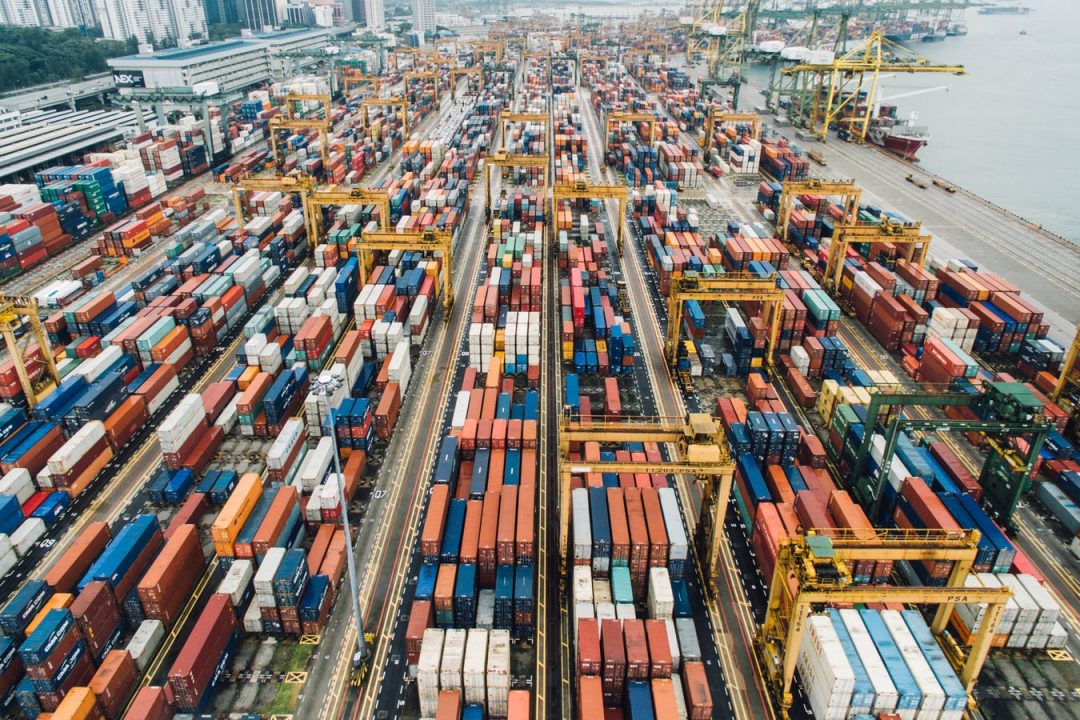
This shows that despite the somewhat rosy statistics on economic and social progress being made in Africa, the economic situation is still dire and precarious for many of the inhabitants of the African continent. This is not an attempt to belittle any economic and social progress made by Africa since 1960. That said, for lesser resources and endowments, countries such as Singapore have been able to transform their countries and economies within a generation and to a point where Singapore is now one of the countries with the highest per capita income in the world and a manufacturer of intermediate and final goods for the world.
Moreover, Africa and China were at the same place in terms of economic and social development in 1960 but China is now a global leader in technology and a prime source of foreign direct investment for Africa. It is noteworthy that countries such as Gabon and Rwanda are outliers on the African continent when it comes to the aforesaid observation. In fact, it is unlikely that any youth from Gabon or Rwanda will attempt to reach Europe via a dinghy boat on the Mediterranean.
What caused this divergence? And what can Africa do about it. These observations is reflected in the Agenda 2063 Africa We Want mantra by the African Union.
One of the main themes that appears in many of the economics literature is the role played by institutions, that is, economic and political institutions. Such is its level of use that when it comes to economics and Africa, the term institutions passes for a cliché’. But there is more to it than meets the eye.
In Africa, institutions are more than “the humanly devised constraints that structure political, economic and social interaction”. In fact, it is the very system on which these constraints that structure political, economic, and social interaction operate. It is the political system. The economic system. And the social system.
It is a system where there is a lack of accountability by politicians and anyone in a leadership position – this includes private businesses and state-owned enterprises. A system so fraught with corruption that the best and brightest of Africa hardly ever make it into leadership positions where they can help Africa write a new story. A system so dysfunctional that informality of the economy grows to a point where so much of what is supposed to be economic activity yields no revenue for the state.
And where revenue comes in from the sale of natural resources, a lack of a social contract – partly due to extremely low tax receipts – means that politicians are free to use resources in a manner that is of little or no benefit for the state. This leads to a system where there are no incentives for the adoption of economic and technological innovation – an economic stasis of some sort wherein economic agents are unable to transform resources available into products or services of significant value to the local economy or intermediate goods and services that is part of a global value chain.
To appreciate this, a walk through a typical Sub-Saharan African city reveals large numbers of hawkers and traders – a good number of them children of school-going age – all selling the same low value products that are mostly imported. These hawkers and traders often sell very close to each other that it is impossible for one of them to earn a decent and taxable day’s wage, assuming the government knew they existed.
Little or no government revenue means that every developmental project must be debt financed from the issuance of government bonds. And a further lack of revenue means that more debt – often using natural resources as a guarantee – is issued to service existing debt creating a circular cycle of debt and even more debt and even more economic stasis. This is a summary of the African story thus far.
In economics, we learn that economic development does not happen overnight. In fact, the economic success stories of the last half-century has taken place over a 30-year period and these success stories have always included substantial improvements to human capital. Indeed, some economists have even gone a step further to argue that human capital improvements which lead to the adoption and improvements in technology and economic innovation are not only the sources of economic development; they are economic development itself.
It cannot be gainsaid that Africa lags the rest of world in human capital capabilities and development. The evidence is very clear. We are talking about a continent where items such as toothpick are imported when there are so many trees on the continent and its imaginable that the technology required to make a toothpick is not complex. Sadly, we are not even talking about breathtaking science and technology. This is what economic and social stasis is.
The aim of my research is to find out whether improvements to human capital in Africa improves institutional capabilities be it economic, social, or political institutions. Will human capital improvements enable Africa to develop an economic system where economic activity is recorded and taxed fairly (not suffocating taxes), reducing informality in the process, raising revenue for economic development projects, creating a reliable system which incentivizes the best and brightest and where the best and brightest of Africa can adopt technology and innovate and add value to natural resources extracted.
A system where corruption is checked and possibly uprooted because the citizenry are educated, understand, and take an active interest in state affairs, understand that economics is the management of finite resources, and realise that Africa is the only place they can call home and therefore work hard to make it a place where all Africans can call home and are happy to return to.
A growing number of African countries have economic and political institutions. In addition, the economics literature is saturated with several economic and social policy prescriptions notable amongst them is democracy and institutions and indeed most Sub-Saharan African countries practice some form of democracy and have had economic and political institutions since 1960 yet the economic situation is dire and precarious for so many Africans of middle and low-income status. This shows that democracy and institutions explains the problem with Africa in a very limited way and that new solutions should be sought for an old problem for Africa.
The Systems Theory Of Economic Development provides a holistic framework for economic development. It shows how economics affects politics and vice versa and how both produces a dysfunctional social system which then affects both economics and politics in a never-ending circular cycle. The Systems Theory Of Economic Development explains the ever-rising tide of public debt in Africa – a well-identified bane to Africa’s development and provides a framework of what African leaders and policy makers can do about it on the path to realizing the aims and objectives of Africa’s Agenda 2063.
Author: Kwabena Meneabe Ackon is an economist and author and has worked for multinationals such as JP Morgan Chase Bank and the London Stock Exchange Group. The author has first-hand experience of the African continent.