
























































Ghana is set to experience a harsher dry season as a very strong El Niño develops in the Pacific Ocean, the Ghana Meteorological Agency (GMet) has confirmed.
In a six-page advisory, GMet said the phenomenon is likely to influence Ghana’s weather into the first half of 2027 and is urging early preparation to mitigate its impacts.
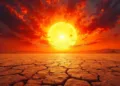
The Agency said the main risks for the country are a hotter, drier and dustier dry season from late November, prolonged dry spells, and the continuing risk of sudden heavy rainfall and flooding in parts of southern Ghana.
According to GMet, observations from its centre and leading international centres including the US National Oceanic and Atmospheric Administration (NOAA), the International Research Institute for Climate and Society (IRI) and the World Meteorological Organization (WMO) show the event is intensifying. It is expected to peak between now and January 2027, before gradually weakening through the first half of 2027.
GMet explains that El Niño is a natural warming of the central and eastern Pacific Ocean that shifts rainfall and temperature patterns worldwide, including West Africa. Past very strong episodes in 1982/83, 1997/98 and 2015/16 and the moderate event of 2023/24 showed Ghana’s vulnerability to rainfall variability and its effects on agriculture, water resources, hydroelectric power generation and public health.
For the period to December 2026, GMet forecasts below-normal rainfall across most parts of the country, though above-normal rainfall is still expected in inland parts of Greater Accra and Central, south-western parts of Volta and Eastern, parts of Bono and Savannah, and north-western Upper West. Warmer-than-average temperatures are expected in most areas, except the south-west and parts of Volta between Ho and Kete Krachi, which may see cooler-than-average conditions.
From late November 2026 to March 2027, conditions are expected to be drier and dustier than usual in many areas. GMet warns this could increase the risk of bushfires, water shortages, and stress on crops and livestock, while hot, dry and dusty conditions may raise the seasonal risk of meningitis in the northern regions. The highest heat stress is expected from February to April 2027, particularly in Northern Ghana.
The Agency says the start and performance of the 2027 rainy seasons remain uncertain and it will continue to monitor conditions and issue updated forecasts.
It has advised farmers to follow GMet and Ministry of Food and Agriculture advisories before planting or replanting, consider early maturing and drought-tolerant varieties, and avoid bush burning. Residents of the northern regions are urged to limit exposure to dust and seek prompt medical attention if they develop symptoms such as fever, severe headache or a stiff neck.
GMet further urges the public to drink enough water, avoid strenuous outdoor work during the hottest hours, check on vulnerable persons, conserve water and rely on official sources for weather updates.
Communities along the Volta and in low-lying urban areas are to continue to follow advisories from NADMO and the Volta River Authority, as short, heavy downpours and localised flooding remain possible even where seasonal rainfall is expected to be below normal.