



































The war in Ukraine has redrawn geopolitical lines across Europe. However, beyond the trenches and missile strikes lies a quieter, more troubling reality: one that stretches far beyond Eastern Europe into the streets of Nairobi, Accra, Lagos and Johannesburg.
It is the story of young African men, drawn by promises of opportunity, only to find themselves on the frontlines of a war that is not theirs.
In recent months, mounting investigations, government statements and eyewitness accounts have exposed a disturbing pattern: recruitment networks linked to Russia targeting African youths for deployment in the ongoing conflict.
What is presented as employment or military opportunity often turns out to be something far more precarious, a pipeline into one of the world’s most dangerous war zones.
Initially, Moscow denied the existence of any such recruitment operations. But as evidence accumulated, that position shifted.
Russian authorities have since acknowledged the presence of Africans, including Kenyans, Ghanaians, Nigerians and South Africans, on the battlefield, describing them as “volunteers.” It is a convenient label and it raises more questions than it answers.
Under international humanitarian law, including the principles reflected in the Geneva Conventions, a volunteer is someone who freely and knowingly joins a conflict without coercion and not primarily for financial gain.
That definition sits uneasily with the realities emerging from the field.
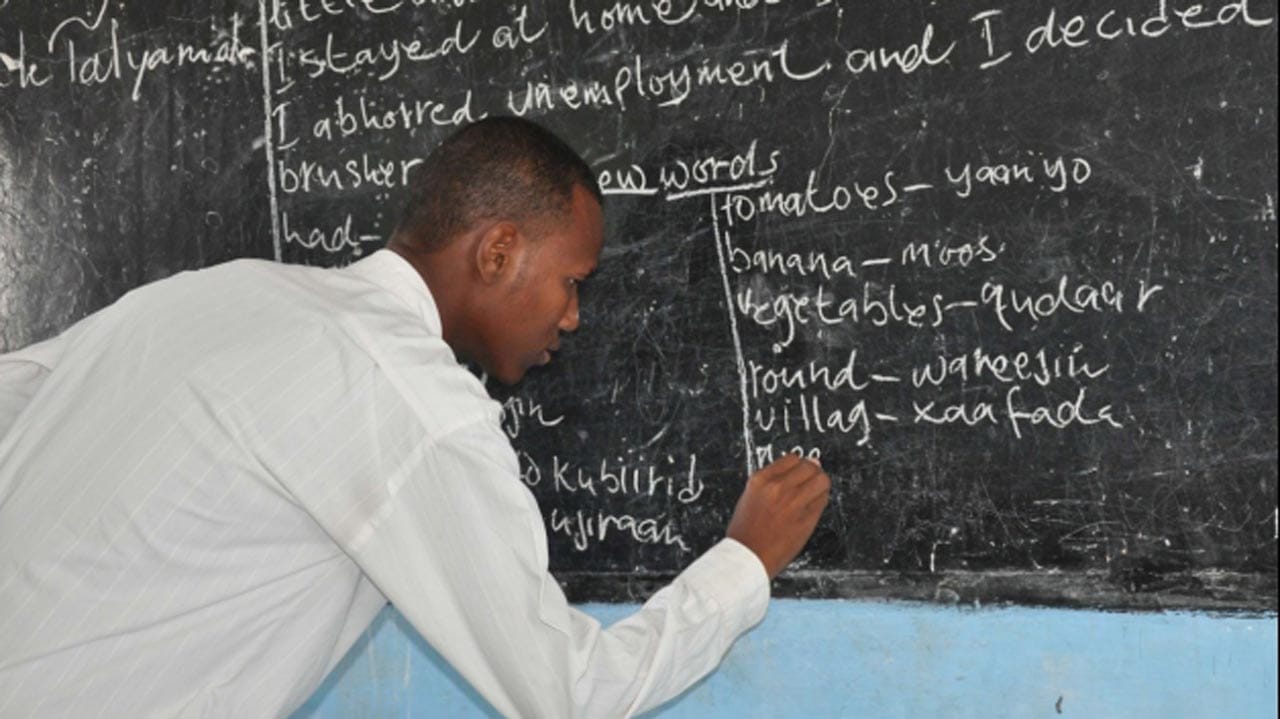
Many of those recruited come from economically vulnerable backgrounds, driven by high unemployment and limited opportunities at home.
Reports suggest that some were promised well-paying jobs or educational prospects, only to be enlisted into military service under conditions they neither fully understood nor consented to. Contracts were allegedly signed in unfamiliar languages.
Passports were reportedly confiscated. In some cases, recruits found themselves unable to withdraw even when they wished to.
This is not the profile of voluntary service. It begins to resemble something far more troubling: a blurred intersection of mercenarism, human trafficking and labour exploitation.
The legal contradictions are equally stark. In Kenya, for example, Section 68 of the Penal Code criminalizes the enlistment of citizens into foreign armed forces without state approval, carrying penalties of up to ten years’ imprisonment. Similar provisions exist in South Africa and across much of the continent.
If recruitment occurs outside these legal frameworks, then the claim of voluntariness becomes even more tenuous.
At the same time, Russia has consistently labelled foreign fighters supporting Ukraine as mercenaries, often using the term to delegitimize their role.
Yet, when it comes to Africans fighting on their own side, the narrative shifts to “volunteers.” This duality is not just rhetorical; it is strategic.
The label of “mercenary” carries legal consequences under international law, while “volunteer” offers a shield against accountability.
But the facts on the ground tell a different story. Multiple reports indicate that African recruits are frequently deployed in high-risk combat roles with minimal training, effectively treated as expendable manpower.
Casualty figures remain opaque, but there have been credible accounts of deaths, injuries and missing persons among African contingents, often with little or no official communication to families.
This raises a fundamental question: if these arrangements are transparent and lawful, why do families struggle to obtain basic information about their loved ones?
The answer lies partly in modern warfare. Military operations are inherently secretive, particularly in active conflict zones. Communication is tightly controlled.
Personal devices may be restricted or confiscated. Secure channels replace public networks. Beyond these operational realities lies another layer, the role of informal recruitment intermediaries.
Many of these recruits do not pass through formal state-to-state agreements. Instead, private agents and loosely regulated networks facilitate their movement, often leaving no clear paper trail.
Once deployed, communication lines break down. Accountability becomes elusive. Governments back home are left with limited leverage to intervene.
For African states, this is more than a humanitarian concern. It is a question of sovereignty.
A nation’s sovereignty is not only defined by its borders but by its ability to protect its citizens, to regulate their movement, safeguard their rights and ensure foreign interests do not exploit them.
When recruitment networks can quietly extract citizens into external conflicts without oversight, that sovereignty is undermined.
Yet the problem is not solely external. The vulnerability of African youths to such recruitment reflects deeper structural challenges: unemployment, limited economic opportunities and weak regulatory systems.
Where opportunity is scarce, risk becomes negotiable. For many young men, the promise of income abroad outweighs the uncertainty of the unknown.
Addressing this requires more than diplomatic protests. It demands systemic reform.
African governments must strengthen legal frameworks to criminalize illegal recruitment and enforce stricter oversight of private employment agencies. Migration systems must be better regulated.
Intelligence sharing across the African Union should be enhanced to identify and disrupt recruitment networks.
Above all, there must be sustained investment in job creation, skills development and entrepreneurship to reduce the economic desperation that fuels such exploitation.
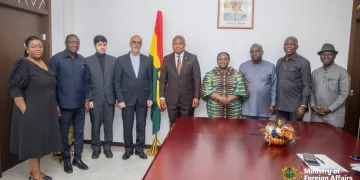
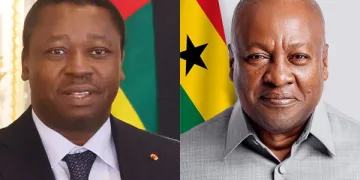
There is also a broader moral dimension to this issue. In a recent address at the United Nations General Assembly, Ghana’s Foreign Minister, Samuel Okudzeto Ablakwa, highlighted the need to protect African citizens caught in global conflicts, including efforts to secure the release of detained nationals. Similarly, President John Dramani Mahama’s call for historical and economic justice for Africa resonates deeply in this context.
For centuries, African lives have been drawn into conflicts and labour systems not of their choosing, from the transatlantic slave trade to colonial wars. The current allegations of recruitment into foreign battlefields echo that history in uncomfortable ways. While the context has changed, the underlying pattern of exploitation remains.
To be clear, diplomacy has made some progress. Kenya, for instance, has reportedly secured assurances from Russia to halt the recruitment of its citizens. However, enforcement remains uncertain, particularly given the covert nature of these operations.
Ultimately, this is a test of both international responsibility and African agency. For Russia, it is a question of consistency, whether its global posture aligns with its actions.
For African states, it is a call to strengthen institutions, protect citizens and assert sovereignty in an increasingly complex world.
The war in Ukraine may be fought on European soil. But its consequences and contradictions are being felt far beyond it. Africa must not be a silent participant in a conflict it did not choose.
Joseph McCarthy is an analyst and researcher focusing on governance, security, and political transitions in the Sahel. He writes on geopolitics, development, and African diplomacy. Contact: 0264354064 | joecarthy30@gmail.com