































Russia’s growing footprint in Africa, particularly in the Sahel, is often framed as a strategic partnership.
In reality, it is something far more subtle and consequential: a calculated campaign to shape perception, influence narratives, and ultimately control outcomes.
Modern geopolitics is no longer fought only with tanks and troops. It is fought in the information space: through stories, symbols, and carefully curated truths.
In this arena, Russia has deployed a sophisticated disinformation architecture across parts of Africa, designed not just to compete with Western influence, but also to rewire how Africans see the world in its own terms and for the sole benefit of the Kremlin.
At the heart of this strategy is a simple but powerful tool: disinformation. By amplifying Western failures, invoking colonial grievances, and projecting itself as an anti-imperialist ally, Moscow positions itself as the “alternative.”
However, this alternative, on closer inspection, is built less on substance and more on narrative engineering.
The objective is clear: weaken competing influences, secure strategic footholds, and gain access to resources, while appearing as a partner in Africa’s quest for sovereignty.
Recent revelations have shed light on how this machinery operates.
Testimonies from insiders and investigations by global media networks point to a coordinated system involving journalists, bloggers, activists, and cultural figures.
At the centre of this network is a shadowy ecosystem linked to Russian interests, often referred to as “the Company”, a structure designed to recruit, fund, and exert influence across the continent.
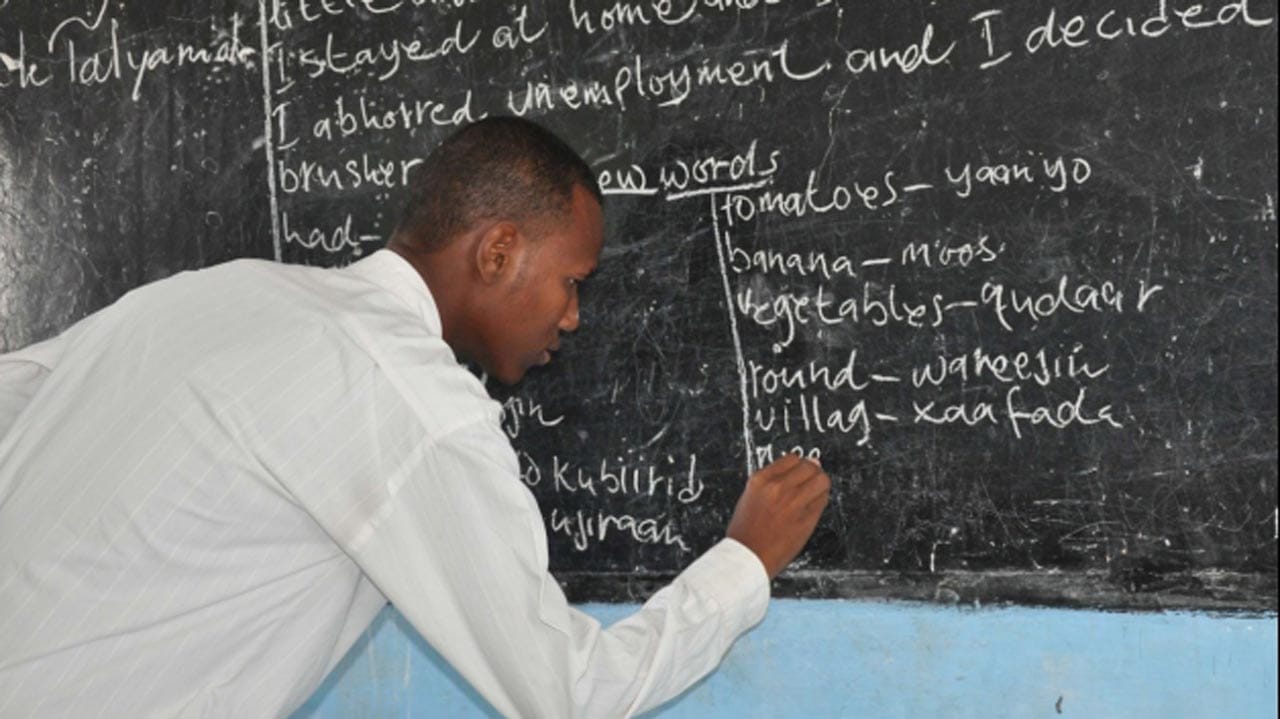
In the Central African Republic, the account of former propagandist Ephrem Yalike is particularly telling.
What began as a survival strategy in a financially constrained media environment evolved into full participation in a state-backed disinformation system.
His daily routine was simple: monitor narratives about Russia, discredit opposing views, and publish pro-Russian content disguised as independent journalism.
These articles were quietly distributed to local newspapers for a fee. Each publication came with modest payments, but in fragile media ecosystems, even small sums can tilt editorial direction.
The result is a subtle but powerful distortion of public discourse, in which truth competes with sponsored narratives and credibility becomes negotiable.
This is not an isolated case. Leaked documents reveal a broader ambition: the creation of a “confederation of independence”, an anti-Western bloc anchored in Africa, particularly within the Sahel.
The Alliance of Sahel States (AES), comprising Mali, Burkina Faso, and Niger, is increasingly portrayed as the nucleus of this vision.
On the surface, the AES represents regional solidarity and sovereign assertion. Beneath it, however, lies a deeper geopolitical play.
Military-led governments, often grappling with legitimacy challenges, become fertile ground for narrative reinforcement.
Through coordinated messaging, coups are reframed as “corrective interventions,” democratic setbacks are downplayed, and external partnerships are recast as threats to sovereignty.
When such narratives spread, they do more than shape opinion; they normalise political disruption.
The strategy extends beyond traditional media. Civil society organisations are subtly engaged to echo themes of sovereignty and resistance.
Cultural figures and influencers are co-opted to give emotional resonance to geopolitical messaging.
Even youth platforms, spaces meant for empowerment and innovation, are increasingly drawn into this orbit.
Consider the International Conference of African Youth held in Bamako in September 2024.
On paper, it was a forum for discussing civic responsibility, food security, and youth engagement in tackling insecurity.
But reports indicate that, by the closing session, participants were encouraged to endorse their countries’ alignment with the AES.
For many, this crossed a line. Foreign policy decisions belong to sovereign states, not youth forums.
The attempt to extract political endorsement in such a setting raises serious concerns about the instrumentalisation of African youth in broader geopolitical contests.
Some participants resisted. That resistance matters. Because what is unfolding in the Sahel is not merely a shift in alliances, it is a contest for influence over institutions, narratives, and ultimately, sovereignty itself.
Russia’s approach operates on a dual track. Publicly, it champions independence and non-interference.
Privately, it builds networks of influence, embeds itself within local ecosystems, and steers discourse in directions that serve its strategic interests.
This is not a partnership. It is penetration. More concerning is the gradual expansion of this influence on architecture.
Plans to extend the AES beyond its current members, potentially drawing in other West African states, suggest a broader ambition to reshape regional alignments.
The risk is not cooperation. Cooperation is essential in today’s interconnected world. The risk is dependency disguised as sovereignty.
Perhaps, the most troubling dimension is how easily this strategy exploits existing vulnerabilities.
Underfunded media institutions, fragile governance structures, and widespread economic hardship create openings that external actors can, and do, leverage.
Journalists struggling to make ends meet become targets for inducement. Youth seeking opportunities become channels for messaging.
Civil society actors become amplifiers of narratives they may not fully control. Yet, Africa’s core challenges remain unchanged: insecurity, unemployment, weak institutions, and limited economic transformation.
No amount of narrative framing can substitute for real development. The Sahel does not need competing propaganda. It needs stability. It needs accountable governance. It needs investment in people, not influence on perception.
This is where the illusion begins to crack. Because influence built on disinformation is inherently fragile. It may shape perception in the short term, but it cannot deliver long-term solutions.
When expectations collide with reality, narratives lose their power.
Africa must therefore respond with clarity and strategic discipline. Engagement with global powers, Russia included, is not inherently problematic.
But such engagement must be guided by national and continental interests, not by externally constructed narratives.
African governments must strengthen institutional resilience. Media organisations must uphold editorial integrity and citizens, especially the youth, must develop the critical awareness needed to navigate an increasingly complex information environment.
The battle unfolding in the Sahel is not just about territory or alliances. It is about the African mind and is a battle Africa cannot afford to lose.
Joseph McCarthy is an analyst and researcher focusing on governance, security, and political transitions in the Sahel. He writes on geopolitics, development, and African diplomacy. Contact: 0264354064 | joecarthy30@gmail.com