


Historically, Ghana’s carbohydrate base had centered on indigenous staples like fufu, banku, gari, plantain, and rice.
Imported pasta especially spaghetti was once a symbol of celebration, served mostly on special occasions.
But a transformation has quietly taken place.
In the early hours of a busy Accra to the quiet late nights, you are likely to see the unwrapping of a steaming plate of spaghetti for breakfast, lunch or supper.
That wasn’t always the image at Ghana’s dining tables.
Yet today, from the bustling streets of Kumasi to the quieter corridors of Tamale kitchens are simmering pots of spaghetti, signaling an undeniable truth: Ghana is eating more spaghetti than ever.
According to trade and customs data from the Ghana Revenue Authority and Ghana Statistical Service, imports of pasta products have increased tremendously by over 50% in the last five years, with spaghetti making up the lion’s share.
Retail surveys estimate that urban households now consume spaghetti more frequently than brown rice or even gari.

While rice still dominates overall carbohydrate preferences, spaghetti has surged ahead not only as a delicious and affordable meal but as the fastest-growing staple in urban diet.
This is largely fueled by busy urban lifestyles, coupled with quick spaghetti cook time.
Television cooking shows, social media food reels, and youth influencers are aggressively promoting the consumption of spaghetti.
In Accra’s trendier neighborhoods, a plate of spaghetti is more than food. It’s a “modern” badge of new lifestyle patterns, a gender-neutral favorite snack, and a weekend comfort meal.
But what are we really consuming?
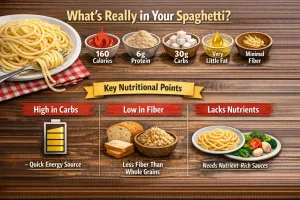
A 100-gram serving of cooked spaghetti typically contains:
• ~160 calories
• ~6 grams of protein
• ~30 grams of carbohydrates
• Minimal fiber
• Very little fat
Key nutritional points include:
• High carbohydrate content, providing quick energy.
• Low in dietary fiber compared to whole grains like brown rice or millet.
• Lack of significant vitamins and minerals unless paired with nutrient-rich sauces.
The surge in consumption of spaghetti has dire health consequences.
According to the World Health Organization (WHO) Framework on Balanced Diets, excessive reliance on refined carbohydrates like pasta can undermine dietary diversity, thus increasing the risk of metabolic issues when consumed disproportionately.
Similarly, a 2024 study by the University of Ghana’s Department of Nutrition revealed that urban youth now list pasta as a preferred lunch choice, and many consumers pair it with high-salt sauces or processed meats, amplifying health risks.
Experts however warn that habitual consumption without balanced diets could propel non-communicable diseases, especially diabetes and cardiovascular conditions in a population already navigating nutritional transitions.
According to the WHO, at least 30 percent of all cancers could be prevented through simple measures such as adopting a healthy diet.
As spaghetti expands its footprint, some local staples risk being marginalized, thus reducing the diversity once characteristic of Ghanaian tables.
Nutritionists emphasize that how spaghetti is eaten really matters.
For example, pairing it with vegetables (kontomire, garden eggs, okra), using lean proteins (beans, fish, chicken), including legumes or whole-grain pasta occasionally, and maintaining daily physical activity.
From a once-occasional imported fare, spaghetti has woven itself into the fabric of Ghana’s daily diet.
It reflects broader shifts; urbanization, globalization, and changing lifestyles.
But behind every steaming plate is a question: Are we eating for comfort, convenience, or long-term health?
As Ghana continues to write its nutritional future, the story of spaghetti is more than pasta on a plate. It’s simply a mirror of who we are and what we may become.
Source: Roberta Gayode Modin


