

























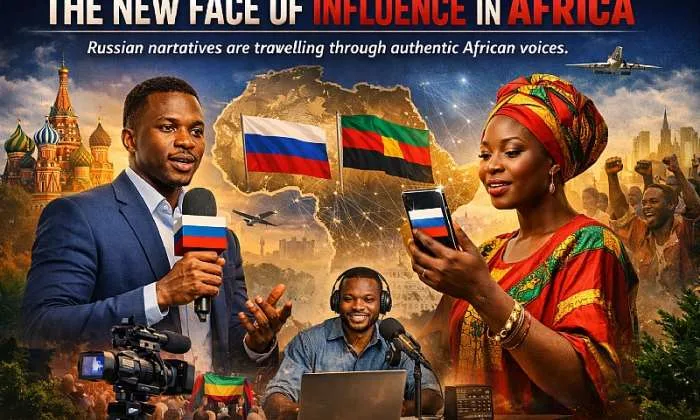
For years, the word disinformation conjured a familiar picture: troll farms, fake accounts and automated bots flooding the internet with crude propaganda.
Those methods still exist, but influence operations have matured. The most effective messenger today is rarely an anonymous account. It is a real person, with a real name, a credible public profile and convictions he appears to hold sincerely.
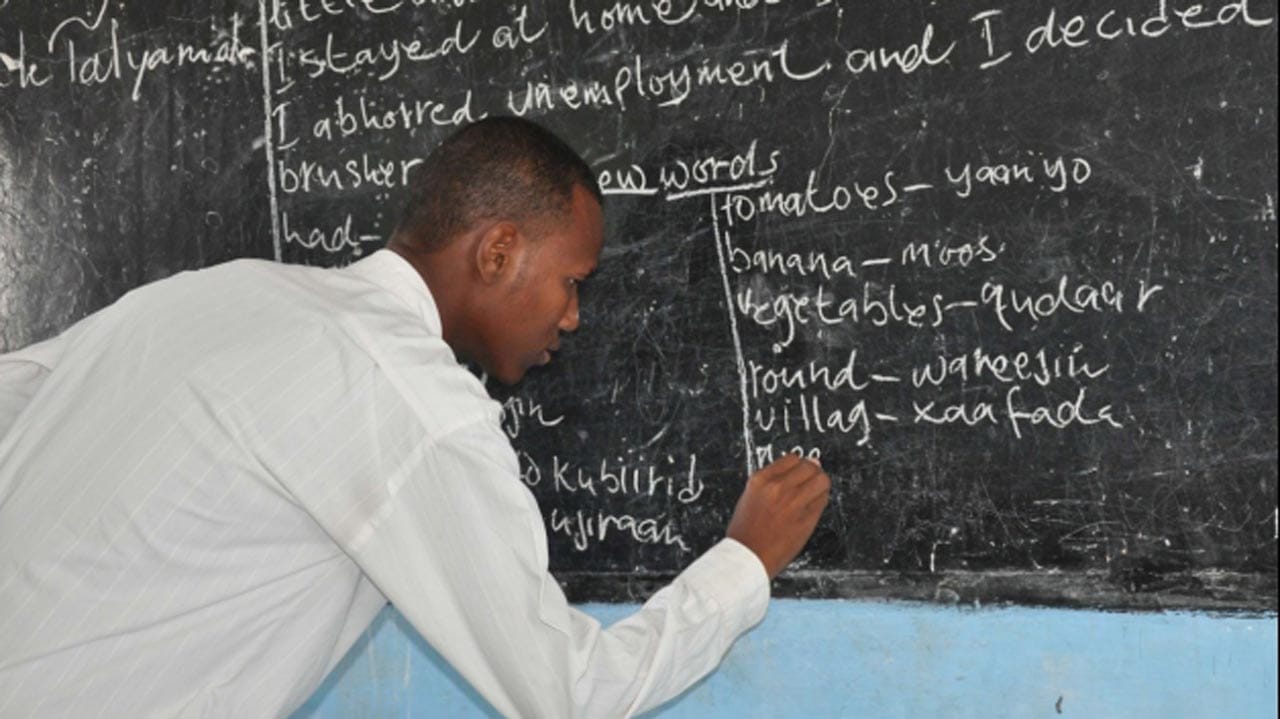
The case of Fortune Madondo illustrates the shift. He is no online provocateur hiding behind a pseudonym; he is a Zimbabwean teacher and the founder of a youth organisation, with a documented life in his community.
He writes under his own name, identified in his byline only as an “African Teacher,” with no institution given, and his views seem consistent with his stated beliefs. What matters is less who he is than what he carries.
Across more than fifty articles in twelve months, most of them on Pan-African platforms, the line never wavers: praise for the military juntas of the Sahel, attacks on Western governments and on AFRICOM, condemnation of France’s role in Africa, and the celebration of resource sovereignty against foreign plunder.
Whether by design or by conviction, these themes closely align with the narratives Moscow has sought to amplify across the continent.
That alignment, not the man, is the point. Influence no longer requires recruitment, payment or instruction.
A foreign power’s objectives can be served just as well by people who believe every word they write, because the force of the message lies in its local authenticity.
A reader will trust an African voice discussing African problems far sooner than a communiqué from Moscow.
So the useful question is not whether Fortune Madondo is a Russian agent; there is no public evidence that he is.
The question is who benefits when local voices, sincere or not, repeatedly reinforce narratives that happen to serve a foreign strategy.
Consider how this interacts with Pan-Africanism. Russia has spent years presenting itself as a champion of African sovereignty and an enemy of colonialism, language that resonates because it draws on real historical wounds.
Madondo’s writing sits comfortably within that tradition, and many African intellectuals share his instincts. Yet the scrutiny runs in only one direction.
The West is relentlessly interrogated; Moscow, despite its expanding military, mining, and political footprint, is almost never asked the same questions.
If Pan-Africanism is the defence of African sovereignty against all external control, the principle must apply evenly. When French deployments are called neo-colonial, Russian military contractors deserve the same examination; when Western extraction is condemned, so should Russian mining concessions.
When he co-signed an appeal in late 2024 demanding both that Russian troops leave Ukraine and that French troops leave Africa, the false symmetry itself did Moscow’s work. A Pan-Africanism that suspects only one power risks sliding from a doctrine of independence into an instrument of another’s ambition.
The Madondo question also points to a place: Ghana. Over the past two years, the country has drawn growing attention from foreign actors keen to enter its media space, and the reason is structural.
Ghana is one of Africa’s most respected democracies and a heavyweight in anglophone media; what is published in Accra travels across West Africa and beyond. In December 2025, Ghanaian journalists attended a SputnikPro seminar co-organised by the Russian Embassy and the Ghana-Russia Centre, led by Vasily Pushkov of Rossiya Segodnya, the state group behind the Sputnik news agency.
Other moves followed, among them a cooperation agreement with Ghana’s main journalism university and the opening of a Russian cultural centre.
None of this is illegal. But influence secured in Ghana enjoys a multiplier effect that few other markets offer.
The mechanism is quieter than propaganda and more durable. People do not trust propaganda; they trust outlets they already consider credible.
A publication earns that trust through genuine local reporting, and the reader then assumes that everything on the page has cleared the same editorial bar.
That is where credibility is transferred: from the newsroom’s real work to syndicated columns, opinion pieces and, on some platforms, verbatim Russian state material set at the same level as a story on local agriculture. Repetition completes the effect.
Ten near-identical articles across ten outlets read as an independent consensus; the reader concludes that everyone is saying this, when in truth, the same viewpoint is simply circling back. Influence here comes not from proving a claim, but from normalising it.
The significance of the Madondo case, then, is not the unmasking of an operative; the evidence does not support that, and the chase would miss the point.
It is the growing difficulty of telling sincere conviction apart from narratives engineered to serve someone else’s strategy, in an environment where influence travels through authentic voices, trusted platforms and ideas that genuinely resonate.
The defence is not a hunt for enemies but the slower work of critical thinking, editorial transparency and media literacy.
The question is no longer simply who is speaking. It is whose interests are served when the same narrative is amplified, again and again, across the continent.
Joseph McCarthy is an analyst and researcher focusing on governance, security, and political transitions in the Sahel. He writes on geopolitics, development, and African diplomacy. Email: joecarthy30@gmail.com