


The Electricity Company of Ghana (ECG) has warned of increasing fire risks in homes and businesses as some customers continue to exceed their approved electricity load without notifying the company.
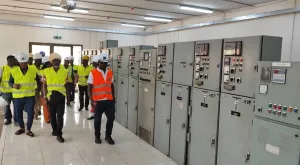
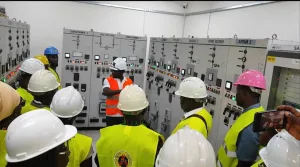
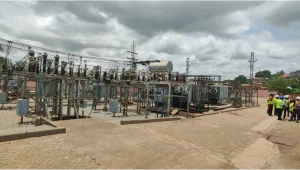
The caution was issued by the Western Regional General Manager of ECG, Ing. Emmanuel J. Ofori, during a media engagement at the Ketan Bulk Supply Point, which aimed to update journalists on the company’s operations.
Ing. Ofori explained that power distributed in the Western Region is sourced from the Ghana Grid Company (GRIDCo) and transmitted through Bulk Supply Points (BSPs) to primary substations before being stepped down to reach homes and businesses.
He identified vegetation interference as a major cause of power outages, especially during the rainy season. Power lines often pass through dense vegetation, and during storms trees and bamboo can come into contact with the lines, causing faults and forcing automatic shutdowns to protect the system.

 To address this, ECG carries out routine vegetation-control exercises to clear growth along power-line corridors.
Ing. Ofori also highlighted the overloading of the Bogoso Bulk Supply Point, which serves areas including Bogoso, Asankrangwa and surrounding communities. The situation has contributed to unstable electricity supply in parts of the Amenfi East and Amenfi West districts.
According to him, ECG is constructing a new line from the Prestea Bulk Supply Point to the Bogoso BSP to ease the pressure and improve supply stability. The project is expected to be completed within one month.
He stressed that customer behaviour is also contributing significantly to the challenges. When customers apply for electricity, they are required to declare their total load demand; however, many increase their usage over time without informing ECG.
 He noted that the standard single-phase meter installed in most homes can handle up to about 80 amps, and any increase beyond that requires an upgrade of both the meter and the service cable.
“When customers exceed their approved load without upgrading their meters and cables, it can lead to overheating, damage to equipment, and in some cases fire outbreaks,” he warned.
He added that although ECG monitors load growth in communities and upgrades transformers where necessary, individual households must take responsibility by informing the company of any increase in electricity demand.
Ing. Ofori cited fast-growing communities such as Wassa Kwabeng as examples where rising demand, if not properly managed, can strain the system.
 He assured the public of ECG’s commitment to improving service delivery and urged the media to help educate consumers on safe electricity usage and the need to comply with load requirements to prevent avoidable disasters.
Source: Nana Fynn


