


Anti-corruption civil society organisation CRUS against Corruption (CRUS) has strongly condemned all forms of vote buying and voter inducement in Ghana’s electoral process, describing the practice as unlawful, unethical, and a serious threat to the country’s democratic foundations.
In a statement issued to media houses on Monday, February 9, 2026, the group said,
“We strongly condemn all acts of vote buying and voter inducement in the electoral process in Ghana. These practices are unlawful, unethical, and fundamentally threaten the integrity of our democratic system.”
CRUS noted that vote buying whether through cash, gifts, food items, or promises of material benefit—is expressly prohibited under Ghana’s electoral framework, including the 1992 Constitution, the Public Elections Regulations, 2020 (C.I. 127), and the Criminal Offences Act, 1960 (Act 29).
“These laws criminalize corrupt electoral practices and impose sanctions on individuals who seek to improperly influence voters,” the statement emphasised.
The organisation warned that such conduct violates the principles of free, fair, and transparent elections guaranteed by the constitution and undermines the sovereign right of Ghanaians to choose their leaders freely.
“Exploiting economic hardship to sway voters is not only illegal but morally reprehensible,” CRUS stressed.
The group also criticised what it described as temporary or ad-hoc responses to vote buying, stating that
“we do not believe that ad-hoc approaches and measures to this criminal act are the solution.”
As part of its demands, CRUS called on the Presidency to take decisive action, urging that
“the presidency should formally call the attention of the appropriate state investigative bodies to ensure absolute enforcement of the laws, irrespective of who or which political party is involved.”
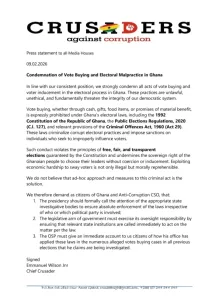
It also urged the legislative arm of government to exercise its oversight responsibility by compelling relevant state institutions to act swiftly on reported cases of vote buying in accordance with the law.
Additionally, CRUS challenged the Office of the Special Prosecutor (OSP) to provide a public account of how it has applied existing laws in addressing alleged vote buying cases from previous elections which the office has indicated are under investigation.


