


President John Dramani Mahama has come under criticism for allegedly contributing to the renewed conflict in the war-torn Bawku enclave and its surrounding areas, following remarks and promises he made while seeking the high office.
During a campaign visit to Bawku ahead of the 2024 general elections, Mr. Mahama pledged to resolve the conflict if elected President again.
He made this promise after attributing the escalation of the unrest to periods when the New Patriotic Party (NPP) was in government.
Although he eventually assumed office after a strong endorsement by the Ghanaian electorate, the Bawku conflict continues to resurface, raising doubts about the fulfillment of that campaign promise.

Commenting on the recent surge in violence that has led to the loss of lives and property in the area, presidential aspirant Akwasi Addai Odike criticised Mr. Mahama and held him partly responsible for the current situation.
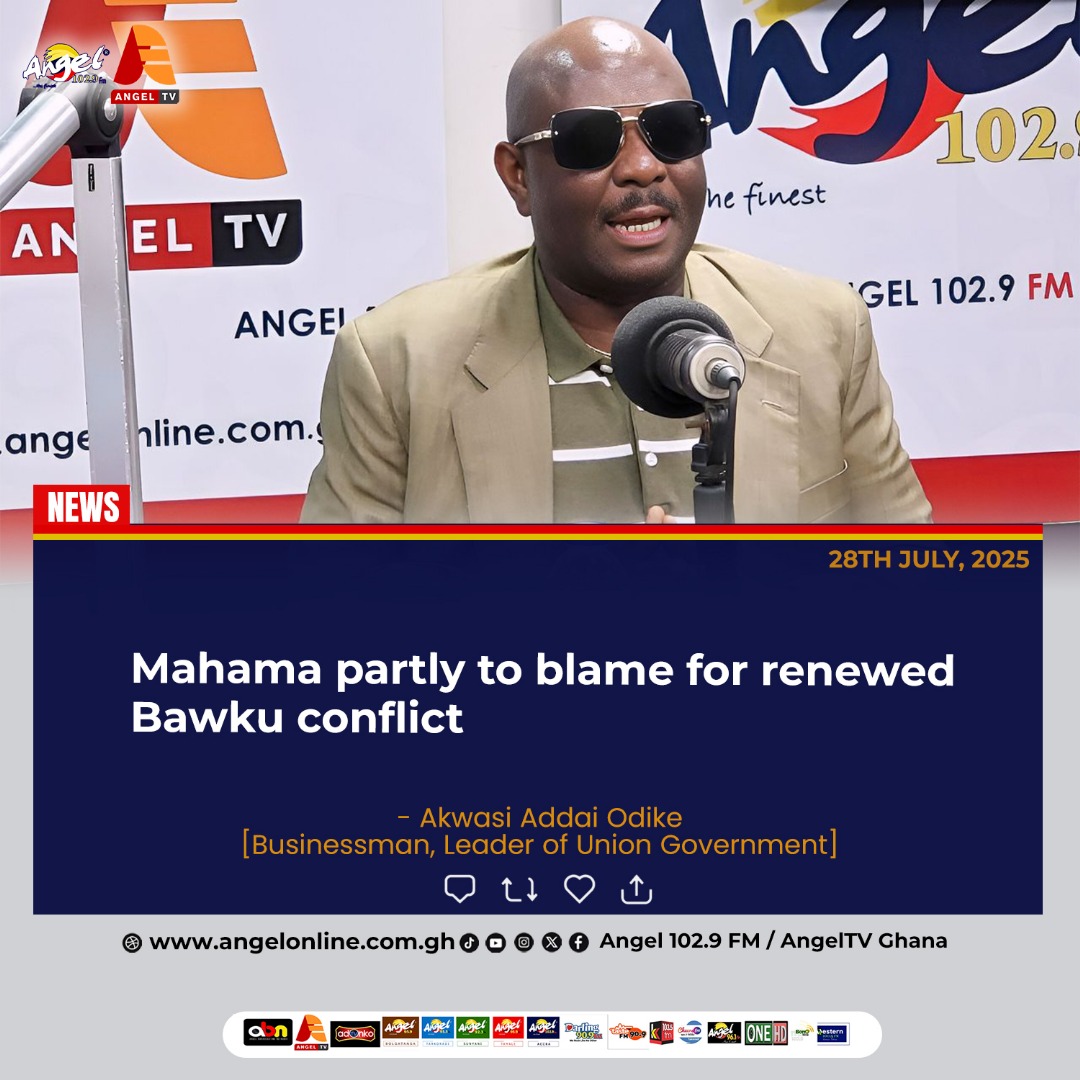
He believes that politically motivated promises should not be encouraged in matters that threaten national peace and security. He emphasized that such promises must go beyond campaign rhetoric because words have spiritual implications.
“It is very sad and disheartening. We should guard against political promises that offer false hope just to win power. It doesn’t help, because in this universe, anything you say with your mouth has spiritual implications,” he noted on Angel TV, on Monday, July 28, 2025.
Odike claimed that Mr. Mahama’s pledge had deeply influenced the expectations of the people in Bawku, resulting in disappointment when no visible resolution followed.
“When the IGP visited the area, he was chased out and his car was shot at. So I am urging Mahama to go there himself and fulfill the promise he made to the people. I wish he would go there and help stop the conflict,” Odike said, calling on the President to stand by his words.
He further warned against politicising the issue, stressing that a nified national effort is needed to resolve the conflict peacefully.
According to him, the state resources being used to manage the violence could instead be channeled into developmental projects.


