


About 25 percent of schoolchildren screened in Tarkwa have been diagnosed with dental caries, raising concern over poor oral hygiene among pupils in the area.
This was disclosed by Dr Victor Paintsil, Clinical Coordinator and Dental Surgeon at Tarkwa Municipal Hospital, during a World Oral Health Day celebration organised by the Gold Fields Foundation at Akon Park.
The exercise, undertaken in collaboration with the Gold Fields Foundation and supported by Unilever Ghana through its Pepsodent for Students initiative, brought together a cluster of schools within the Akon community.
A total of 892 pupils were screened, with the number expected to exceed 1,000 by the end of the exercise.
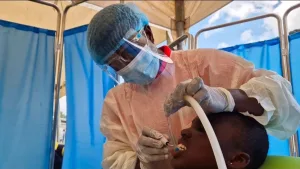 Dr Paintsil noted that dental caries, commonly known as tooth decay, remains the most prevalent oral health condition among children from preschool to junior high school.
He added that the second most common condition observed was plaque-induced gingivitis, characterised by swelling, redness, pain and bleeding of the gums, mainly caused by poor oral hygiene.
He described the situation as a growing public health concern, stressing that the increasing cases of tooth decay among children require urgent preventive interventions rather than relying solely on clinical treatment.
According to him, while procedures such as fillings and tooth extractions are necessary, they represent only a small part of the solution. He emphasised that education and prevention remain the most effective ways to address the problem.
 Dr Paintsil explained that tooth decay develops through the interaction of four key factors: the presence of teeth, sugar consumption, bacteria in the mouth, and time.
He said when sugary foods, beverages or carbohydrates are consumed, bacteria in the mouth feed on them and produce acid, which lowers the pH level in the mouth and gradually damages the teeth, leading to cavities.
Project Coordinator at the Gold Fields Foundation, Madam Ayisha Mohammed, also underscored the importance of preventive oral healthcare, noting that the initiative goes beyond the distribution of dental products.
She explained that the programme is focused on sensitisation and education, particularly among schoolchildren in host communities.
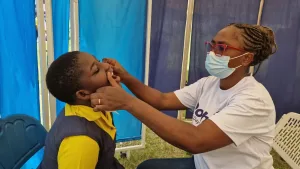 According to her, pupils are being encouraged to adopt the “brush twice daily” routine in the morning and at night as a key step in maintaining good oral hygiene.
Madam Mohammed highlighted the role of peer educators in the campaign, indicating that selected pupils are being trained to pass on the knowledge acquired to their colleagues who may not have been present at the event.
She further called on parents to take an active role in supervising their children’s oral hygiene practices, stressing that while many parents provide toothbrushes, proper guidance on brushing techniques is often lacking.
 She expressed optimism that the knowledge shared during the exercise would be applied at home, with children also helping to educate their peers.
She commended the collaborative efforts of stakeholders, noting that sustained education and community engagement remain critical in addressing the growing oral health challenges among children.
Source: Nana Fynn


