


The Ghana helicopter crash investigation report has concluded that the August 2025 military helicopter accident which claimed the lives of Defence Minister Edward Omane Boamah, Environment Minister Ibrahim Murtala Muhammed, and six others was caused by a sudden loss of altitude triggered by bad weather.
Presenting the findings at a public briefing, Captain (Rtd) Paul Forjoe, a member of the committee, explained that the aircraft’s rapid loss of altitude occurred without any change in power or pitch attitude.
He noted that changing weather over the Ashanti hills created strong downward winds that forced the helicopter to lose height.
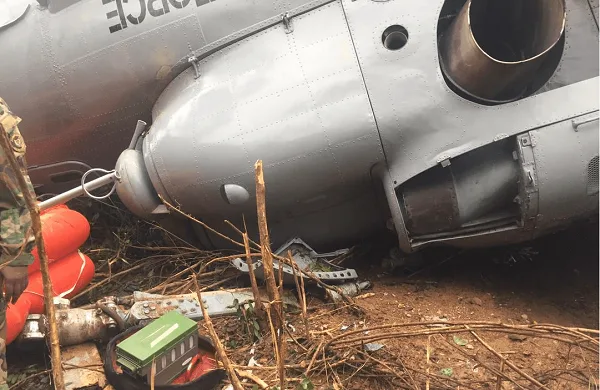

The crash involved a Ghana Air Force Harbin Z9 helicopter with registration number GHF 631. The aircraft was on a government assignment from Accra to Obuasi when it went down near Adansi Akrofuom. All eight occupants on board, including the two ministers, a deputy national security coordinator, and senior military officers, died on the spot.
According to the Ghana helicopter crash investigation report, the aircraft was airworthy at the time of departure but lacked additional safety features that would have improved its ability to fly in the prevailing weather. The absence of a Helicopter Terrain Awareness and Warning System and an Enhanced Ground Proximity Warning System meant that the pilots were unable to receive timely alerts about rising terrain or dangerous downdrafts.
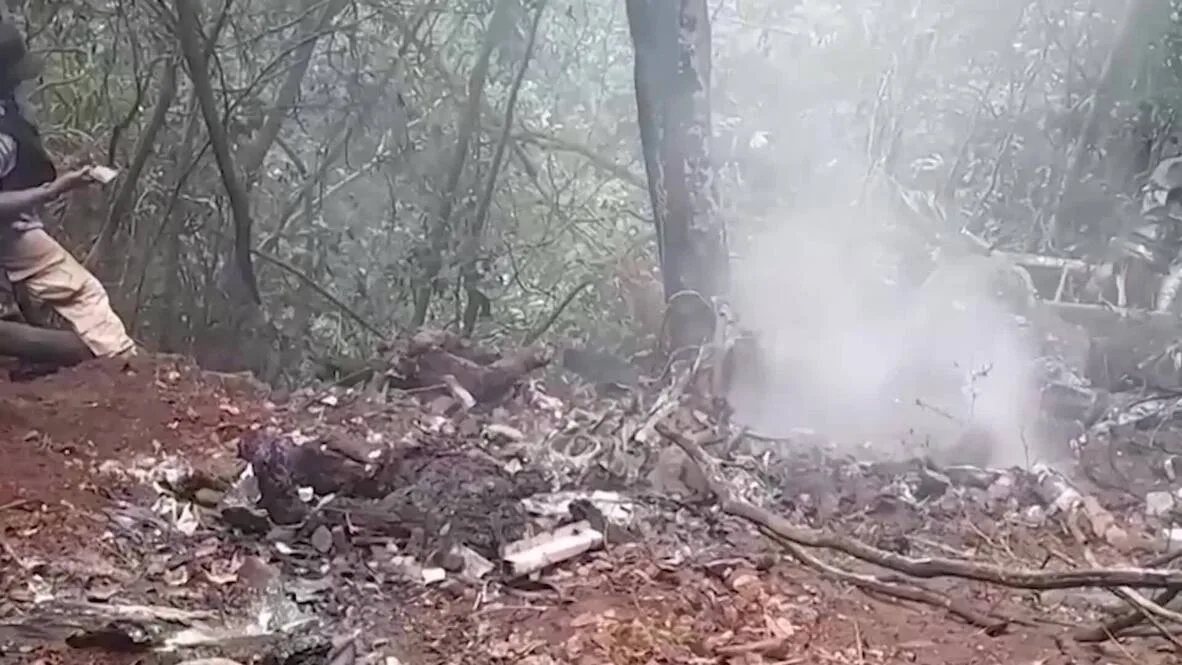
The investigation further revealed that the incident exposed deeper organisational and systemic weaknesses within Ghana’s aviation and defence sectors. Captain Forjoe stated that the country currently has limited navigational capability for remote areas and lacks adequate weather monitoring systems to support flights outside controlled airspace.
The committee also observed that Ghana does not have a Flight Data Monitoring system in place to record and analyse flight performance, a measure that could improve both safety and accountability.


