















































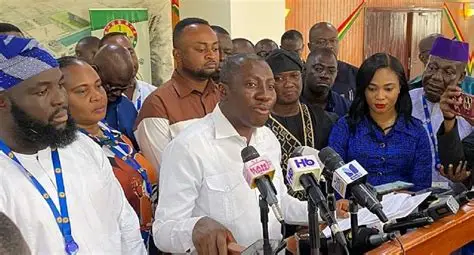
The Minority Caucus on Employment, Labour Relations and Pensions in Parliament has criticised the newly agreed 9 per cent salary increment for public sector workers in 2027 and 2028.
They described it as inadequate and incapable of addressing the rising cost of living facing Ghanaian workers.
In a statement issued on October 30, 2026, the caucus said it had received “with utter shock and dismay” details of the Multi-Year Public Service Remuneration Agreement for 2027 and 2028, arguing that the wage adjustment falls far below the economic realities confronting workers.
According to the Minority, the agreement grants public sector workers a 9 per cent total remuneration increase for 2027, comprising an 8 per cent increase in base pay and a 1 per cent adjustment in conditions of service, while workers are expected to receive a 10 per cent increment in 2028.
“To offer Ghanaian public sector workers a meager 9% total remuneration increase for 2027 (8% base pay and 1% conditions of service) and 10% for 2028 is nothing short of an insult,” the statement said,
The added that the adjustment amounts to “a direct assault on the dignity of workers.”
The caucus argued that the salary increases have failed to keep pace with inflation and the rising cost of utilities and other household expenses.
It noted that public sector workers had already received a 10 per cent salary adjustment in 2025 and a 9 per cent increase in 2026 and are now being locked into another 9 per cent increment for 2027.
The stagnant wage squeeze faced by workers, the Minority said, has eroded purchasing power as electricity tariffs, water charges, transport fares, rent and cooking gas prices continue to rise.
The statement pointed to increases in electricity tariffs and water rates over the past two years as evidence that wage growth has lagged behind household expenditure.
“A side-by-side examination reveals the extreme economic injustice inflicted on Ghanaian households by contrasting suppressed wages with the adjustments in electricity, water, rent, transport, cooking gas and other regular household expenditure imposed since 2025.
“The Minority Caucus is equally compelled to ask whose interests were represented at the negotiating table. Workers are asking, and rightly so, whether their leaders went to the table to defend their wages or to deliver industrial peace for Government.”
The statement also criticised the government’s handling of salary negotiations, alleging that workers are being asked to exercise restraint while utility tariffs and other living costs continue to increase.
“Expecting workers to tighten their belts with a 9% pay deal while utility tariffs compound quarterly is economic wickedness that the Minority Caucus will fiercely resist,” it stated.
The Minority maintained that the agreement disregards the economic hardship confronting public sector employees and called for greater transparency regarding the negotiations that led to the salary settlement.
It urged labour unions to provide a full account of the discussions, concessions and outcomes that culminated in the agreement.