


















































The Deputy Minister for Lands and Natural Resources, Hon. Alhaji Yusif Sulemana, has urged small-scale miners operating under the Responsible Cooperative Mining programme to set aside part of their earnings for land reclamation.

He said the measure forms part of the government’s efforts to promote responsible mining, protect the environment and ensure that lands degraded through mining activities are restored.
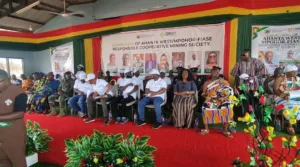
Hon. Alhaji Yusif Sulemana made the call during the inauguration of the Ahanta West/Mpohor Fiase Responsible Cooperative Mining Society at Anwunakrom in the Western Region.
The cooperative was described at the launch as the first joint mining operation involving the two areas.
The Deputy Minister explained that the initiative forms part of the government’s strategy to combat illegal mining by regularising small-scale miners who are willing to operate within the law.
According to him, the government inherited a situation in which several river bodies had been severely polluted and forest reserves threatened by illegal mining activities.
He said the government believes that helping miners obtain the necessary permits and certificates, while providing them with technical support, would encourage responsible mining and reduce environmental destruction.
He noted that the programme seeks to bring miners together under registered cooperatives and connect them with relevant institutions to improve their mining practices.
The Deputy Minister added that the initiative would help reduce tensions between miners and security personnel, as operators who meet the requirements would be authorised to conduct their activities legally.

On land reclamation, Hon. Alhaji Yusif Sulemana stressed that even miners who avoid river bodies and protected forest reserves could still degrade the land through excavation.
He explained that the policy guidelines require miners to set aside funds for restoring lands affected by their operations, with the amount depending on their production levels.
He further disclosed that the Ministry was working with the Forestry Commission to provide seedlings and other planting materials to support the restoration of mined-out areas.
The Deputy Minister also indicated that the authorities would monitor the activities and production levels of cooperative miners to ensure compliance with the guidelines.
He said the government was targeting the registration of at least 50 responsible cooperative mining groups by the end of the year.
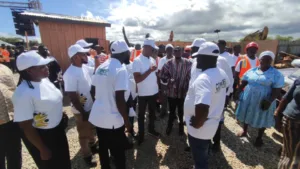
Meanwhile, the National Coordinator of the Responsible Cooperative Mining and Skills Development Programme (rCOMSDEP), Sheikh Seidu Sadiq, said the initiative represents the government’s commitment to balancing economic opportunities with environmental protection.
He acknowledged that although mining remains an important source of livelihood for many Ghanaian families, illegal and irresponsible mining has caused significant damage to farmlands, rivers, forests and other natural resources.
Sheikh Seidu Sadiq said the Responsible Cooperative Mining programme provides a lawful, organised and sustainable pathway for small-scale mining, with the potential to create jobs, improve livelihoods and promote development in host communities.
He explained that the programme would work closely with the Minerals Commission, the Environmental Protection Agency, the Department of Cooperatives, traditional authorities, local government institutions and other stakeholders to ensure that mining cooperatives comply with regulatory requirements.
According to him, the collaboration would also help strengthen the technical capacity of miners, improve safety standards, promote the adoption of mercury-free gold processing technologies, encourage responsible water management and support the rehabilitation of degraded mining lands.
The National Coordinator urged members of the newly inaugurated cooperative to operate strictly within their designated concessions and comply with all regulatory requirements.
He stressed that the success of the initiative would depend on the commitment of the miners, as well as the active involvement of traditional authorities, district assemblies and host communities.
He called on the stakeholders to provide effective oversight and take ownership of the initiative to ensure that mining activities translate into sustainable livelihoods and lasting community development.

Sheikh Seidu Sadiq also expressed appreciation to the Minister for Lands and Natural Resources, the Deputy Minister, regulatory institutions, traditional authorities, local government officials and development partners for their support towards the implementation of the programme.
Source: Nana Fynn