

























































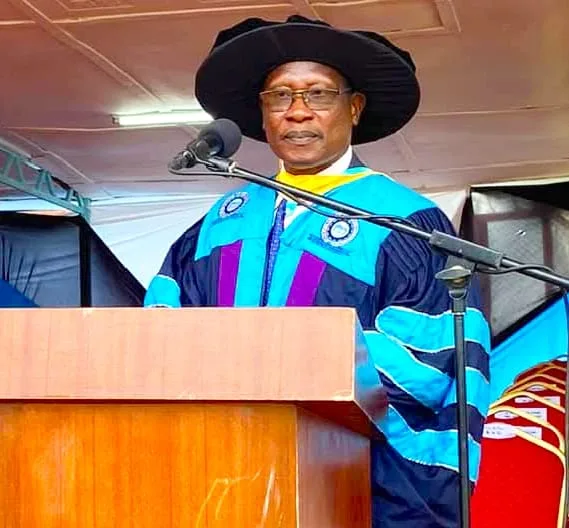
The Vice President of the Pan-African Writers Association (PAWA) and Chancellor of Mount Kigali University, Rwanda, Prof Egara Kabaji, has cautioned Africans against attacking fellow Africans or treating African migrants as strangers in host countries, saying such actions amount to self-mutilation.
Speaking as a keynote speaker at the Pan-African Literary Conference and Masterclass on the theme “Strangers Among Us: Writing About Migration in Africa” in Accra on Thursday, October 15, 2026, Prof Kabaji urged Africans to embrace a borderless Africa.
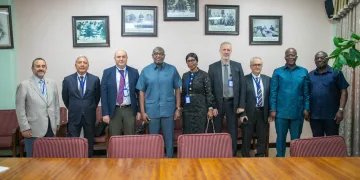
The conference was hosted by the African University of Communications and Business (AUCB) in partnership with Gemspread Publishing and PAWA.
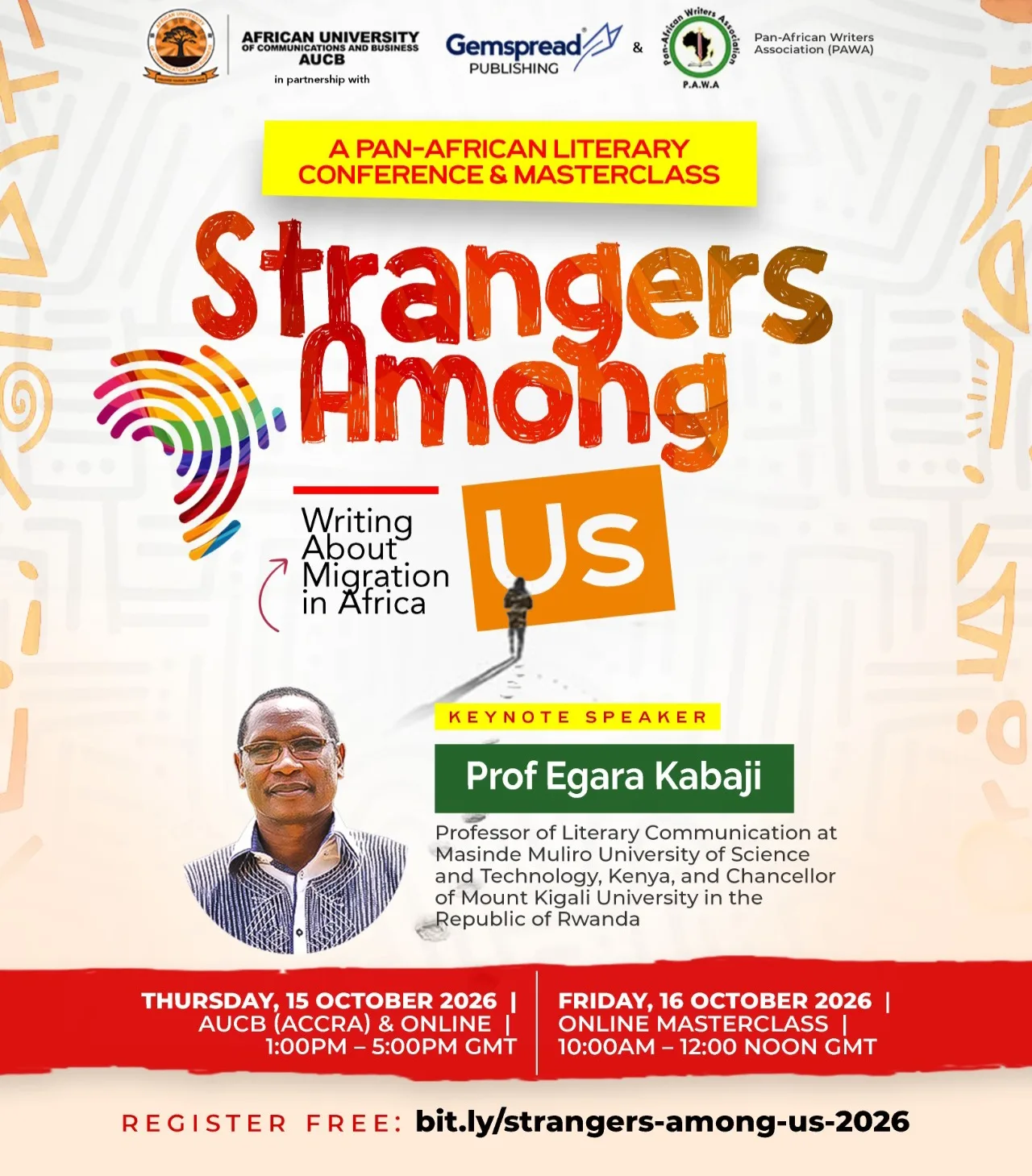
Presenting his paper titled ‘Strangers Among Us: Migration, Identity and Imagining of a Borderless Africa’, Prof Kabaji, who is also Professor of Literary Communication at Masinde Muliro University of Science and Technology, Kenya, said Africa must reject what he described as the “toxic politics of exclusion.”
He said the concept of a stranger in Africa is built on artificial colonial borders that literature has already proven false.
“In our universities we teach East African Literature – Kenyan, Ugandan, Tanzanian, Congolese works together – because literature reveals a profound truth that partisan politics seeks to obscure: we are one people,” he said.
Drawing from personal experience, Prof Kabaji recounted how he was taught in Kenya by Ugandan and Rwandan teachers who fled Idi Amin’s regime, and later served as a teacher in Rwanda and Uganda himself to repay that educational debt.
“I do not feel like a foreigner working abroad. I see myself simply as an East African working alongside fellow East Africans,” he told participants.

He noted that populist leaders across the continent, including in his home country Kenya, are weaponizing economic anxiety to scapegoat foreign African nationals, just as was done in Ghana in 1969 and Nigeria in 1983 with the infamous ‘Ghana Must Go’ expulsion.

Prof Kabaji called on African governments to defend regional integration protocols, prosecute what he termed violence entrepreneurs who profit from xenophobic attacks, and teach the next generation that their homeland extends “across the vast, magnificent expanse of a federated, borderless Africa.”
“We have seen the human cost when xenophobia festers: houses burnt, shops looted, families displaced, lives stolen simply because someone carried a different passport,” he added.
The hybrid conference ends on Friday, October 16, with an online masterclass.