



































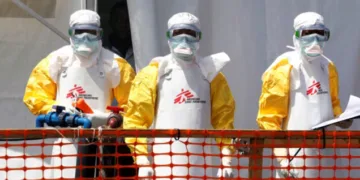


























The Ministry of Health, through the Ghana Health Service (GHS), has introduced new Ebola screening and monitoring measures for all travellers arriving at Ghana’s international airports in response to the ongoing outbreak of Ebola Disease caused by the Bundibugyo virus in some African countries.
The Ministry says the measures are precautionary and aimed at preventing the importation and spread of the virus through international travel. Ghana has not recorded any confirmed case of Ebola Disease to date.
The Ministry explained that the decision is consistent with commitments made at the recent Africa CDC ministerial meeting on Ebola, which convened all 55 African member states and over 40 health ministers, where member states agreed to implement preparedness actions, strengthen cross-border and border-point surveillance, and keep borders open while investing in measures to prevent transmission.
Under the new directive, all passengers are required before travel to complete the Health Declaration Form and truthfully declare any travel to or transit through Ebola-affected countries in the previous 21 days.
They must also disclose any close contact with a suspected or confirmed Ebola patient, visits to a health facility managing Ebola cases, participation in funeral or burial rites for a suspected case, or contact with blood, body fluids or contaminated materials from an ill person.
Persons with symptoms such as fever, severe weakness, headache, vomiting, diarrhoea, or unexplained bleeding or bruising are advised to postpone travel and seek immediate medical attention.
On arrival, every passenger will be screened by Port Health officers. The screening will include non-contact temperature checks, review of the Health Declaration Form, travel history and additional questions on symptoms and exposure where necessary.
Passengers showing symptoms suggestive of Ebola, those with recent travel from or through affected countries, or possible exposure to a case will be referred for immediate secondary assessment, taken to a designated area, temporarily isolated for evaluation, and referred to a health facility where necessary.
After arrival, passengers from countries with ongoing transmission will be monitored for up to 21 days, with the GHS contacting them for follow-up. Affected passengers are required to keep their contact details reachable and report any symptoms immediately to the designated contact.
Hotels, conference venues and similar hospitality providers have also been directed to report guests arriving from affected countries to the nearest district health directorate of the GHS and maintain records and contact details of all persons who access their facilities while such guests are hosted.
The Ministry has stressed that all arriving passengers must cooperate fully with Port Health officers, provide truthful information, follow screening instructions, practice frequent hand hygiene, and report immediately if symptoms develop in flight or at the airport.
It further warned that any passenger who knowingly provides false information, conceals symptoms or refuses to comply with screening will be subjected to public health measures under Ghanaian law.
The public has been urged to rely only on official information from the Ministry of Health and the GHS and to avoid spreading rumours, while anyone with a health concern is advised to contact the nearest Port Health officer at the airport or the nearest health facility.